Categories Knee Pain

5 Warning Signs Your Knee Pain May Need Surgical Evaluation

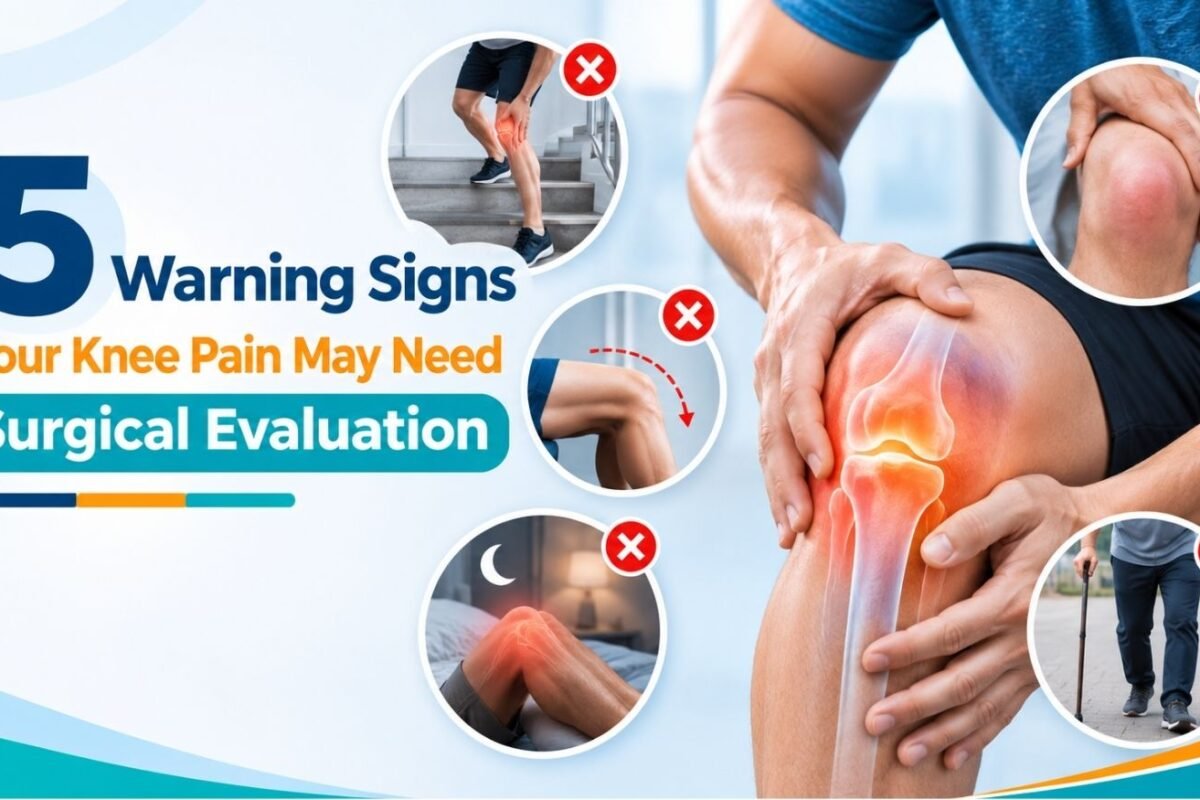
Five warning signs of knee pain that may require surgical evaluation, including persistent pain, reduced movement, knee locking, difficulty walking, and ongoing swelling

Quick Answer

Most knee pain improves without surgery. But five warning signs mean you should be assessed by a doctor who can judge whether surgery is a realistic option: pain that keeps worsening despite proper non-surgical care, a knee that gives way, a knee that truly locks, deformity or inability to bear weight after an injury, and a hot, red, swollen knee with fever. The last two can be emergencies. A surgical evaluation is an assessment, not a decision to operate.

Quick Summary

  • Surgery usually follows structured non-surgical care, except for injuries and infections.
  • Clicking alone is not a surgical sign; true locking is different.
  • Giving way deserves examination, especially after a twisting injury.
  • A hot, red, swollen knee with fever needs same-day hospital assessment.
  • An MRI finding alone does not decide treatment.

Introduction

Knee pain is one of the most common reasons people see a doctor, and common causes often improve without an operation. The harder question is when to stop waiting. This guide explains five warning signs that justify a surgical evaluation, which are urgent, and what to expect. It is general education, not a diagnosis.

How Urgent Is Each Warning Sign?

Warning signSuggested urgencyWhat it may reflect (a doctor must confirm)
1. Pain worsening despite proper non-surgical careBook an assessmentAdvanced osteoarthritis or structural damage
2. Knee gives wayPrompt assessment; sooner after injuryLigament injury, weak muscles, arthritis
3. Knee truly locksPrompt assessment, ideally within daysDisplaced meniscus fragment, loose body
4. Deformity, popping injury, cannot bear weightEmergency care todayFracture, dislocation, tendon rupture
5. Hot, red, swollen knee with feverEmergency care todayJoint infection (septic arthritis)

Sign 1: Pain That Keeps Worsening Despite Proper Non-Surgical Care

Mayo Clinic and the NHS advise seeing a doctor when knee pain worsens, keeps returning, disturbs sleep or limits daily tasks. For knee osteoarthritis, AAOS guidance recommends supervised exercise, self-management education, sustained weight loss and anti-inflammatory medicines, and a 2023 Journal of Family Practice review places surgery after non-surgical treatment has failed.

“Proper” matters. Rest and tablets alone are not a trial. A real trial includes progressive thigh-muscle strengthening, weight management where relevant, activity pacing and follow-up. There is no universal timeline: patient pages quote 2–6 or 6–12 weeks, while NHS trust guidance suggests calling your GP if 3–4 weeks of self-help has not helped. Treat these as prompts for review, not deadlines for surgery.

Hypothetical example: a 62-year-old with knee arthritis who has only rested and taken tablets is likely best served by a structured rehabilitation trial and assessment, not an immediate operation.

Sign 2: Your Knee Gives Way

Mayo Clinic lists a knee that feels unstable or gives out among the reasons to call a doctor. Causes include ligament injury, weak thigh muscles and arthritis. Whether surgery helps depends on the cause and what you need your knee to do. Isolated grade 1–2 MCL sprains generally recover without surgery, and some people with an isolated ACL tear who stay stable in daily life can defer reconstruction, but most active patients and athletes need it to return to their previous level. Giving way after a twisting injury deserves assessment sooner rather than later.

Sign 3: Your Knee Truly Locks

Many people call clicking, catching or stiffness “locking”. True locking means the knee is physically blocked and cannot fully straighten, often because a torn meniscus piece or loose fragment is wedged in the joint. Mayo Clinic lists inability to fully extend or flex the knee as a reason to see a doctor, and the Journal of Family Practice review counts a locked knee among presentations that likely warrant surgical consultation.

Context matters. In degenerative meniscus tears in middle-aged and older adults, trials found arthroscopic surgery no better than exercise-based care or sham surgery; those trials excluded verified locked knees. Guidelines recommend against routine arthroscopy for degenerative tears and osteoarthritis. The distinction is catching or clicking (usually managed without surgery) versus a genuine mechanical block. Pain-related stiffness can mimic locking, so examination, and sometimes MRI, helps tell them apart.

Sign 4: Deformity, a Popping Injury or Inability to Bear Weight

After a fall, twist or collision, get urgent care if the knee looks misshapen, you heard a pop, pain is severe, swelling is sudden or you cannot stand on the leg. Mayo Clinic and the NHS list these as reasons for immediate help. Causes include fracture, kneecap dislocation, major ligament injury and tendon rupture. Some are time-sensitive: complete quadriceps or patellar tendon ruptures generally do best with early repair, and repair delayed beyond one to two weeks is associated with worse outcomes. A suspected knee dislocation with a pale, cold or numb foot is a vascular emergency. Slowly increasing bowing of the leg is different: it usually reflects long-standing arthritis and can be raised at a routine assessment.

Sign 5: A Hot, Red, Swollen Knee With Fever

A knee that is hot, red, swollen and very painful, especially with fever, chills or feeling unwell, needs assessment the same day. Mayo Clinic notes septic arthritis can quickly damage knee cartilage. The knee is the joint most often affected, and treatment usually involves draining the joint plus antibiotics. Fever is not present in everyone. Risk is higher after joint surgery or injections, with an artificial joint, or with a weakened immune system. Gout can look similar, so doctors confirm the cause from joint fluid.

What a Surgical Evaluation Involves

An evaluation is a structured assessment: your history, an examination of movement, swelling and stability, and usually an X-ray first, with MRI or CT only when they will change management. The outcome is often a non-surgical plan. For knee osteoarthritis, guidelines differ on injections: ACR guidance strongly recommends corticosteroid injections for short-term relief, conditionally recommends against hyaluronic acid and strongly recommends against PRP, while AAOS finds limited evidence for PRP. Some recent meta-analyses favour PRP. This disagreement is why choices should be individualised.

Myths vs Facts

MythFact
Clicking or popping means I need surgery.Clicking alone is not a surgical sign. It matters alongside pain, swelling, giving way, true locking or a pop during injury.
A meniscus tear on MRI means an operation.Degenerative tears are common, and trials show surgery is often no better than exercise-based care. Traumatic tears and true locking are exceptions.
If I have coped this long, I can keep waiting.Infection, tendon rupture and dislocation are time-sensitive.

Expert Insight

The useful question is rarely “surgery or no surgery”. It is “what is driving this pain, and has non-surgical care been tested properly?” Mayo Clinic notes that hip problems can refer pain to the knee, so the source is not always the joint itself.

Practical Action Plan

  1. Check the urgent signs first. Signs 4 and 5 mean emergency care today.
  2. Keep a two-week diary: night pain, stairs, giving way, locking, swelling and medicines used.
  3. Do a structured programme, not just rest: gradual strengthening, weight management if relevant and activity pacing.
  4. Book an assessment if pain has not improved after a few weeks, disturbs sleep or work, or you notice giving way or locking.
  5. Bring your records: earlier imaging reports and your medicine list.

Questions Patients Forget to Ask

  • Does the imaging match my symptoms?
  • Which non-surgical options have I not yet tried?
  • What are the risks of waiting?
  • If surgery is suggested, what happens without it?

Nexus Advanced Pain Management Expert Summary

Knee pain becomes a surgical question when function stays limited despite well-delivered non-surgical care, when the joint is mechanically blocked or unstable, or when an injury or infection is time-sensitive. The purpose of evaluation is clarity about the cause, options and trade-offs, so decisions are made calmly rather than by default. Signs 4 and 5 are not for waiting: seek emergency care.

How Nexus Advanced Pain Management Can Help

If your knee pain is persistent but no emergency sign applies, a pain assessment can clarify the likely source and what has and has not been tried. At Nexus Advanced Pain Management in Ahmedabad, care is built around:

  • Comprehensive pain assessment: history, examination and review of existing imaging.
  • Evidence-based, non-surgical treatment planning: exercise guidance, medication review and lifestyle support.
  • Interventional procedures where they suit the diagnosis, discussed with realistic expectations.
  • Rehabilitation and long-term pain management
  • Clear advice on when an orthopaedic surgical opinion is appropriate.

Nexus Advanced Pain Management does not replace emergency care. Deformity, inability to bear weight, or a hot swollen knee with fever needs the nearest emergency department.

Key Takeaways

  • Judge non-surgical care by its quality, not just its length.
  • Giving way and true locking differ from clicking or catching.
  • Deformity, inability to bear weight, or a hot, red knee with fever means emergency care today.
  • Evaluation often ends in a non-surgical plan; it does not commit you to an operation.

Frequently Asked Questions

How do I know if my knee pain is serious?

Seek prompt care if you cannot bear weight, the knee looks deformed, swelling is sudden, you have fever with a red, hot knee, or pain disturbs sleep and daily tasks.

When should I see a doctor for knee pain?

See a doctor if pain is worsening, keeps returning, or has not improved after a few weeks of self-care. Go to an emergency department the same day for injury with deformity, inability to walk, or a hot, swollen knee with fever.

Does knee clicking or popping mean I need surgery?

No. Clicking alone is not a surgical sign. It deserves assessment with pain, swelling, giving way, true locking, or a pop during an injury.

Can a torn meniscus heal without surgery?

Many degenerative meniscus tears are managed with exercise-based care. Traumatic tears and a truly locked knee are different and need an orthopaedic opinion.

Can injections like PRP or steroids help me avoid surgery?

They may reduce pain in selected patients, but guidelines disagree on which injections to use. Discuss options for your specific diagnosis.

Should I see an orthopaedic surgeon or a pain specialist first?

Either can start the assessment. Injuries, locking or suspected structural damage usually need an orthopaedic opinion. For persistent arthritis-type pain, a pain specialist can review non-surgical options and advise when a surgical opinion is appropriate.


Categories Knee Pain

Best Doctor for Knee Pain Treatment in Ahmedabad: How to Choose the Right Specialist

Doctor examining a patient's knee during an assessment for knee pain in Ahmedabad

Quick Answer

There is no single “best” knee doctor for everyone; the right specialist depends on why your knee hurts. Orthopaedic or sports-medicine doctors usually handle injuries, instability and possible surgery. Rheumatologists assess inflammatory arthritis. Interventional pain specialists suit long-standing pain, most often from osteoarthritis, that persists despite exercise, weight management and medicines. Whoever you choose should examine you, explain the diagnosis and offer more than one option.

Quick Summary

  • “Best” is not a medical qualification, and Indian regulators restrict doctors from advertising as the best.
  • Match the specialist to the problem: injury, inflammatory arthritis, persistent osteoarthritis pain or advanced joint damage.
  • Exercise, education and weight management are first-line care for knee osteoarthritis.
  • Evidence for injections and nerve procedures differs, and expert bodies disagree.
  • Sudden swelling, deformity, inability to bear weight, or fever with a red, hot knee need prompt care.

Searching for the best doctor for knee pain treatment in Ahmedabad returns many directories but little guidance on deciding. This guide explains which specialist suits which problem, what a proper evaluation involves, what the evidence says about non-surgical treatments, and how to judge any clinic.

Why “Best Doctor” Is Not the Right First Question

Directories rank doctors by experience, fee or the share of patients who recommend them. These help shortlisting but do not measure diagnostic accuracy or honest discussion of options. India’s National Medical Commission has also moved to bar doctors from advertising as “best doctor” or “No.1 specialist”. A better question is which kind of doctor fits your knee problem, and how you will know the plan is sound.

Which Doctor Should You See for Knee Pain?

Your situationUsually start withWhy
Injury, swelling, locking or the knee giving wayOrthopaedic or sports-medicine doctorLigament, meniscus or bone injury needs examination and often imaging.
Gradual pain on stairs with stiffness, in middle or older ageOrthopaedic doctor, physician or pain specialistArthritis is a common cause.
Several swollen joints and long morning stiffnessRheumatologistSuggests inflammatory arthritis.
Pain persists despite exercise, weight management and medicinesInterventional pain specialistCan consider image-guided injections or nerve procedures alongside rehabilitation.
Severe joint damage limiting daily lifeOrthopaedic joint-replacement surgeonSurgery is considered for selected patients.

Pain can also be referred from the hip or foot, so a good doctor examines beyond the knee, and physiotherapy supports every pathway. For sports-related knee pain, see our sports injury pain treatment page.

Red Flags: When Not to Wait

Seek prompt care if your knee:

  • looks deformed, or popped or snapped during an injury
  • cannot bear weight or bend
  • swells suddenly or is intensely painful after an injury
  • is red, warm and swollen with fever, which can signal infection

Also see a doctor if pain disturbs sleep or daily tasks.

What a Proper Knee Evaluation Includes

  • History: onset, triggers, locking, swelling, giving way and other painful joints.
  • Examination: swelling, movement, ligament stability, walking pattern, and the hip and spine as possible sources.
  • Tests when needed: X-rays are often first; MRI or blood tests are used when injury, inflammation or infection is suspected.
  • Explanation of the likely diagnosis and how certain it is.

Treatment suggested without examination or explanation deserves a second opinion.

Non-Surgical Knee Pain Treatment: What the Evidence Says

Most guidance concerns knee osteoarthritis, often behind long-term knee pain. The American College of Rheumatology (ACR) updated its recommendations in 2026.

OptionWhat guidelines and studies sayPractical note
Exercise and educationStrongly recommended first-line care.Supervised physiotherapy helps.
Weight managementStrongly recommended; about 5% weight loss noticeably eases pain. The 2026 update conditionally supports GLP-1 medicines in knee OA with obesity.Discuss medicines with your doctor.
NSAIDsShort-term benefit; the 2026 update conditionally favours topical forms.Oral forms carry risks; ask first.
Corticosteroid injectionShort-term relief; recommended by the ACR for knee OA.Relief is temporary.
Hyaluronic acid injectionACR conditionally advises against; other guidelines are less consistent.Ask why it is suggested.
PRP injectionACR strongly advises against; AAPM&R 2026 guidance suggests considering it for mild-to-moderate OA after conservative care.Evidence conflicts.
Genicular nerve radiofrequency ablation (RFA)ACR 2026 conditionally recommends it in selected patients. A 2026 sham-controlled meta-analysis found meaningful relief; another meta-analysis rated certainty low. Relief is reported for roughly 3 to 12 months.A diagnostic nerve block often comes first.

Expert insight: a diagnostic nerve block before RFA may help identify who benefits. Ask which studies support any procedure for your diagnosis, how long relief lasts and what the risks are. Ligament, meniscus and inflammatory causes follow different evidence.

Where Interventional Pain Procedures Fit

Image-guided injections, nerve blocks and radiofrequency ablation are generally considered after exercise, weight management and medicines, or when surgery is unsuitable or declined. They complement rehabilitation rather than replace it.

How to Choose a Knee Doctor in Ahmedabad

  1. Verify registration with the National Medical Commission or state medical council.
  2. Look for relevant experience with your type of problem.
  3. Check the process: examination and explanation should precede any procedure.
  4. Expect options, including exercise, weight management and medicines, with benefits and risks.
  5. Ask about follow-up and rehabilitation, not just the procedure.
  6. Be wary of guarantees such as “permanent cure” or “100% success”, and read reviews as individual stories, not expected outcomes.

Questions Patients Forget to Ask

  • What is my most likely diagnosis, and how sure are you?
  • What are the risks, and how long does relief usually last?
  • What is the plan if this does not work, and what will it all cost?

Myths vs Facts

MythFact
Knee pain always ends in knee replacement.Many people manage knee osteoarthritis without surgery; surgery is for selected severe cases.
Rest is best for an arthritic knee.Appropriate exercise is first-line care.
An injection cures knee arthritis.Guidance describes injections as short-term relief, not a cure.

Practical Action Plan

  1. Check the red flags first; seek care promptly if any apply.
  2. Note when pain began, triggers, swelling and medicines tried.
  3. Without red flags, start self-care: for new pain, rest, ice, compression and elevation; for long-standing arthritis pain, gentle low-impact movement and weight management.
  4. Book the specialist that matches your pattern, carrying earlier X-rays, scans and prescriptions.
  5. Use the questions above, and get a second opinion before surgery or any major procedure.

Nexus Advanced Pain Management Expert Summary

Knee pain is a symptom, not a diagnosis. Start with an accurate diagnosis, then a plan built on exercise, education and weight management, adding medicines, injections or procedures only where they suit the cause and your goals. Because evidence differs between treatments, a trustworthy doctor explains what may help and what remains uncertain. This article is educational and cannot replace an individual assessment.

How Nexus Advanced Pain Management Can Help

Nexus Advanced Pain Management is a pain management clinic in Ahmedabad led by Dr. Dhaval Patel and Dr. Parth Shah, interventional pain specialists with MD qualifications and fellowship training in pain management. For knee pain, care may include:

  • Comprehensive assessment with examination and review of earlier reports.
  • Evidence-based, personalised plans that start with conservative care.
  • Non-surgical options, including image-guided injections, where appropriate.
  • Interventional procedures such as radiofrequency ablation or PRP therapy, with benefits, limits and alternatives explained.
  • Rehabilitation and lifestyle guidance, and a second opinion before surgery for selected patients.

To discuss your knee pain, book a consultation through the clinic’s contact page or call +91 9033 882 054 (Monday to Saturday, 10 am to 8 pm).

Your Doctors at Nexus Advanced Pain Management

DoctorQualifications and fellowshipsPractice focus
Dr. Dhaval PatelMBBS, MD (B.J. Medical College & Civil Hospital, Ahmedabad). Fellowship in Pain Management (FIPM), Daradia Pain Clinic, Kolkata; FPCC (2017).Interventional spine and pain care, about 10 years’ experience. Performs pain interventions under ultrasound (USG), CT and image-intensifier (IITV) guidance. Member, Indian Society for the Study of Pain.
Dr. Parth ShahMBBS, MD (B.J. Medical College & Civil Hospital, Ahmedabad). FIPM, Daradia Pain Clinic, Kolkata; FPCI (Mumbai, 2017); FIAPM (Bengaluru, 2018).Interventional pain management, about 10 years’ experience. Performs interventions under USG, CT and IITV guidance. Member, Indian Society for the Study of Pain.

Key Takeaways

  • The cause of knee pain decides the right specialist; no one doctor is best for every knee.
  • Treat “best” claims as marketing and judge clinics by their process.
  • Evidence for PRP, hyaluronic acid and RFA is mixed, so ask what supports a recommendation for you.
  • Verify registration, avoid guarantees and seek a second opinion before surgery.

Frequently Asked Questions

Which doctor is best for knee pain in Ahmedabad?

No single doctor suits every patient. Injuries usually go to an orthopaedic or sports-medicine doctor, inflammatory arthritis to a rheumatologist, and persistent pain despite basic care to an interventional pain specialist. Verify registration and ask how the plan was reached.

Should I see an orthopaedic doctor or a pain specialist?

See an orthopaedic doctor first for injury, instability, deformity or possible surgery. A pain specialist suits pain that persists despite exercise, weight management and medicines. The two often work together.

Can knee pain be treated without surgery?

Often, especially with osteoarthritis. Options include exercise, weight management, medicines and selected injections or procedures. Surgery is generally for severe pain and disability that do not respond to other care.

When is knee pain an emergency?

Get prompt care for deformity, inability to bear weight, sudden swelling, intense pain after injury, or fever with a red, warm, swollen knee.

Is PRP effective for knee pain?

Evidence is mixed. The ACR strongly advises against PRP for knee osteoarthritis, while 2026 AAPM&R guidance suggests considering it after conservative care in mild-to-moderate cases. Discuss the evidence with your doctor.

How long does radiofrequency ablation relief last in the knee?

Reviews report roughly three to twelve months, and responses vary. It is not described as a permanent cure.

How much does a knee pain consultation cost in Ahmedabad?

Directory listings reviewed in October 2026 showed fees from about ₹250 (physiotherapy) to about ₹1,200 (orthopaedic surgeon). Treatment costs depend on the diagnosis; see our guide to the cost of knee pain treatment in Ahmedabad.

This article is for general education and does not replace a medical examination.

Categories Knee Pain

Cost of Knee Pain Treatment in Ahmedabad: What to Expect

Knee pain treatment in Ahmedabad showing consultation, diagnostic imaging, injections, and treatment options- Nexus Advanced Pain Management In ahmedabad

Quick Answer

The cost of knee pain treatment in Ahmedabad depends on the cause and stage of the problem, so there is no single price. Public listings observed in October 2026 suggest roughly ₹250–₹1,500 for a specialist consultation, ₹2,500–₹6,000 for a knee MRI, ₹6,000–₹20,000 per injection session, and ₹1.5–₹3.5 lakh or more for knee replacement. Most people begin with the lower-cost steps, so an accurate diagnosis is the best first investment.

Quick Summary

  • Your diagnosis and its severity set the cost, not the knee alone.
  • Exercise-based physiotherapy and weight management have the strongest guideline support and usually cost less.
  • Injections are priced similarly but rated very differently by the 2026 ACR guideline.
  • Knee replacement is one possible route, not a default.
  • Ask for an itemised estimate before agreeing to any package.

Knee pain may come from osteoarthritis, a meniscus or ligament injury, or inflammation around the joint. Treatment can range from a few physiotherapy sessions to joint replacement, which is why one search rarely gives one number.

This guide explains typical costs, what drives them, how current guidelines rate each option, and what to ask before paying. Figures are market ranges from public listings, not a Nexus Advanced Pain Management fee list.

Knee Pain Treatment Cost in Ahmedabad: Typical Ranges

StepPublished range (INR)What changes the price
Specialist consultation₹250–₹1,500 per visitDoctor, clinic, online or in person
Knee MRI (one knee)₹2,500–₹6,000Centre, contrast, both knees
Physiotherapy₹500–₹2,000 per sessionTechniques, session length, number of sessions
Hyaluronic acid injection₹8,000–₹20,000 per injectionBrand, single- or multi-dose product
PRP injection₹6,000–₹20,000 per session; courses and corporate packages cost moreKit, number of sessions, imaging guidance
Genicular nerve RFANo reliable public price foundDiagnostic block first; request an itemised quote
Total knee replacement₹1.5–₹3.5 lakh commonly quoted; robotic often higherImplant, room category, stay, surgeon, rehabilitation


Ranges combine directory, clinic and hospital listings; some are over a year old. Confirm current prices directly.

What Decides Your Final Bill

  • Diagnosis and severity: early osteoarthritis and a ligament tear need different plans.
  • Sessions and follow-up: many options need repeat visits or repeat doses.
  • Product and guidance: the brand used, and whether imaging guidance is included.
  • Setting: clinic versus corporate hospital, and room category for surgery.
  • Rehabilitation: often billed separately from the procedure.

Expert insight: a low quote is not always a low total. Check whether repeat doses, imaging, follow-up and rehabilitation are included.

Non-Surgical Options: Cost Versus Evidence

The 2026 update of the American College of Rheumatology (ACR) osteoarthritis recommendations, approved in September 2026, is the newest major guideline. It is US-based and limited to osteoarthritis, but it helps judge value for money. Ratings below apply to knee osteoarthritis.

OptionCost pattern2026 ACR rating
Exercise and supervised physiotherapyPer session, repeated over weeksStrongly recommended
Weight loss, if overweightLow direct costStrongly recommended
Topical or oral NSAIDsLow pharmacy cost; suitability depends on your health historyStrongly recommended
Corticosteroid injectionNot separately priced in sources reviewedStrongly recommended (low-certainty evidence)
Genicular nerve RFANo reliable public priceConditionally recommended (low certainty)
Hyaluronic acid injection₹8,000–₹20,000 eachConditionally recommended against
PRP injection₹6,000–₹20,000+ per sessionStrongly recommended against (low certainty)
Stem cell injectionPriced in lakhs in some reportsStrongly recommended against


A strong recommendation against does not mean a treatment never helps. The PRP rating rests on low-certainty evidence, and some trials and specialists report benefit, so the evidence is contested. It does mean you should hear the expected benefit, the uncertainty and the total cost before paying.

Where Genicular RFA Fits

Radiofrequency ablation (RFA) uses heat to interrupt pain signals from the knee’s genicular nerves. It is usually considered for knee osteoarthritis pain that persists despite conservative care, often after a diagnostic nerve block. Relief is not permanent, and some insurers classify it as investigational, so coverage varies.

When Surgery Enters the Picture: Knee Replacement Cost

Total knee replacement is generally considered when joint damage is advanced and pain limits daily life despite non-surgical care. Ahmedabad listings commonly quote ₹1.5–₹3.5 lakh, with robotic-assisted surgery around ₹2.5–₹3.5 lakh. Quotes usually cover surgeon and anaesthesia fees, implant, operating theatre, room, medicines and early rehabilitation, so confirm what is included.

India caps implant prices component by component. For example, the ceiling for a titanium-alloy-coated primary femoral component is ₹51,563, in force until 15 November 2026 unless revised. Implants are only part of the bill.

Will Insurance or a Government Scheme Cover It?

  • Surgery: comprehensive policies usually cover hospital-based replacement, subject to waiting periods (commonly one to three years for pre-existing conditions), room-rent limits and exclusions.
  • Physiotherapy: usually covered only after hospitalisation or through an OPD add-on.
  • Injections such as PRP: commercial pages describe these as self-paid. Confirm with your insurer.
  • Ayushman Bharat PM-JAY: secondary sources report knee-replacement packages at empanelled hospitals. Check eligibility with the hospital.
  • Get pre-authorisation in writing for planned procedures.

Red Flags: Do Not Wait to Compare Prices

Seek prompt medical care if you cannot bear weight, the knee looks deformed, swelling is sudden or marked, pain is severe after an injury, the knee cannot fully bend or straighten, or you have fever with a red, swollen knee. These can signal injury or infection.

Questions to Ask Before You Pay

  1. What is my diagnosis, and how was it confirmed?
  2. Is this scan or procedure needed now, and what will it change?
  3. What does the quote include: product, guidance, follow-up, rehabilitation?
  4. How many sessions or doses may I need, and what if I do not improve?
  5. What are the expected benefit, duration and risks, and what evidence supports them?
  6. What would the next step cost if this does not work?

Myths vs Facts

MythFact
Costlier treatment works better.Price does not track evidence. Similarly priced injections are rated very differently by guidelines.
Knee pain eventually needs surgery.Many types of knee pain respond to self-care, physiotherapy and bracing.
Online success percentages are reliable.Some clinic pages quote percentages without clear study sources. Ask for the evidence.

Practical Action Plan

  1. Note when pain occurs, past injuries, scans, medicines and your insurance terms.
  2. Book an assessment with an orthopaedic surgeon or pain specialist and ask for the diagnosis in plain language.
  3. Unless red flags are present, start with first-line care: exercise, weight management and doctor-advised medicines.
  4. For injections, RFA or surgery, request an itemised written estimate and consider a second opinion.

Nexus Advanced Pain Management Expert Summary

Knee pain cost is best understood as a pathway, not a price tag. Most of the value comes early: a clear diagnosis, a realistic plan and first-line care built on exercise and appropriate medicines. Newer or costlier options are not automatically better, because current guidelines rate them very differently. When comparing quotes, compare plans (diagnosis, expected benefit, number of sessions, follow-up), not just rupee figures.

How Nexus Advanced Pain Management Can Help

Nexus Advanced Pain Management is a pain management clinic in Ahmedabad offering specialist, non-surgical care for knee pain and related joint conditions. Depending on your assessment, care may include:

  • A comprehensive pain assessment to identify the likely source of knee pain.
  • An evidence-based, personalised plan that starts with lower-risk options.
  • Interventional procedures, such as radiofrequency ablation, where appropriate.
  • Discussion of regenerative options such as PRP, including the current evidence.
  • Rehabilitation guidance, lifestyle support and advice on when to seek an orthopaedic opinion.

Not every option suits every patient, and costs depend on your plan. An itemised estimate can be discussed at consultation.

Key Takeaways

  • There is no single price; diagnosis drives the plan.
  • Consultation and MRI are modest costs; surgery sits at the top.
  • Strongly recommended first-line care is usually the most affordable.
  • Check guideline ratings before paying for injections.
  • Insurance varies; get estimates and approvals in writing.

Frequently Asked Questions

How much does knee pain treatment cost in Ahmedabad?

It ranges from a few hundred rupees for a consultation to about ₹1.5–₹3.5 lakh or more for knee replacement. Most people spend within the lower steps. The final cost depends on your diagnosis and the plan you choose.

What is the lowest-cost effective treatment for knee pain?

For knee osteoarthritis, exercise-based physiotherapy, weight management and topical medicines have the strongest guideline support and are usually the least costly. Your doctor should confirm what suits you.

How much does a knee MRI cost in Ahmedabad?

Public listings show roughly ₹2,500–₹6,000 for one knee, depending on the centre and whether contrast is used. Ask whether an MRI is needed at this stage.

Is PRP for the knee worth the cost?

Roughly ₹6,000–₹20,000 per session is commonly quoted. However, the 2026 ACR guideline strongly recommends against PRP for knee osteoarthritis, based on low-certainty evidence. Discuss expected benefit and alternatives before deciding.

Does insurance cover knee pain treatment?

Hospital-based surgery is usually covered, subject to waiting periods and policy limits. Outpatient physiotherapy and injections often are not, unless your policy includes OPD cover. Check with your insurer.

Does knee pain always need surgery?

No. Many people are managed without surgery. Replacement is generally considered when joint damage is advanced and non-surgical care has not controlled symptoms.

Who should I see for non-surgical knee pain care in Ahmedabad?

Orthopaedic surgeons assess structural problems and surgery, while pain specialists focus on non-surgical and interventional pain care. Many patients benefit from coordination between both.


This article is for general information and is not a substitute for personal medical advice, diagnosis or treatment.

Categories Knee Pain

Why Do Knees Hurt While Climbing Stairs?

Quick Answer

Knees hurt while climbing stairs because stairs place 3–4 times your body weight through the kneecap joint, far more than walking on flat ground. Pain is most often caused by patellofemoral pain syndrome (irritation under the kneecap), early cartilage wear, weak thigh muscles, or, in older adults, osteoarthritis. Most cases improve with targeted strengthening, activity modification, and non-surgical pain management — surgery is rarely the first step.

Quick Summary

  • Stairs load the kneecap joint 3–4x more than flat-ground walking, which is why pain often appears only on stairs.
  • Descending is usually more painful than climbing because it requires the thigh muscles to control your body weight while lengthening (eccentric load).
  • The most common cause in adults under 45 is patellofemoral pain syndrome; in adults over 50, early knee osteoarthritis is more likely.
  • Weak or imbalanced thigh (quadriceps) muscles are a leading, correctable contributor.
  • Pain that lasts more than 2–3 weeks, causes swelling, or is accompanied by locking or giving-way needs clinical evaluation.
  • Most stair-related knee pain responds well to physiotherapy, activity modification, and non-surgical interventional treatment.
  • A pain management specialist can identify the exact source of pain using clinical assessment and imaging, avoiding unnecessary surgery.

Introduction

Climbing or descending a flight of stairs is one of the most physically demanding everyday movements for the knee joint — more demanding, in fact, than walking or even jogging on level ground. So when a patient says, “My knees are fine most of the day, but stairs are unbearable,” that single detail is clinically meaningful. It tells us the problem is very likely centered on the kneecap (patellofemoral) joint rather than the whole knee, and it usually points toward a specific, identifiable cause rather than vague “wear and tear.”

This guide explains exactly why stairs trigger knee pain, what the common underlying causes are, how pain specialists diagnose the problem, and which non-surgical treatments genuinely help. The goal is not to alarm you — the goal is to help you understand your knee well enough to make an informed decision about what to do next.

Why Stairs Are So Hard on Your Knees

Every time you climb a step, your kneecap (patella) glides within a groove at the end of the thighbone (femur). This is called the patellofemoral joint. Research in joint biomechanics has consistently shown that this joint bears roughly 3–4 times your body weight when climbing stairs, compared to about 1–1.3 times your body weight during level walking. Descending stairs can place even greater strain on the joint, because your thigh muscles must contract while lengthening to control your descent — a pattern called eccentric loading, which is more taxing on both muscle and joint surface.

Why this matters: if your knee only hurts on stairs (and not on flat ground), the problem is almost always related to how load passes through the kneecap joint — not necessarily deep, structural damage inside the knee.

Common Symptoms of Stair-Related Knee Pain

  • A dull, aching pain around or behind the kneecap when climbing or descending
  • Sharp, catching pain on the first few steps, especially going downstairs
  • A grinding, clicking, or crunching sensation (crepitus) with movement
  • Mild swelling after stair use or prolonged sitting
  • Stiffness after sitting with bent knees for a long time (“theatre sign”)
  • A feeling that the knee may “give way” on stairs, particularly descending

What Causes Knee Pain While Climbing Stairs?

1. Patellofemoral Pain Syndrome (PFPS)

The single most common cause in active adults and young patients. It occurs when the kneecap doesn’t track smoothly in its groove, causing irritation of the cartilage and surrounding tissue under repetitive loading — exactly the kind of loading stairs produce.

2. Chondromalacia Patella

A softening or early wear of the cartilage on the underside of the kneecap. It shares symptoms with PFPS but reflects an actual, visible change in the cartilage surface, usually identified on imaging.

3. Knee Osteoarthritis

In patients over 45–50, progressive cartilage thinning across the joint is a common cause. Stair pain — particularly descending — is often one of the earliest reported symptoms of osteoarthritis, appearing before pain on flat ground.

4. Quadriceps Weakness or Imbalance

The quadriceps (thigh) muscles, especially the inner portion (vastus medialis), help guide the kneecap’s movement. Weakness or imbalance here is one of the most common — and most correctable — contributors to stair pain.

5. Patellar Tendinitis (“Jumper’s Knee”)

Overuse-related inflammation of the tendon just below the kneecap, common in athletes and people who recently increased stair-climbing, running, or squatting activity.

6. Meniscus Irritation

The meniscus (shock-absorbing cartilage between the thigh and shin bones) can become irritated or, in some cases, torn, causing pain that is often worse with twisting or descending motions.

7. IT Band Syndrome

Tightness in the iliotibial band running along the outer thigh can pull on the outer kneecap structures, producing pain that is frequently worse going down stairs.

Risk Factors

  • Age over 45, particularly for osteoarthritis-related causes
  • Sedentary lifestyle with weak thigh and hip muscles
  • Sudden increase in stair use, running, or squatting activity
  • Previous knee injury or surgery
  • Being overweight, which multiplies joint loading on stairs
  • Occupations requiring frequent stair or ladder use
  • Flat feet or abnormal lower-limb alignment

How Is Stair-Related Knee Pain Diagnosed?

A pain management specialist typically begins with a detailed history — including exactly when the pain occurs (up vs. down stairs), its duration, and any swelling or instability — followed by a physical examination assessing kneecap tracking, muscle strength, and joint stability. Depending on findings, imaging such as X-ray (for joint space and arthritis) or MRI (for cartilage, tendon, or meniscus detail) may be recommended. Diagnosis is rarely guesswork; it is a structured process of ruling causes in or out.

Expert Insight

“Patients often assume stair pain automatically means arthritis, but in our clinical experience, patellofemoral pain syndrome and muscle weakness are far more common causes, particularly in patients under 50. A focused assessment usually identifies the exact source within one visit.”

Treatment Options for Knee Pain on Stairs

Non-Surgical Treatment (First-Line Approach)

For the vast majority of patients, non-surgical, evidence-based management is the appropriate starting point:

  • Targeted physiotherapy to strengthen the quadriceps, hips, and core
  • Activity and load modification (e.g., using a handrail, reducing stair frequency temporarily)
  • Anti-inflammatory strategies guided by a physician, where appropriate
  • Bracing or taping to support kneecap tracking during recovery
  • Interventional options such as targeted injections or PRP therapy for select cases of cartilage irritation or tendinitis
  • Radiofrequency ablation (RFA) for select chronic osteoarthritis-related knee pain that hasn’t responded to conservative care

Surgery is generally considered only when structural damage (such as a significant meniscus tear or advanced arthritis) is confirmed and conservative treatment has not provided adequate relief.

Prevention Tips

  • Strengthen the quadriceps and hip muscles with guided exercises 2–3 times per week
  • Warm up before activities that involve repeated stair use
  • Maintain a healthy body weight to reduce joint loading
  • Use proper footwear with adequate cushioning and support
  • Avoid sudden spikes in stair-climbing, running, or squat-based activity
  • Address flat feet or alignment issues with orthotics if recommended

Recovery and Rehabilitation

Most cases of patellofemoral pain syndrome and mild chondromalacia improve within 6–12 weeks of consistent, guided physiotherapy. Recovery is typically progressive: initial pain reduction and swelling control in the first 1–2 weeks, followed by graded strengthening over 4–8 weeks, and a gradual return to full stair activity by week 8–12. Osteoarthritis-related pain follows a longer-term management pattern rather than a fixed recovery timeline, focused on symptom control and joint preservation.

Comparison: Climbing vs. Descending Stairs

AspectClimbing (Ascending)Descending
Muscle actionConcentric (muscle shortens)Eccentric (muscle lengthens under load)
Typical joint stressHighHigher — often the more painful direction
Common associated causeQuadriceps weakness, tendinitisPFPS, chondromalacia, early osteoarthritis
Typical sensationAching, fatigue-like painSharp, catching, or unstable feeling

Common Mistakes Patients Make

  1. Ignoring stair pain for months, assuming it will “just go away”, which allows muscle weakness and altered movement patterns to worsen.
  2. Resting completely instead of modifying activity — prolonged inactivity weakens the quadriceps further and can worsen symptoms.
  3. Self-diagnosing as “arthritis” and assuming surgery is inevitable, when most cases respond well to non-surgical care.
  4. Skipping professional strengthening guidance and doing generic online exercises that may not target the right muscles.

Myths vs. Facts

MythFact
Knee pain on stairs always means arthritisIt is often patellofemoral pain syndrome or muscle weakness, especially under age 50
Rest is the best treatmentGuided activity and targeted strengthening usually work better than complete rest
Surgery is the only real fixMost patients improve significantly with non-surgical, evidence-based treatment
Clicking or cracking always signals damagePainless clicking (crepitus) is common and often not a sign of injury

Questions Patients Forget to Ask

  • Is my pain coming from the kneecap joint specifically, or the whole knee?
  • What is causing my pain — is it muscular, cartilage-related, or joint-related?
  • What is a realistic recovery timeline for my specific cause?
  • Which exercises should I avoid until my pain improves?
  • What are my non-surgical options before considering more invasive treatment?

Practical Action Plan

  1. Track your pain pattern for one week — note whether it’s worse going up, down, or both, and whether swelling occurs.
  2. Reduce (don’t eliminate) stair use temporarily and use a handrail for support.
  3. Begin gentle quadriceps and hip-strengthening exercises, ideally under guidance.
  4. Schedule an evaluation with a pain management specialist if pain persists beyond 2–3 weeks, or sooner if there is swelling, locking, or instability.
  5. Follow a structured, evidence-based treatment plan rather than a generic online routine.

Nexus Pain Expert Summary

Stair-related knee pain is common, usually explainable, and in most cases treatable without surgery. At Nexus Advanced Pain Management, we begin with a comprehensive assessment to identify the exact source of your pain, then build a personalized, non-surgical treatment plan — from targeted physiotherapy to interventional options like PRP or radiofrequency ablation where appropriate — with realistic expectations and long-term joint health as the goal.

How Nexus Pain Management Can Help

Nexus Advanced Pain Management takes an evidence-based approach to knee pain, beginning with a comprehensive assessment to identify the true source of your discomfort rather than treating symptoms generically. Our approach includes personalized, non-surgical treatment planning, interventional pain procedures where clinically appropriate, rehabilitation guidance, and long-term strategies for joint health and pain relief — all grounded in realistic expectations and patient education.

Key Takeaways

  • Stairs load the kneecap joint 3–4x more than walking, which is why pain often appears there first.
  • Descending stairs is frequently more painful than climbing due to eccentric muscle loading.
  • Common causes include patellofemoral pain syndrome, chondromalacia, quadriceps weakness, and — in older adults — early osteoarthritis.
  • Persistent pain beyond 2–3 weeks, swelling, or instability warrants professional evaluation.
  • Non-surgical treatment is effective for the large majority of patients.
  • A structured diagnosis prevents unnecessary worry and unnecessary surgery.

Frequently Asked Questions

  1. Why does my knee only hurt on stairs and not when walking?

Stairs place several times more load through the kneecap joint than flat-ground walking, so problems localized to that joint — such as patellofemoral pain syndrome — often show up only on stairs.

  1. Is it normal for knees to hurt while climbing stairs?

Occasional mild discomfort can occur with deconditioning, but persistent or worsening pain is not something to ignore and should be evaluated, particularly if it lasts more than 2–3 weeks.

  1. Why is going down the stairs more painful than going up?

Descending requires your thigh muscles to control your body weight while lengthening (eccentric loading), which places greater stress on the kneecap joint than the muscle-shortening action used while climbing.

  1. Can weak thigh muscles really cause knee pain on stairs?

Yes. Weak or imbalanced quadriceps muscles are one of the most common and most correctable contributors to stair-related knee pain, as they affect how the kneecap tracks during movement.

  1. Does knee pain on stairs mean I have arthritis?

Not necessarily. While early osteoarthritis can present this way in adults over 45–50, patellofemoral pain syndrome and muscle weakness are more common causes in younger, active patients.

  1. When should I see a pain specialist for knee pain on stairs?

See a specialist if pain persists beyond 2–3 weeks, is accompanied by swelling, clicking with pain, locking, instability, or if it is limiting your daily activities.

  1. Can knee pain on stairs be treated without surgery?

Yes. Most cases respond well to physiotherapy, activity modification, and non-surgical interventional treatments; surgery is generally reserved for confirmed structural damage that hasn’t responded to conservative care.

  1. What tests are used to diagnose stair-related knee pain?

Diagnosis typically starts with a clinical history and physical examination, followed by imaging such as X-ray or MRI when needed to assess cartilage, tendon, or joint condition.

  1. How long does it take for stair-related knee pain to improve?

Many patients with patellofemoral pain syndrome improve within 6–12 weeks of consistent, guided treatment, though timelines vary depending on the underlying cause.

  1. Can being overweight cause knee pain on stairs?

Yes. Excess body weight significantly increases the load passing through the kneecap joint during stair use, which can contribute to or worsen symptoms.

  1. Is clicking or cracking in the knee on stairs a cause for concern?

Painless clicking (crepitus) is common and usually not concerning on its own; it becomes relevant mainly when accompanied by pain, swelling, or a catching sensation.

  1. Where can I get evaluated for knee pain while climbing stairs in Ahmedabad?

Nexus Advanced Pain Management in Ahmedabad offers comprehensive knee pain assessment and evidence-based, non-surgical treatment planning for stair-related and activity-related knee pain.


Categories Knee Pain

Knee Replacement vs. Non-Surgical Knee Pain Treatment

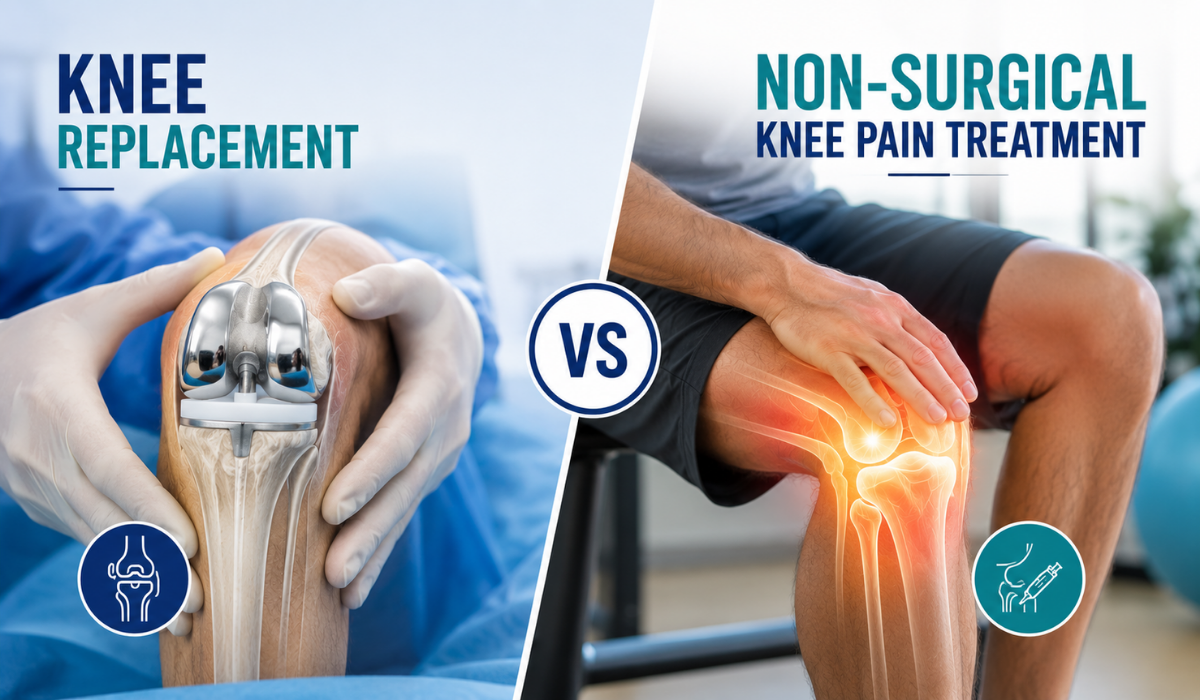
Knee replacement vs non-surgical knee pain treatment options

Quick Answer

Non-surgical, interventional treatment — such as PRP therapy, viscosupplementation, a genicular nerve block, radiofrequency ablation (RFA), or ozone therapy — is often considered for knee osteoarthritis and can help manage pain and improve function for select patients. Total knee replacement becomes the more effective option when arthritis is advanced (grade 3–4), when non-surgical/interventional options no longer control symptoms, or when daily activity is severely limited. The right choice depends on a clinical assessment of your pain severity, functional limitation, imaging findings, previous treatment response, and personal goals — not on X-ray grade alone.

Quick Summary

  • Non-surgical or interventional treatment is often considered first for mild-to-moderate knee osteoarthritis, based on clinical assessment.
  • Total knee replacement (TKR) tends to produce greater pain and function improvement than non-surgical care alone in patients with moderate-to-severe osteoarthritis, according to randomised trial data.
  • A meaningful proportion of patients who begin non-surgical or interventional treatment are able to delay or manage their symptoms without surgery for a period of time; individual outcomes vary.
  • Non-surgical/interventional options generally carry fewer immediate risks than surgery and do not require anaesthesia or a hospital stay.
  • TKR recovery generally takes 3–6 months for most daily activities, with continued strength gains up to a year.
  • The decision should be individualised — pain severity, functional limitation, imaging, previous treatment response, and patient goals all matter, not arthritis grade alone.
  • A trial of appropriate non-surgical or interventional care before surgery is a reasonable approach for most patients without emergency indications.

Introduction

Knee pain from osteoarthritis is one of the most common reasons people in Ahmedabad visit an orthopaedic or pain management clinic. At some point, most patients are asked the same question: should you try non-surgical treatment, or is it time to consider knee replacement? Neither answer is universally correct — the right path depends on how far the arthritis has progressed, how the knee responds to conservative care, and what matters most to you: avoiding surgery, restoring full activity, or something in between. This article breaks down both pathways in practical terms, using current clinical evidence, so you can have a more informed conversation with your treating doctor.

Understanding the Two Pathways

Knee osteoarthritis develops when the cartilage cushioning the joint wears down, leading to pain, stiffness, and reduced mobility. Treatment generally follows a staged approach: conservative, non-surgical management first, with surgery reserved for patients whose symptoms and joint damage do not respond adequately.

Non-Surgical Knee Pain Treatment

At Nexus Pain Management, non-surgical treatment for knee osteoarthritis is approached through minimally invasive, interventional, injection-based, and regenerative options, selected based on individual assessment:

  • PRP (Platelet-Rich Plasma) Therapy — a regenerative, injection-based option used to help manage symptoms in select patients as part of an individualized plan
  • Viscosupplementation — a lubricating, injection-based option considered for appropriately selected patients with knee osteoarthritis
  • Genicular Nerve Block — a targeted injection that addresses pain signalling from the nerves around the knee joint
  • Radiofrequency Ablation (RFA) — a minimally invasive procedure that targets selected pain-transmitting nerves around the knee; it does not repair or regenerate cartilage
  • Ozone Therapy — an interventional option some patients consider for knee pain; current evidence is limited, and it is not a cure or a way to reverse existing joint damage
  • In some cases, more than one option may be combined, based on individual assessment findings
  • Reassessment over time to guide whether the same treatment, a different option, or a combination is appropriate going forward

These treatments have different purposes and are not interchangeable — the right option, or combination, depends on the cause and severity of the pain, imaging findings, and how the knee has responded to treatment so far, determined through a clinical assessment at Nexus Pain Management, an advanced/interventional pain management clinic in Ahmedabad.

Total Knee Replacement (TKR)

Total knee replacement is a surgical procedure in which the damaged joint surfaces are resurfaced with an artificial implant. It is generally considered the definitive treatment for end-stage knee osteoarthritis (grade 3–4) once non-surgical measures no longer provide adequate relief. It is a major orthopaedic procedure requiring hospital admission, anaesthesia, and a structured rehabilitation programme afterward.

What the Evidence Shows

A randomised controlled trial published in the New England Journal of Medicine compared patients with moderate-to-severe knee osteoarthritis who were eligible for TKR, assigning them to either surgery followed by non-surgical care, or non-surgical care alone. At 12 months, the surgery group showed significantly greater improvement in the Knee Injury and Osteoarthritis Outcome Score (KOOS), which measures pain, symptoms, daily function, and quality of life. A related 2-year follow-up found the same pattern held over time, though patients who started with non-surgical treatment alone still showed meaningful improvement compared to written advice only.

It is worth noting that a proportion of patients who begin with non-surgical or interventional treatment do eventually proceed to knee replacement, while others continue to manage without surgery for an extended period. This is the key clinical takeaway: non-surgical and interventional treatment is not a guaranteed alternative to surgery for advanced arthritis, but it can allow many patients to delay it or manage effectively for a period of time while maintaining function.

Knee Replacement vs. Non-Surgical Treatment: Side-by-Side Comparison

FactorNon-Surgical TreatmentTotal Knee Replacement
Best suited forMild-to-moderate osteoarthritis, or patients seeking to manage symptoms before considering surgeryAdvanced (grade 3–4) osteoarthritis, failed conservative care
Pain reliefVaries by treatment and patient; options target different mechanisms (e.g., the joint itself vs. pain-signalling nerves)Generally greater improvement in trial data
Recovery timeMinimal downtime for most options; effects and duration vary by treatment type3–6 months for most activities; up to 12 months for full strength
Risk profileLow; localized, injection-related risks only, and vary by treatment typeSurgical and anaesthesia-related risks apply
ReversibilityNon-permanent; treatment plan can be adjusted or changedPermanent structural change to the joint
Typical first stepOften considered before surgery, depending on assessmentConsidered after non-surgical options are exhausted
Ongoing commitmentPeriodic reassessment and, where appropriate, repeat or combined interventional treatmentStructured rehab, then long-term joint care

Recovery and Rehabilitation

Recovery expectations differ meaningfully between the two pathways, and this is often the deciding factor for working professionals and homemakers weighing their options.

Non-Surgical / Interventional Treatment Pattern

There is no surgical downtime. Response to treatment varies by option and by patient, and some treatments may be repeated or combined based on how symptoms respond, with periodic reassessment (typically every 4–8 weeks) to check whether the current approach is working.

TKR Recovery Pattern

  • Days 1–3: Hospital stay; walking with assistance typically begins within a day or two
  • Weeks 2–3: Transition to a cane or walking unaided for many patients; a structured post-surgical rehabilitation programme often begins
  • Weeks 6–12: Return to light daily activities and desk-based work; low-impact activity gradually reintroduced
  • Months 3–6: Continued strengthening; many patients resume low-impact recreational activity
  • Months 6–12: Further gains in strength and stability for most patients

Recovery timelines vary by age, general health, pre-surgical fitness, and adherence to the post-surgical rehabilitation programme — these figures are general patterns, not guarantees for any individual patient.

Expert Insight

Expert Insight 1 — On Timing

One of the most common mistakes we see is patients waiting too long to explore non-surgical or interventional treatment, and then expecting it to work as quickly as they hoped once the arthritis has already progressed. Starting an appropriate option early, while the joint damage is still mild to moderate, generally gives it the best chance to delay or reduce the need for surgery.


Expert Insight 2 — On Realistic Expectations

Non-surgical and interventional treatment options are not designed to reverse cartilage loss. Their role is to help manage pain and maintain function for as long as reasonably possible. Patients who understand this go in with realistic expectations.


Expert Insight 3 — On Deciding for Surgery

The decision to proceed with knee replacement is rarely made on X-rays alone. We look at how much the knee is limiting daily life — walking, stairs, sleep — alongside imaging findings and how the joint has responded to a genuine trial of conservative care.

Common Mistakes to Avoid

  • Trying a single treatment in isolation without a proper clinical assessment, then concluding non-surgical or interventional treatment “doesn’t work.”
  • Delaying any evaluation until the knee is severely deformed or activity is completely restricted, which narrows treatment options.
  • Assuming knee replacement guarantees a pain-free knee — most patients see major improvement, but realistic expectations and rehab commitment matter.

Myths vs. Facts

MythFact
“Surgery is always the better choice.”For mild-to-moderate arthritis, non-surgical treatment often provides adequate relief; surgery is generally reserved for advanced disease or failed conservative care.
“Non-surgical treatment is a waste of time before surgery anyway.”Many patients are able to manage symptoms and delay surgery for a period of time with appropriately selected non-surgical or interventional treatment, though outcomes vary by individual.
“PRP therapy cures arthritis.”PRP may help manage symptoms in select patients as part of an individualized plan; it does not reverse existing cartilage damage.
“Knee replacement means months of being bedridden.”Most patients begin walking with assistance within a day or two and progress steadily over the following weeks.

Questions Patients Forget to Ask

  • How advanced is my arthritis on imaging, and what does that mean for my options?
  • How long should I trial a non-surgical or interventional option before reassessing?
  • What specific outcome am I trying to achieve — pain relief, return to sport, or basic mobility?
  • What does my occupation or daily routine require from my knee?
  • What is the realistic recovery timeline for someone my age and fitness level?

Practical Action Plan

  1. Clinical assessment to understand your knee pain and overall health.
  2. Identification of the cause and severity of the knee pain.
  3. Imaging when clinically appropriate.
  4. Discussion of suitable non-surgical/interventional options.
  5. Individualized treatment selection.
  6. Reassessment of treatment response.
  7. Surgical evaluation when symptoms remain severe and surgery is clinically appropriate.

Nexus Pain Expert Summary

Most patients with knee osteoarthritis benefit from a thorough clinical assessment and consideration of non-surgical or interventional options before proceeding to surgery. The exception is advanced, grade 3–4 arthritis with significant functional limitation that has not responded to appropriate treatment, where knee replacement generally becomes the more appropriate option. The most important step is an accurate, individualized assessment early on, so the treatment recommendation matches the actual severity of the joint damage and the patient’s goals.

Key Takeaways

  • Non-surgical and interventional treatment is often an appropriate option to consider first for mild-to-moderate knee osteoarthritis, based on clinical assessment.
  • Total knee replacement shows greater improvement in trial data for moderate-to-severe cases that don’t respond to conservative care.
  • Many patients are able to delay or avoid surgery for a period of time with appropriately selected non-surgical or interventional treatment; outcomes vary by individual.
  • Recovery from TKR generally spans 3–6 months for most activities, with gains continuing up to a year.
  • The decision should be based on pain severity, functional limitation, imaging findings, and response to treatment — not on imaging alone.
  • Neither pathway guarantees a specific outcome — individual results vary.

How Nexus Pain Can Help

Nexus Pain Management is an advanced pain management and interventional pain management clinic in Ahmedabad, supporting patients at every stage of the knee pain decision-making process. This includes a thorough clinical assessment to identify the cause and severity of knee pain, imaging when clinically appropriate, and discussion of suitable non-surgical/interventional options — including PRP therapy, viscosupplementation, genicular nerve block, radiofrequency ablation, and ozone therapy — alongside clear guidance on when a surgical evaluation may be warranted. Start with a clinical assessment at Nexus Pain Management to receive an accurate diagnosis and an individualized treatment recommendation for your knee pain.

Frequently Asked Questions

Q: Is non-surgical treatment effective for knee osteoarthritis?

A: For many patients with mild-to-moderate osteoarthritis, non-surgical and interventional options such as PRP therapy, viscosupplementation, a genicular nerve block, RFA, or ozone therapy can help manage pain and improve function, depending on individual assessment. Effectiveness varies by patient and by arthritis severity.

Q: When should I consider knee replacement instead of non-surgical treatment?

A: Knee replacement is typically considered when pain severity, functional limitation, and imaging findings together indicate advanced (grade 3–4) osteoarthritis, and non-surgical or interventional treatment no longer provides adequate relief. The decision is based on clinical assessment, not imaging alone.

Q: Does non-surgical treatment delay the need for surgery?

A: For many patients, appropriately selected non-surgical or interventional treatment can help delay the need for surgery, though how long this lasts varies from person to person and depends on arthritis severity and treatment response.

Q: How long does recovery take after total knee replacement?

A: Most patients resume light daily activities within 6–12 weeks and continue to gain strength for up to a year. Individual recovery time depends on age, health, and rehabilitation adherence.

Q: Is PRP therapy a substitute for knee replacement?

A: No. PRP therapy may help manage symptoms for some patients as part of a broader non-surgical plan, but it does not reverse existing cartilage damage or replace surgery in advanced arthritis.

Q: What are the risks of delaying knee replacement surgery?

A: Delaying surgery in advanced arthritis can mean prolonged pain and functional limitation, but it is not automatically harmful — many patients safely continue non-surgical management for extended periods under medical supervision.

Q: Can younger patients avoid knee replacement with non-surgical treatment?

A: Many younger patients with early-stage arthritis respond well to non-surgical or interventional treatment and may be able to delay surgery significantly, depending on individual assessment and response to treatment.

Q: What non-surgical/interventional treatment options does Nexus Pain Management offer for knee pain?

A: At Nexus Pain Management, options may include PRP therapy, viscosupplementation, a genicular nerve block, radiofrequency ablation, or ozone therapy, selected based on a clinical assessment of the cause and severity of your knee pain.

Q: Is knee replacement painful?

A: Post-surgical pain is expected and managed with medication in the initial recovery period; pain typically decreases progressively over the following weeks as healing and rehabilitation progress.

Q: How do doctors decide which treatment is right for a specific patient?

A: The decision considers imaging findings, symptom severity, functional limitation, response to prior treatment, age, and the patient’s personal activity goals.

Q: Where can I get a knee pain evaluation in Ahmedabad?

A: Nexus Pain Management, an advanced pain management and interventional pain management clinic in Ahmedabad, offers comprehensive knee pain assessment covering both non-surgical/interventional and surgical-pathway guidance to help you understand your options.

Q: Can non-surgical treatment and surgery be used together?

A: Yes. Even patients who proceed with knee replacement generally follow a structured post-surgical rehabilitation programme to support recovery, separate from the non-surgical/interventional treatments used before surgery.