Categories Neuropathic Pain

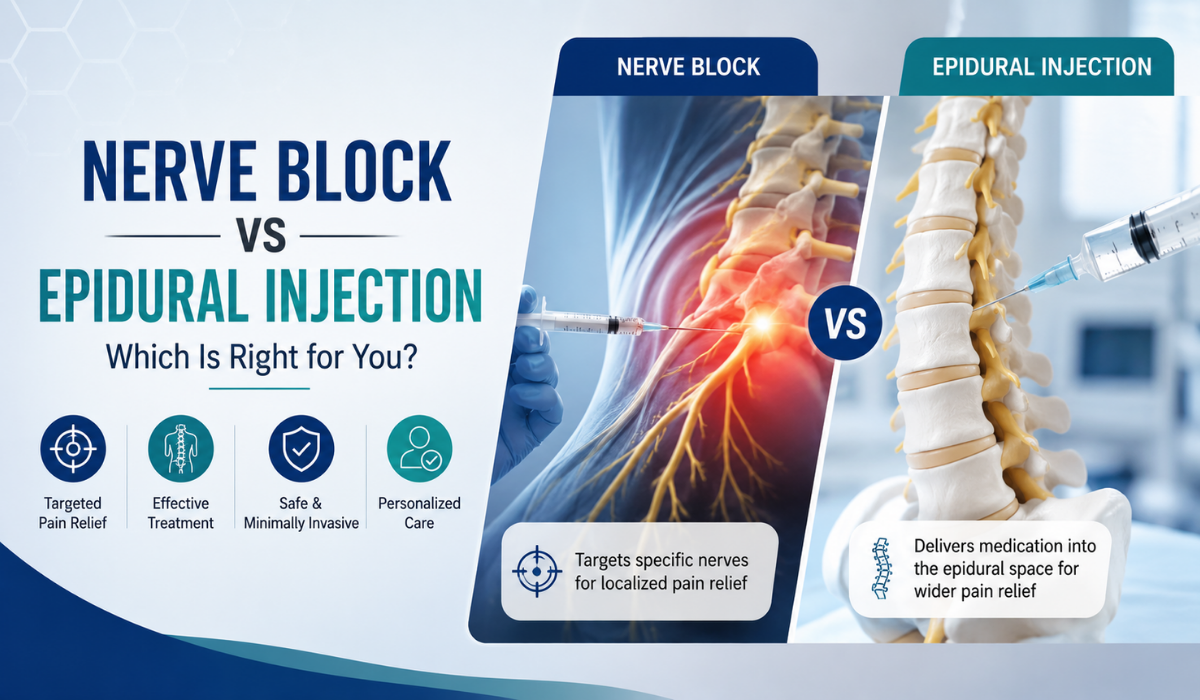
Nerve Block vs Epidural Injection: Which Is Right for You?

Comparison of nerve block and epidural injection procedures for pain management

Quick Answer

An epidural injection delivers steroid medication into the epidural space to calm inflammation around multiple nerve roots — commonly used for sciatica, slip disc, and spinal stenosis. A nerve block targets one specific nerve directly, and is often used both to diagnose the exact source of pain and to treat localized nerve-related pain. The right choice depends on where your pain originates and what your imaging and clinical exam show, which is why an individual assessment by an interventional pain specialist matters more than the label of the procedure.

Quick Summary

  • Epidural injections treat a broader spinal segment; nerve blocks target one specific nerve.
  • Both are minimally invasive, image-guided, outpatient procedures.
  • Epidurals are typically used for disc-related and radicular pain (sciatica, slip disc, stenosis).
  • Nerve blocks are used for localized nerve pain and as a diagnostic tool.
  • Relief from either can last weeks to a few months and varies by patient.
  • Neither procedure is inherently “better” — the right one depends on your diagnosis.
  • Most patients resume normal light activity within 24–48 hours.
  • A qualified interventional pain specialist should confirm suitability through clinical exam and imaging.

Introduction

If your doctor has mentioned an epidural injection or a nerve block for your back, neck, or leg pain, it’s natural to wonder which one actually applies to your situation. Both are well-established, non-surgical interventional pain procedures used across pain management practices, including here at Nexus Pain Management in Ahmedabad. But they are not interchangeable. Understanding what each procedure targets, how it works, and when a pain specialist typically recommends one over the other can help you have a more informed conversation at your next consultation.

What Is an Epidural Injection?

An epidural steroid injection delivers an anti-inflammatory steroid, often combined with a local anesthetic, into the epidural space — the area surrounding the spinal cord and the nerve roots as they exit the spine. By reducing inflammation around irritated nerve roots, an epidural can ease pain that radiates from the lower back into the leg (sciatica) or from the neck into the arm. Common types include interlaminar, transforaminal, and caudal epidural injections, each named for the specific approach used to reach the epidural space.

What Is a Nerve Block?

A nerve block delivers medication — typically a local anesthetic, sometimes combined with a steroid — directly around one specific nerve or a small group of nerves, rather than a broader spinal segment. Nerve blocks serve two purposes: diagnostic, to confirm whether a particular nerve is the true source of pain, and therapeutic, to reduce pain and inflammation at that nerve directly. Selective nerve root blocks, occipital nerve blocks, and stellate ganglion blocks are common examples used in interventional pain practice.

Conditions Each Procedure Typically Treats

AspectEpidural InjectionNerve Block
Target AreaEpidural space around multiple nerve rootsOne specific nerve or nerve cluster
Common ConditionsSciatica, slip disc, spinal stenosis, radiculopathyOccipital neuralgia, post-surgical nerve pain, CRPS, focal neuropathic pain
Primary PurposeReduce inflammation, relieve radiating painDiagnose pain source and/or relieve localized nerve pain
Guidance UsedFluoroscopy (X-ray) guidedFluoroscopy or ultrasound guided
Typical Relief DurationSeveral weeks to a few monthsHours (diagnostic) to weeks/months (therapeutic)
Procedure Time15–30 minutes10–20 minutes

Symptoms That May Point to Either Procedure

  • Pain radiating from the lower back down one or both legs
  • Numbness, tingling, or weakness following a nerve pathway
  • Neck pain radiating into the shoulder or arm
  • Sharp, localized nerve pain triggered by movement or touch
  • Chronic pain following a prior surgery or injury

Causes and Risk Factors

Radicular pain treated with epidurals is most often caused by a herniated or slipped disc, spinal stenosis, or degenerative changes compressing a nerve root. Localized nerve pain treated with nerve blocks can stem from nerve entrapment, post-surgical scarring, trauma, or conditions such as complex regional pain syndrome. Risk factors common to both include prolonged sitting, poor posture, repetitive strain, obesity, and age-related degenerative spine changes.

Diagnosis: How Your Specialist Decides

Choosing between a nerve block and an epidural is a clinical decision, not a patient preference alone. Your interventional pain specialist will review your symptom pattern, physical examination findings, and imaging (MRI or CT) to identify whether pain originates from a broad nerve root compression (favoring an epidural) or a single identifiable nerve (favoring a nerve block). In some cases, a diagnostic nerve block is used first, purely to confirm the exact pain generator before deciding on the next step.

Non-Surgical Treatment Approach

Both procedures fall under non-surgical, interventional pain management — an approach that aims to relieve pain and improve function without surgery. They are typically considered after conservative measures such as physiotherapy, activity modification, and oral medication have provided limited relief, and before surgery is discussed. Many patients combine these injections with a structured rehabilitation plan for longer-term benefit.

Expert Insight

“Patients often ask us which procedure is ‘stronger.’ That’s the wrong question. An epidural and a nerve block are designed for different pain patterns. The real work is in pinpointing exactly where the pain is coming from — that’s what determines the right procedure, not which one sounds more advanced.” — Nexus Pain Interventional Team

Recovery and Rehabilitation

Recovery from both procedures is typically quick. Most patients rest briefly after the injection, are monitored for a short period, and are able to go home the same day. Mild soreness at the injection site for a day or two is common. Specialists usually recommend avoiding strenuous activity for 24 to 48 hours, after which normal daily activity can gradually resume. Pain relief is often not immediate — it may take a few days to a week to notice the full effect, particularly with steroid-based injections.

Expert Insight

“One of the most common mistakes we see is patients expecting instant, permanent relief from a single injection. These procedures are one part of a broader pain management plan, not a standalone cure.” — Nexus Pain Interventional Team

Common Mistakes Patients Make

  1. Assuming both procedures treat the same conditions and asking for one by name without a proper evaluation.
  2. Expecting permanent relief from a single injection rather than viewing it as part of a broader treatment plan.
  3. Skipping the physiotherapy or rehabilitation phase that supports and extends the benefit of the injection.

Myths vs Facts

MythFact
A nerve block is always weaker than an epidural.Effectiveness depends on whether the pain source is localized or spread across a nerve root region, not on the procedure name.
These injections are only used as a last resort before surgery.They are often used earlier in a treatment plan, alongside physiotherapy, once conservative care alone hasn’t given enough relief.
Epidural injections and spinal anesthesia are the same thing.They use similar anatomy but serve very different purposes — one manages chronic pain, the other is for surgical anesthesia.
More injections always mean better results.Response is individual; some patients improve significantly with one injection, while repeat injections beyond a certain point may add limited additional benefit.


Expert Insight

“We always explain the ‘why’ behind the choice of procedure. When patients understand that a nerve block versus an epidural is a targeting decision — not a strength ranking — they make more confident, informed choices about their care.” — Nexus Pain Interventional Team

Questions Patients Forget to Ask

  • How will we confirm this procedure is targeting the actual source of my pain?
  • What should I expect to feel in the first 48 hours after the injection?
  • How many injections might I realistically need, and how will we decide to stop?
  • What non-injection options should run alongside this treatment?
  • At what point would we consider this approach isn’t working and revisit the plan?

Practical Action Plan

  1. Book a consultation with an interventional pain specialist and bring any existing MRI, X-ray, or CT reports.
  2. Ask your specialist to explain, in your specific case, why a nerve block, an epidural, or another approach is being recommended.
  3. Clarify expected timelines: when relief should begin, how long it may last, and what follow-up is planned.
  4. Plan for 24–48 hours of lighter activity after the procedure, and arrange transport if advised.
  5. Pair the procedure with a physiotherapy or rehabilitation plan for longer-term pain management.

Nexus Pain Expert Summary

Both nerve blocks and epidural injections are established, minimally invasive tools in non-surgical pain management. Neither is universally superior — the right choice depends on precisely where your pain originates, confirmed through clinical examination and imaging. At Nexus Pain Management, our approach starts with a comprehensive assessment before recommending either procedure, ensuring the treatment plan matches your specific diagnosis rather than a generic protocol.

Key Takeaways

  • Epidural injections target the broader epidural space around nerve roots; nerve blocks target one specific nerve.
  • Epidurals are typically used for sciatica, slip disc, and spinal stenosis-related pain.
  • Nerve blocks are used for localized nerve pain and to diagnose the exact pain source.
  • Both are outpatient, image-guided, and generally allow same-day discharge.
  • Relief duration varies by patient and by whether the block is diagnostic or therapeutic.
  • The decision should be made by a specialist after clinical exam and imaging — not chosen by the patient alone.
  • Combining either procedure with physiotherapy typically supports longer-lasting results.

How Nexus Pain Can Help

Nexus Pain Management provides comprehensive pain assessment and evidence-based, non-surgical treatment planning for patients across Ahmedabad. Our interventional pain specialists use image-guided techniques — including epidural injections and nerve blocks — as part of a personalized treatment plan that also considers rehabilitation guidance and long-term pain management strategies. Every recommendation is based on individual clinical evaluation rather than a one-size-fits-all protocol, with the goal of helping patients understand their options and make informed decisions about their care.

FAQ Section

1. Is a nerve block the same as an epidural injection?

No. Both are injection-based pain treatments, but an epidural places medication into the epidural space surrounding multiple nerve roots along the spine, while a nerve block targets one specific nerve or a small nerve cluster. They serve overlapping but distinct purposes.

2. Which is more effective, a nerve block or an epidural?

Neither is universally “better.” Epidurals tend to work well for broad radicular pain from disc herniation or spinal stenosis affecting a spinal segment. Nerve blocks are often more effective when pain is traced to one identifiable nerve, such as occipital neuralgia or post-surgical nerve pain.

3. How long does pain relief from a nerve block last compared to an epidural?

Diagnostic nerve blocks with local anesthetic may relieve pain for hours; therapeutic blocks with steroid can last weeks to months. Epidural steroid injections typically provide relief for several weeks up to a few months, and effects vary by patient and underlying condition.

4. Can nerve blocks and epidural injections be used together in a treatment plan?

Yes. A pain specialist may use a diagnostic nerve block first to confirm the exact pain source, then follow with an epidural or a targeted procedure such as radiofrequency ablation based on the response.

5. Are nerve blocks or epidural injections painful?

Both procedures involve a brief needle insertion under local anesthetic and image guidance, so most patients report mild discomfort rather than significant pain. Some pressure or a brief stinging sensation during the injection is common.

6. How many injections are typically needed?

This depends on the condition and response. Some patients experience meaningful relief from a single injection, while others require a short series spaced weeks apart, always guided by how the body responds rather than a fixed number.

7. What conditions are epidural injections used for?

Epidural steroid injections are commonly used for sciatica, herniated or slipped disc, spinal stenosis, and radiculopathy where inflammation around a nerve root is contributing to pain radiating into the arm or leg.

8. What conditions are nerve blocks used for?

Nerve blocks are used for localized nerve pain such as occipital neuralgia, intercostal nerve pain, complex regional pain syndrome, post-surgical nerve pain, and as a diagnostic tool to confirm a specific pain generator.

9. Is one procedure safer than the other?

Both are considered safe, minimally invasive, image-guided procedures when performed by a trained interventional pain specialist. Every injection carries some risk, including infection, bleeding, or temporary soreness, which your specialist will review with you beforehand.

10. Do I need surgery if injections don’t work?

Not necessarily. If injections provide limited or short-lived relief, your specialist may recommend additional non-surgical options such as radiofrequency ablation, physiotherapy-led rehabilitation, or a revised treatment plan before surgery is even discussed.

11. How soon can I return to work after a nerve block or epidural injection?

Most patients resume light daily activities the same day or the next day, though your specialist may recommend avoiding strenuous activity for 24 to 48 hours depending on the injection site and your individual recovery.

12. Can I get a nerve block or epidural injection in Ahmedabad without traveling elsewhere?

Yes, image-guided nerve blocks and epidural injections are available locally through interventional pain management clinics in Ahmedabad, so patients do not need to travel to other cities for these procedures.


Categories Neuropathic Pain

Best Neuropathic Pain Treatment in Ahmedabad

Neuropathic Pain Treatment in Ahmedabad

Quick Answer

Neuropathic pain comes from damaged or malfunctioning nerves rather than tissue injury, and it typically responds best to a combined approach: an accurate diagnosis, targeted medication, physical therapy, lifestyle adjustments, and — when conservative care isn’t enough — interventional procedures such as nerve blocks or radiofrequency ablation. At Nexus Advanced Pain Management in Ahmedabad, treatment begins with identifying the underlying cause, whether that’s diabetic neuropathy, nerve compression, or post-shingles nerve pain, before building a personalized, non-surgical plan.

Quick Summary

  • Neuropathic pain arises from nerve damage or dysfunction, not from an injury to skin, muscle, or bone alone
  • Diabetes, spinal nerve compression, shingles, and post-surgical nerve injury are common causes seen in Ahmedabad patients
  • Diagnosis usually involves a clinical exam plus nerve conduction studies or imaging when needed
  • First-line care combines medication with physical therapy and lifestyle changes
  • Interventional procedures like nerve blocks or radiofrequency ablation are considered for pain that doesn’t respond to conservative treatment
  • Improvement is usually gradual, over weeks to months, rather than immediate
  • Untreated nerve pain can worsen over time and affect sleep, mood, and daily function
  • A personalized plan based on the underlying cause works better than a generic approach

Introduction

Neuropathic pain feels different from the pain of a sprained ankle or a pulled muscle. Patients often describe it as burning, electric-shock-like, tingling, or a persistent “pins and needles” sensation that doesn’t go away with rest. This happens because the pain originates in the nervous system itself — the nerves are damaged, compressed, or misfiring — rather than because tissue somewhere is injured.

In a city like Ahmedabad, where lifestyle-related conditions such as type 2 diabetes are common, diabetic peripheral neuropathy is one of the most frequent reasons patients seek nerve pain treatment. Others arrive after a bout of shingles, a spinal disc issue pressing on a nerve root, or a surgery that inadvertently affected a nearby nerve. Regardless of the cause, the good news is that most neuropathic pain can be meaningfully improved with the right combination of diagnosis, medication, and, when necessary, minimally invasive procedures.

Symptoms of Neuropathic Pain

Neuropathic pain has a recognizable character that helps distinguish it from other types of pain:

  • Burning or scalding sensations, often worse at night
  • Sharp, electric-shock-like jolts
  • Tingling, prickling, or “pins and needles” feelings
  • Numbness alternating with heightened sensitivity
  • Pain triggered by light touch that normally wouldn’t hurt (allodynia)
  • Weakness or reduced coordination in the affected area, in more advanced cases

Causes of Neuropathic Pain

Nerve pain can originate from several distinct sources, and identifying the right one shapes the entire treatment plan:

  • Diabetic peripheral neuropathy, from prolonged high blood sugar damaging small nerve fibers
  • Postherpetic neuralgia, nerve pain that persists after a shingles infection
  • Nerve compression from a herniated or slipped disc pressing on a spinal nerve root
  • Post-surgical or post-traumatic nerve injury
  • Trigeminal neuralgia, affecting the facial nerve
  • Chronic conditions such as complex regional pain syndrome (CRPS)

Risk Factors

  • Long-standing or poorly controlled diabetes
  • Age above 50, when nerve regeneration slows
  • History of shingles or significant viral infections
  • Previous spinal surgery, disc disease, or physical trauma
  • Prolonged repetitive strain or occupational nerve compression
  • Certain nutritional deficiencies, particularly vitamin B12

Diagnosis

An accurate diagnosis is the foundation of effective treatment, since nerve pain from diabetes is managed differently than nerve pain from a compressed spinal nerve. A typical evaluation at a pain management clinic includes a detailed clinical history and physical examination, a review of blood sugar control (HbA1c) where diabetes is suspected, and, when the picture isn’t clear, a nerve conduction study (NCS) or electromyography (EMG) to assess how well the nerves are conducting signals. Imaging such as an MRI may be recommended if spinal nerve compression is suspected.

Treatment Options for Neuropathic Pain

There is no single “best” treatment for every patient — the right approach depends on the cause, severity, and how the pain has responded to care so far. Options generally fall into three tiers, moving from conservative to more targeted interventions as needed.

Non-Surgical and Conservative Treatment

  • Neuropathic-pain-specific medications such as gabapentin, pregabalin, or duloxetine, which calm overactive nerve signaling
  • Topical treatments like capsaicin or lidocaine patches for localized pain
  • Physical therapy to maintain mobility, strength, and nerve gliding
  • Blood sugar optimization for patients with diabetic neuropathy
  • Lifestyle modification, including activity pacing and sleep hygiene, since poor sleep tends to amplify nerve pain

Interventional Procedures

When conservative measures don’t provide enough relief, interventional pain specialists can offer more targeted options:

  • Nerve blocks, which deliver anti-inflammatory medication directly to the affected nerve
  • Epidural steroid injections, for nerve pain caused by spinal nerve root compression
  • Radiofrequency ablation (RFA), which uses controlled heat to interrupt pain signals from a specific nerve for an extended period
  • Spinal cord stimulation, considered for select cases of chronic, treatment-resistant neuropathic pain

Prevention Tips

  • Keep blood sugar levels within the target range recommended by your physician
  • Address vitamin B12 or other nutritional deficiencies promptly if identified
  • Seek early treatment for shingles to reduce the risk of postherpetic neuralgia
  • Avoid prolonged postures or repetitive movements that compress nerves
  • Don’t ignore early tingling or numbness — early evaluation prevents progression

Recovery and Rehabilitation

Recovery from neuropathic pain is typically gradual. Medication adjustments often take two to six weeks to show their full effect, since doses are usually increased slowly to balance relief against side effects. Interventional procedures like nerve blocks or radiofrequency ablation can offer relief within days for some patients, though results vary by cause and individual response. Physical therapy and lifestyle changes work alongside these treatments over the following months to support long-term function and reduce the likelihood of flare-ups.

Comparison: Conservative Care vs. Interventional Procedures

AspectConservative Care (Medication, PT)Interventional Procedures (Nerve Block, RFA)
Best suited forMild to moderate nerve pain, early-stage casesPain not controlled by medication alone
InvasivenessNon-invasiveMinimally invasive, outpatient
Typical time to reliefSeveral weeksDays to a few weeks, procedure-dependent
Duration of effectOngoing, requires ongoing useWeeks to several months, depending on procedure
Recovery timeNone requiredUsually same-day, with brief rest advised

Expert Insights

Expert Insight 1: Diagnosis Before Medication

Prescribing a nerve pain medication without first identifying the underlying cause is one of the most common gaps we see. A patient with undiagnosed diabetic neuropathy who only takes painkillers may feel some relief while the underlying nerve damage continues to progress. Practical takeaway: always ask what is causing the nerve pain, not just how to numb it.


Expert Insight 2: Sleep and Nerve Pain Are Linked

Poor sleep lowers pain threshold and can make neuropathic pain feel significantly worse the next day. Real-life scenario: patients who improve their sleep routine alongside medication often report better daytime pain control than medication changes alone would predict. Practical takeaway: sleep hygiene is part of the treatment plan, not a side note.


Expert Insight 3: Interventional Care Isn’t a Last Resort

Many patients delay procedures like nerve blocks or radiofrequency ablation, assuming they’re only for severe or failed cases. In reality, these are standard, well-established options once conservative care plateaus — waiting longer often means more months of unnecessary pain. Practical takeaway: ask your specialist when, not just whether, an interventional option makes sense for you.

Common Mistakes Patients Make

  1. Self-medicating with over-the-counter painkillers for weeks without a proper diagnosis, which can mask progression of the underlying cause
  2. Stopping prescribed nerve pain medication too early because relief feels slow, when these medications typically need several weeks at the right dose to work
  3. Ignoring early tingling or numbness as “nothing serious,” which delays treatment until the pain becomes harder to manage

Myths vs. Facts

MythFact
Nerve pain always means surgery is neededMost neuropathic pain is managed successfully with medication, physical therapy, and minimally invasive procedures; surgery is rarely the first option
If painkillers don’t work, nothing will helpNeuropathic pain often needs nerve-specific medications or interventional procedures, not standard painkillers, which are not designed for this type of pain
Nerve damage can never improveWhile some nerve damage is permanent, pain signaling can often be significantly reduced even when the underlying nerve isn’t fully restored
Only elderly people get neuropathic painNeuropathic pain affects working-age adults too, especially with diabetes, disc issues, or post-surgical nerve involvement

Questions Patients Forget to Ask

  • What is actually causing my nerve pain, and how was that determined?
  • How long should I expect to be on medication, and what’s the plan if it doesn’t fully work?
  • What interventional options exist if conservative treatment plateaus?
  • Are there lifestyle changes that would meaningfully affect my specific type of nerve pain?
  • What signs would mean I should come back sooner rather than waiting for my next appointment?

Practical Action Plan

  1. Track your symptoms for one to two weeks — location, triggers, and pattern — before your first consultation
  2. Get a clinical evaluation to identify the underlying cause rather than starting with generic painkillers
  3. Follow the prescribed medication schedule for the full recommended period before judging its effectiveness
  4. Incorporate physical therapy or guided movement, even on lower-pain days
  5. Discuss interventional options with your specialist if pain persists beyond six to eight weeks of conservative care
  6. Schedule regular follow-ups to adjust the plan as your response to treatment becomes clearer

Nexus Pain Expert Summary Box

Nexus Advanced Pain Management — Expert Summary

Neuropathic pain is best approached as a diagnostic problem first and a treatment problem second. Once the underlying cause — diabetic, compressive, post-viral, or post-surgical — is clearly identified, a structured plan combining medication, physical therapy, and, where appropriate, interventional procedures typically offers meaningful, lasting relief. Patients in Ahmedabad don’t need to choose between “living with it” and surgery; evidence-based, non-surgical care covers the vast majority of cases.

Key Takeaways

  • Neuropathic pain originates from nerve damage or dysfunction, with a distinct burning, tingling, or electric-shock quality
  • Diabetes, spinal nerve compression, and post-shingles nerve involvement are common local causes
  • An accurate diagnosis, including nerve conduction studies where needed, guides effective treatment
  • Most cases respond to medication, physical therapy, and lifestyle changes as first-line care
  • Interventional procedures like nerve blocks and radiofrequency ablation help when conservative care isn’t enough
  • Relief is typically gradual — consistency with the treatment plan matters more than any single step
  • Delaying evaluation allows nerve pain to progress and become harder to manage
  • A cause-specific, personalized plan outperforms a one-size-fits-all approach

FAQ Section

What is neuropathic pain?

Neuropathic pain is pain caused by damage or dysfunction in the nervous system itself, rather than by injury to skin, muscle, or bone. It often feels like burning, tingling, or electric shocks.

What are the most common causes of neuropathic pain in Ahmedabad patients?

Diabetic peripheral neuropathy, nerve compression from spinal disc issues, postherpetic neuralgia after shingles, and post-surgical nerve injury are among the most frequently seen causes.

How is neuropathic pain diagnosed?

Diagnosis typically involves a clinical history and physical exam, blood sugar testing when diabetes is suspected, and, if needed, a nerve conduction study, electromyography, or MRI.

Can neuropathic pain be cured completely?

Some causes can be fully resolved, while others are managed long-term. Many patients achieve significant, lasting reduction in pain even when full reversal of nerve damage isn’t possible.

What medications are commonly used for nerve pain?

Nerve-specific medications such as gabapentin, pregabalin, and duloxetine are commonly used, since standard painkillers are generally less effective for neuropathic pain.

Is surgery required for neuropathic pain?

Surgery is rarely the first option. Most patients respond well to medication, physical therapy, and minimally invasive interventional procedures.

What is radiofrequency ablation, and when is it used?

Radiofrequency ablation uses controlled heat to interrupt pain signals from a specific nerve. It’s typically considered when conservative treatment hasn’t provided sufficient relief.

How long does it take for nerve pain treatment to work?

Medication adjustments often take two to six weeks to show full effect. Interventional procedures can offer relief within days to a few weeks, depending on the cause and procedure.

Is diabetic neuropathy reversible?

Nerve damage from diabetes is often only partially reversible, but pain and symptom progression can usually be significantly reduced with good blood sugar control and targeted treatment.

What happens if neuropathic pain is left untreated?

Untreated nerve pain can worsen over time, disrupt sleep, affect mood, and become progressively harder to manage, which is why early evaluation is recommended.

When should I see a pain specialist for nerve pain?

If tingling, numbness, or burning pain persists beyond a couple of weeks, or if over-the-counter measures aren’t helping, it’s a reasonable time to seek a specialist evaluation.

Does Nexus Advanced Pain Management offer non-surgical treatment for nerve pain in Ahmedabad?

Yes. Nexus Advanced Pain Management focuses on evidence-based, non-surgical care for neuropathic pain, including medication management, physical therapy guidance, and interventional procedures when appropriate.

Categories Neuropathic Pain

What Is Neuropathic Pain? Understanding Nerve-Related Pain Conditions

Pain is a universal experience, yet it manifests in various forms, each with its own causes and treatments. Among these, neuropathic pain stands out as a complex and often debilitating condition that arises from damage or dysfunction within the nervous system. Understanding neuropathic pain requires delving into its causes, symptoms, and treatment options, as well as recognising its impact on individuals’ lives.

What Is Neuropathic Pain?

Neuropathic pain is a type of chronic pain that occurs due to injury or malfunction in the nerves themselves. Unlike nociceptive pain, which results from external injury or tissue damage (such as a cut or a broken bone), neuropathic pain is directly related to the nervous system’s pathways. It can arise from damage to the peripheral nerves, spinal cord, or brain.

Causes of Neuropathic Pain

Neuropathic pain can stem from a wide range of conditions and situations, including:

  1. Diabetes: Diabetic neuropathy is a common complication of diabetes, often affecting the legs and feet. High blood sugar levels over time can damage nerves and lead to symptoms like burning or tingling sensations.
  2. Injuries: Trauma to the nerves, spinal cord, or brain from accidents or surgeries can result in persistent neuropathic pain.
  3. Infections: Certain infections, such as shingles (caused by the varicella-zoster virus), can cause postherpetic neuralgia, a severe and long-lasting form of nerve pain.
  4. Autoimmune Diseases: Conditions like multiple sclerosis or lupus may lead to nerve damage and neuropathic pain.
  5. Cancer and Chemotherapy: Tumours pressing on nerves or the side effects of chemotherapy drugs can induce nerve-related pain.
  6. Other Neurological Disorders: Diseases such as Parkinson’s disease, stroke, or trigeminal neuralgia may contribute to neuropathic pain.
  7. Idiopathic Causes: In some cases, the exact cause of neuropathic pain remains unknown.

Symptoms of Neuropathic Pain

Neuropathic pain can manifest in various ways, often with symptoms that are persistent and disruptive to daily life. These may include:

  • Burning or shooting pain
  • Tingling or numbness
  • Increased sensitivity to touch (allodynia)
  • Electric shock-like sensations
  • Spontaneous pain without apparent triggers
  • Difficulty sleeping or performing routine activities due to pain intensity

The severity of these symptoms can vary widely between individuals, with some experiencing intermittent discomfort and others enduring constant, debilitating pain.

Diagnosing Neuropathic Pain

Diagnosing neuropathic pain often requires a comprehensive medical evaluation. Physicians typically assess:

  1. Medical History: Reviewing past illnesses, injuries, or conditions that may contribute to nerve damage.
  2. Physical Examination: Checking for areas of tenderness, numbness, or altered sensation.
  3. Diagnostic Tests: Tests like nerve conduction studies, electromyography (EMG), or imaging scans (MRI or CT) may be used to identify nerve abnormalities or underlying conditions.
  4. Pain Questionnaires: Patients may be asked to describe their pain using specific scales or tools to assess its nature and intensity.

Treatment Options for Neuropathic Pain

Managing neuropathic pain can be challenging, as it often requires a multimodal approach tailored to the individual’s needs. Treatment options include:

  1. Medications:
    • Anticonvulsants (e.g., gabapentin, pregabalin): These drugs stabilise overactive nerve signals.
    • Antidepressants (e.g., amitriptyline, duloxetine): These alter chemical pathways involved in pain perception.
    • Topical Treatments: Lidocaine patches or capsaicin creams may provide localised relief.
    • Pain Relievers: Opioids are sometimes prescribed, though their use is typically limited due to dependency risks.
  2. Physical Therapy: Gentle exercises and therapies can improve mobility and reduce pain in some cases.
  3. Interventional Procedures:
    • Nerve Blocks: Injections that interrupt pain signals.
    • Spinal Cord Stimulation: Devices implanted near the spinal cord to modify pain signals.
    • Intrathecal Pumps: Delivering medication directly to the spinal fluid for targeted relief.
  4. Lifestyle Modifications:
    • Maintaining blood sugar levels in diabetes.
    • Regular exercise to improve nerve function and overall health.
    • Stress management techniques like yoga or meditation.
  5. Psychological Support: Chronic pain can take a toll on mental health. Cognitive-behavioural therapy (CBT) and support groups can help individuals cope with the emotional aspects of neuropathic pain.

Living with Neuropathic Pain

Chronic neuropathic pain can significantly impact an individual’s quality of life, affecting their physical, emotional, and social well-being. It’s crucial for patients to work closely with healthcare providers to develop a personalised pain management plan. Education about the condition and open communication about its effects can empower patients to regain a sense of control.

Neuropathic pain is a challenging condition, but with proper diagnosis and treatment, many individuals can achieve significant relief and improve their quality of life. Nexus Advanced Pain Management, a leading facility dedicated to treating chronic pain conditions, offers cutting-edge solutions tailored to individual needs. Whether it’s through innovative interventions, compassionate care, or personalised treatment plans, Nexus Advanced Pain Management is committed to helping patients reclaim their lives from the burden of neuropathic pain.