
Categories Back Pain

Best Sleeping Positions for Back Pain Relief

Best Sleeping Poistions for Back Pain Relief

Quick Answer

• The best sleeping positions for back pain relief are side sleeping with a pillow between the knees, or back sleeping with a pillow under the knees.

• Both positions keep the spine in a neutral, aligned position and reduce pressure on the lower back.

• Stomach sleeping is generally the least supportive position and can strain the neck and lower spine.

Quick Summary

  • Side sleeping with a pillow between the knees keeps the hips, pelvis, and spine aligned.
  • Back sleeping with a small pillow under the knees reduces pressure on the lumbar spine.
  • Stomach sleeping is the least recommended position for most people with back pain.
  • Pillow height and mattress firmness matter as much as the position itself.
  • The fetal position can help open the space between vertebrae for people with a herniated disc.
  • It typically takes one to two weeks of consistent practice to adjust to a new sleep position.
  • Morning back pain that does not ease with position changes may need a professional evaluation.

Introduction

Most people spend close to a third of their life asleep, yet very few think about how their sleeping position affects their spine. For someone already managing back pain, the wrong posture at night can undo an entire day of careful movement, stretching, and rest. The good news is that sleep position is one of the simplest and most controllable factors in reducing back pain, and adjusting it does not require expensive equipment or medical intervention in most cases.

This guide walks through the sleeping positions that are best for back pain relief, the ones to avoid, why sleep posture matters, and when ongoing back pain during sleep is a sign that it is time to speak with a pain management specialist.

How Sleep Position Affects Back Pain

The spine has natural curves at the neck, mid-back, and lower back. When a person lies down in a position that does not support these curves, muscles around the spine work overtime to compensate, and the discs and joints between vertebrae come under uneven pressure. Over an eight-hour night, this uneven loading can leave the lower back stiff, sore, or noticeably worse by morning.

A supportive sleep position does the opposite: it keeps the spine close to its natural, neutral alignment, allows the muscles around it to relax fully, and reduces the load placed on the discs and facet joints. This is why the right combination of position, pillow placement, and mattress support often brings a noticeable improvement within one to two weeks.

The Best Sleeping Positions for Back Pain Relief

1. Side Sleeping With a Pillow Between the Knees

Lying on the side with the knees slightly bent and a firm pillow placed between them is one of the most consistently recommended positions for lower back pain. The pillow keeps the top leg from pulling the pelvis and lower spine out of alignment, which reduces strain on the lower back and hips through the night.

2. Back Sleeping With a Pillow Under the Knees

Sleeping on the back with a small pillow or rolled towel placed under the knees helps maintain the natural curve of the lower spine and takes pressure off the lumbar discs. This position distributes body weight evenly across the widest surface of the body, which many people with general lower back stiffness find comfortable.

3. Fetal Position for Disc-Related Pain

For people with a herniated or bulging disc, curling gently onto one side with the knees drawn toward the chest can open up the space between vertebrae and ease pressure on a compressed nerve. Switching sides periodically through the night helps avoid one-sided muscle tightness.

4. Slightly Reclined Position for Certain Conditions

For some patients, particularly those recovering from spinal surgery or managing spinal stenosis, sleeping in a slightly reclined position, such as in an adjustable bed or with extra pillows under the upper back, can reduce pressure on the lower spine. This position should generally be guided by a treating specialist rather than adopted on its own.

Sleeping Position to Avoid: Stomach Sleeping

Stomach sleeping is the position most likely to aggravate back and neck pain. It flattens the natural curve of the lower spine and forces the neck to stay turned to one side for hours, which strains both the cervical and lumbar spine. Anyone who currently sleeps on their stomach and struggles to change positions can place a thin pillow under the pelvis and lower abdomen to reduce the arch in the lower back while gradually transitioning to side or back sleeping.

Symptoms That Suggest Sleep Position Is Contributing to Back Pain

  • Back pain that feels worse first thing in the morning and eases within an hour of moving around.
  • Stiffness concentrated on one side of the lower back or hip.
  • Tingling or numbness in the legs that appears after lying in one position for a long time.
  • Pain that improves noticeably on nights spent away from a usual bed, such as while travelling.

Causes and Risk Factors

Sleep-related back pain is rarely caused by position alone. It usually develops from a combination of factors that make the spine more sensitive to how it is loaded overnight.

  • An unsupportive or sagging mattress that no longer holds the spine in alignment.
  • Long hours of sitting during the day that leave hip and back muscles tight before bed.
  • Existing conditions such as a herniated disc, sciatica, spinal stenosis, or facet joint arthritis.
  • Excess strain from stomach sleeping or sleeping without any knee or lumbar support.
  • Weak core and back muscles that are less able to stabilise the spine during sleep.

When to See a Specialist

Adjusting sleep position and pillow support resolves mild, mechanical back pain for many people. However, certain signs suggest the pain needs a proper clinical evaluation rather than home adjustments alone.

  • Pain that radiates down one or both legs, especially with numbness or tingling.
  • Back pain that wakes you from sleep or is unrelieved by any position.
  • Pain lasting more than four to six weeks despite changes in sleep posture and mattress support.
  • Any loss of bladder or bowel control, which requires immediate medical attention.

A pain management specialist can assess whether the pain is coming from a disc, joint, nerve, or muscular source, and confirm whether a change in sleep habits alone is enough or whether further treatment is needed.

Non-Surgical Treatment Options

For most patients, back pain linked to sleep posture and general spinal strain responds well to non-surgical, evidence-based care rather than surgery. Options a pain management team may consider include:

  • Targeted physiotherapy and core-strengthening exercises to improve spinal support.
  • Postural correction and ergonomic guidance for both daytime and sleep positions.
  • Interventional options such as epidural injections or nerve blocks for nerve-related pain.
  • Radiofrequency ablation for chronic facet joint pain that has not responded to conservative care.
  • Structured lifestyle and weight management guidance where it is contributing to spinal load.

Prevention Tips for Better Sleep Posture

  • Choose a medium-firm mattress that supports the spine without being too soft or too hard.
  • Replace pillows that have flattened or lost their shape, typically every twelve to eighteen months.
  • Keep a consistent sleep position for most of the night rather than shifting constantly.
  • Do a few minutes of gentle stretching before bed to release tension in the hips and lower back.
  • Avoid falling asleep on the couch in a slouched or twisted position.

Recovery and Adjustment Period

Switching to a more supportive sleep position rarely feels comfortable on the first night. Most people need one to two weeks of consistent practice, along with correctly placed pillows, before the new position feels natural. Setting reminders to check position before falling asleep, and using a body pillow to prevent rolling onto the stomach, can make the transition easier. If pain increases rather than eases after two to three weeks of a genuine, consistent change, it is a reasonable point to seek a professional opinion.

Comparison of Sleeping Positions for Back Pain

PositionEffect on SpineBest ForWatch-Outs
Side with pillow between kneesKeeps hips and spine alignedGeneral lower back pain, pregnancy-related painUse a firm enough pillow to fill the gap between knees
Back with pillow under kneesMaintains natural lumbar curveGeneral stiffness, even weight distributionNot ideal for those with sleep apnoea or snoring
Fetal positionOpens space between vertebraeHerniated or bulging disc painAlternate sides to avoid one-sided tightness
Slightly reclinedReduces lumbar loadPost-surgical recovery, spinal stenosisBest used under specialist guidance
Stomach sleepingFlattens spinal curve, strains neckGenerally not recommendedTransition out gradually rather than all at once

Expert Insight

Expert Insight 1: Pillow Placement Matters as Much as Position

• A side sleeper without a knee pillow can still let the top leg roll forward, twisting the lower spine even in an otherwise good position.

• Practical takeaway: place the pillow high enough between the knees that the hips stay level.


Expert Insight 2: Mattress Age Is an Overlooked Factor

• A mattress that has sagged in the middle can undo the benefit of an otherwise correct sleep position.

• Practical takeaway: if a mattress is more than seven to eight years old and shows visible sagging, it is worth having it assessed or replaced.


Expert Insight 3: One Bad Night Is Not a Diagnosis

• Occasional stiffness after an unusual sleeping arrangement, such as travel, is common and not usually a sign of a serious problem.

• Practical takeaway: track whether the pain is a one-off or a pattern over one to two weeks before assuming a deeper issue.

Common Mistakes

  1. Using a pillow that is too soft to keep the knees, hips, and spine properly separated and aligned.
  2. Trying to force a completely new sleep position overnight instead of transitioning gradually.
  3. Ignoring persistent morning pain for months instead of seeking an evaluation after four to six weeks.

Myths vs Facts

MythFact
A firmer mattress is always better for back pain.A medium-firm mattress that supports the spine’s natural curve is generally more effective than an extremely firm one.
Back sleeping is bad for everyone with back pain.Back sleeping with knee support works well for many people; it depends on the underlying cause of the pain.
Sleeping position alone can fix any back pain.Position helps with mechanical, posture-related pain but does not replace treatment for disc, nerve, or joint conditions.
You should sleep in whatever position feels easiest to fall asleep in.The easiest position to fall asleep in is not always the one that protects the spine through the whole night.

Questions Patients Forget to Ask

  • Could my mattress or pillow be contributing to my pain, not just my sleep position?
  • Is my pain more likely to be coming from a disc, a joint, or a muscle?
  • Are there specific stretches I should do before bed for my particular type of back pain?
  • At what point should I stop trying home adjustments and come in for an evaluation?

Practical Action Plan

  1. Identify your current default sleep position and note where morning pain is concentrated.
  2. Switch to side sleeping with a knee pillow or back sleeping with a pillow under the knees.
  3. Check your mattress and pillow for sagging or flattening, and replace if needed.
  4. Track your pain for two weeks after the change to see if it is improving, unchanged, or worsening.
  5. If pain persists, radiates, or disrupts sleep after this period, book an evaluation with a pain management specialist.

Nexus Pain Expert Summary 

• Side sleeping with a knee pillow or back sleeping with a pillow under the knees are the most supportive positions for most people with back pain.

• Stomach sleeping should generally be avoided or transitioned out of gradually.

• Give a new sleep position one to two weeks before judging its effect, and seek a professional evaluation if pain persists, radiates, or disrupts sleep.

How Nexus Pain Can Help

For back pain that does not improve with sleep posture changes and basic home care, Nexus Pain Management offers a structured, evidence-based approach. This includes a comprehensive pain assessment to identify whether the source is a disc, joint, nerve, or muscular in nature, followed by a personalised, non-surgical treatment plan. Depending on the assessment, this may involve targeted rehabilitation guidance, interventional pain procedures, or long-term pain management strategies designed around each patient’s daily routine, including practical, sustainable lifestyle and sleep posture modifications.

Key Takeaways

  • Sleep posture directly affects spinal alignment and how rested the back feels each morning.
  • Side sleeping with a knee pillow and back sleeping with a knee pillow are the two most supportive options.
  • Stomach sleeping places the most strain on the neck and lower back.
  • Mattress and pillow condition matter as much as the position itself.
  • Give any new sleep position one to two weeks before evaluating its effect.
  • Radiating pain, numbness, or pain lasting beyond four to six weeks warrants a specialist evaluation.

Frequently Asked Questions

  1. What is the best sleeping position for back pain?

For most people, side sleeping with a pillow between the knees or back sleeping with a pillow under the knees provides the most spinal support.

  1. Is it bad to sleep on your stomach if you have back pain?

Stomach sleeping generally flattens the lower spine’s natural curve and strains the neck, so it is usually the least recommended position for back pain.

  1. How long does it take to adjust to a new sleeping position?

Most people need about one to two weeks of consistent practice before a new sleep position feels natural and comfortable.

  1. What is the best sleeping position for sciatica?

Many people with sciatica find relief in the fetal position on the side that is not affected, or back sleeping with a pillow under the knees.

  1. Should I sleep on a firm or soft mattress for back pain?

A medium-firm mattress that supports the spine’s natural curve is generally recommended over one that is extremely soft or extremely hard.

  1. Can a pillow really make a difference to back pain?

Yes. A pillow placed between the knees or under the knees helps keep the hips and spine aligned, which reduces strain through the night.

  1. Why does my back hurt more in the morning than during the day?

This often happens when a sleep position places uneven pressure on the spine for several hours, and it usually eases once movement resumes.

  1. Is it normal for back pain to worsen while traveling or sleeping away from home?

Yes, an unfamiliar mattress or pillow can temporarily disrupt spinal support, though this is usually short-lived and not a sign of a new problem.

  1. Can sleeping position alone cure chronic back pain?

Sleeping position can meaningfully reduce mechanical, posture-related pain, but underlying conditions such as a disc or nerve issue usually need a broader treatment plan.

  1. When should I see a pain specialist about back pain during sleep?

If pain radiates down a leg, includes numbness, wakes you from sleep, or lasts beyond four to six weeks despite position changes, it is time for an evaluation.

  1. Are adjustable beds helpful for back pain?

A slightly reclined position can help some patients, particularly those recovering from surgery or managing spinal stenosis, but this is best guided by a specialist.

  1. Where can I get a professional evaluation for back pain in Ahmedabad?

Nexus Pain Management in Ahmedabad offers comprehensive assessments and evidence-based, non-surgical treatment plans for back pain that does not improve with home adjustments.

 

Categories Back Pain

Degenerative Disc Disease: Symptoms, Stages & Treatment Options in Ahmedabad

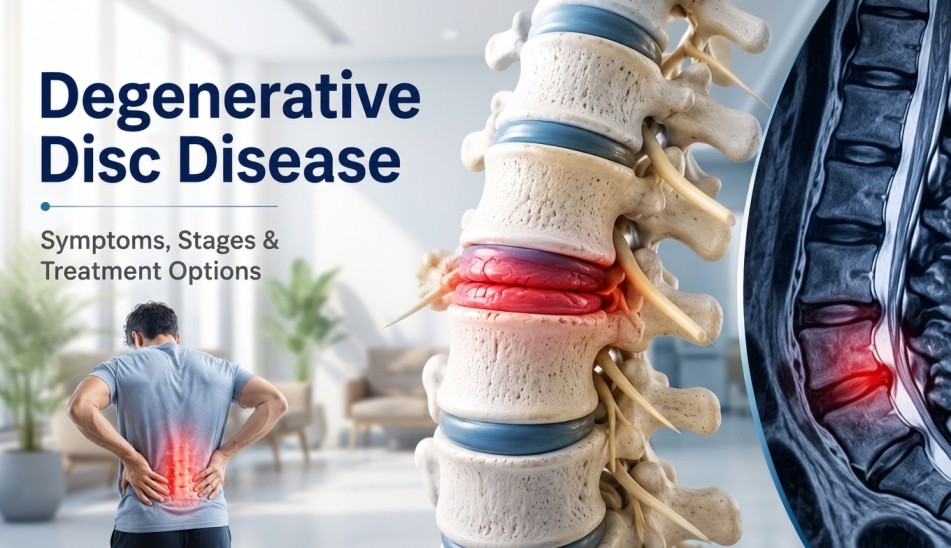
Degenerative Disc Disease symptoms stages and non-surgical treatment options with spine MRI and lumbar disc degeneration


QUICK ANSWER: What Is Degenerative Disc Disease?

Degenerative Disc Disease (DDD) happens when the discs between the bones of your spine gradually lose their strength, flexibility, and cushioning over time. As these discs wear down, they can cause back pain, stiffness, and reduced mobility.
Despite the name, DDD is not actually a disease. It is a common age-related change that may develop faster due to factors such as injury, lifestyle habits, or genetics.
The good news is that most people can manage DDD successfully without surgery through personalized treatment options such as physical therapy, interventional pain procedures, and regenerative medicine.


QUICK SUMMARY — KEY FACTS

• Degenerative Disc Disease affects the cushioning discs between spinal vertebrae
• Common in adults over 40 but can occur earlier due to injury or lifestyle factors
• Symptoms include chronic back/neck pain, stiffness, numbness, and leg pain (sciatica)
• DDD progresses through 4 identifiable stages — early identification improves outcomes
• Most patients respond well to non-surgical treatment: physiotherapy, injections, RFA, PRP
• Surgery is rarely necessary and is considered only when conservative treatments fail
• Lifestyle changes — posture correction, weight management, and exercise — play a critical role
• Nexus Pain Clinic in Ahmedabad offers comprehensive, personalized DDD management plans


When Your Spine’s Shock Absorbers Wear Out

Imagine carrying a 10-kg bag on your back, every single day, for 40 years. That is essentially what your spinal discs do. These remarkable structures absorb shock, allow movement, and protect your spinal cord — all without rest. Degenerative Disc Disease (DDD) is what happens when that constant wear and tear begins to take its toll.

In India, millions of adults silently endure chronic back pain that is often rooted in disc degeneration. Office workers spending 8-10 hours seated, homemakers with repetitive bending movements, and athletes with high-impact sports histories are all at elevated risk. Understanding DDD early makes a significant difference in outcomes — and the good news is that the vast majority of patients do not require surgery.

This guide covers everything you need to know about DDD — its symptoms, stages, causes, diagnosis, and the full range of treatment options available at a pain management clinic in Ahmedabad.


What Is Degenerative Disc Disease?

Each spinal disc is composed of two parts: a tough outer ring called the annulus fibrosus, and a soft gel-like centre called the nucleus pulposus. Together, they function as the spine’s shock absorbers. With age — or due to injury and lifestyle factors — these discs begin to lose hydration, height, and structural integrity.

The result is a narrowed disc space, increased pressure on surrounding nerves and joints, and the development of pain signals that the brain interprets as back pain, neck pain, or radiating leg and arm pain. Over time, bone spurs (osteophytes) may form as the body attempts to compensate, sometimes narrowing the spinal canal in a condition called spinal stenosis.

EXPERT INSIGHT #1
“DDD is often misunderstood as an automatic path to surgery. In reality, the severity of imaging findings does not always correlate with the level of pain a patient experiences.
Many patients with advanced disc degeneration on MRI live pain-free, while others with mild degeneration experience significant discomfort.
This is why personalised treatment — not imaging-based assumptions — drives better outcomes.”


Stages of Degenerative Disc Disease

DDD typically progresses through four stages. Identifying the stage early allows for timely, targeted intervention:

StageWhat HappensCommon Symptoms
Stage 1 — Early DegenerationDisc begins losing water content; minor structural changesMild stiffness, occasional back ache
Stage 2 — Disc Height LossDisc starts to flatten; annulus shows micro-tearsRecurring back pain, reduced flexibility
Stage 3 — Disc CollapseSignificant height loss; nerve compression beginsChronic pain, numbness, radiating leg/arm pain
Stage 4 — Advanced DegenerationBone-on-bone contact; osteophytes form; possible stenosisSevere pain, weakness, possible sciatica


Early-stage DDD responds exceptionally well to conservative and minimally invasive treatments. Waiting until Stage 4 significantly narrows your options.


Symptoms of Degenerative Disc Disease

Symptoms vary depending on which part of the spine is affected — the lower back (lumbar) or the neck (cervical) — and the extent of nerve involvement:

Lumbar DDD (Lower Back)

  • Persistent lower back pain that worsens with prolonged sitting or bending
  • Pain that radiates down one or both legs (sciatica)
  • Numbness or tingling in the feet and toes
  • Muscle weakness in the legs
  • Stiffness after waking up or long periods of inactivity


Cervical DDD (Neck)

  • Neck pain and stiffness, especially after screen time
  • Pain radiating into the shoulder, arm, or fingers
  • Headaches originating from the base of the skull
  • Reduced range of neck motion
  • Grip weakness or fine motor difficulty


REAL-LIFE SCENARIO
Priya, 42, an IT project manager in Ahmedabad, dismissed her persistent lower back pain as “office fatigue.”
After 8 months of worsening numbness in her right leg, an MRI revealed Stage 3 lumbar DDD with mild nerve compression.
With a structured 12-week non-surgical program — physical therapy, posture correction, and a targeted epidural injection — she returned to full work capacity without surgery.


Causes and Risk Factors

While aging is the primary cause of disc degeneration, several factors accelerate the process:

Cause / Risk FactorHow It Contributes
Natural Aging (35-50+)Discs lose up to 80% of their water content with age
Prolonged Sitting / Desk WorkIncreases intradiscal pressure; weakens supporting muscles
SmokingReduces blood supply to discs, accelerating degeneration
Obesity / Excess WeightAdds mechanical load on lumbar discs
Past Spinal InjuriesMicro-tears in the annulus trigger accelerated breakdown
GeneticsFamily history of spine issues increases risk by up to 60%
Heavy Manual LabourRepetitive lifting and bending damages disc structure
Poor Posture (Forward Head / Slouching)Creates uneven load distribution across discs


How Is Degenerative Disc Disease Diagnosed?

A thorough diagnosis of DDD involves a combination of clinical assessment and imaging studies. A pain specialist in Ahmedabad will typically follow this pathway:

  1. Detailed medical history and pain pattern assessment
  2. Physical examination — neurological testing, range of motion, posture analysis
  3. MRI Spine (Gold Standard) — reveals disc height, hydration, nerve compression
  4. X-Ray Spine — shows disc space narrowing and bone spur formation
  5. CT Scan — evaluates bone anatomy and canal dimensions
  6. Nerve Conduction Studies (if neurological symptoms are present)


COMMON MISTAKE #1
Many patients rely on X-rays alone for diagnosis. While X-rays can show bone changes, they cannot visualize disc degeneration, hydration changes, nerve compression, or soft tissue involvement.
MRI is essential for accurate diagnosis, staging, and treatment planning in Degenerative Disc Disease (DDD).


Treatment Options for Degenerative Disc Disease

The treatment approach is determined by the stage of degeneration, symptom severity, and the patient’s overall health. The vast majority of patients — over 90% — are successfully managed without surgery.

Non-Surgical Treatment Options

TreatmentHow It Helps
Physiotherapy & ExerciseStrengthens spinal muscles, improves posture, reduces disc load
Pain Medications (Short-Term)NSAIDs and muscle relaxants for acute pain episodes
Epidural Steroid InjectionsReduces inflammation around compressed nerves (lumbar/cervical)
Facet Joint InjectionsTargets facet joint pain — a common DDD complication
Radiofrequency Ablation (RFA)Interrupts pain signals from facet joints; effects last 6-18 months
PRP (Platelet-Rich Plasma) TherapyRegenerative treatment using growth factors to support disc repair
Spinal Decompression TherapyTraction-based treatment to reduce disc pressure
Lifestyle & Posture ModificationCore strengthening, ergonomic correction, weight management


EXPERT INSIGHT #2
” Radiofrequency Ablation (RFA) can be an effective treatment option for DDD-related facet joint pain.”
“By interrupting pain signals from the affected facet joints, RFA may provide meaningful pain relief and improve function.”
“This often helps patients participate more comfortably in physiotherapy, rehabilitation, and daily activities.”


When Is Surgery Considered?

Surgery for DDD is considered only when all conservative measures have failed over an adequate period (typically 6+ months), and the patient has clear structural pathology causing neurological deficit. Common surgical options include spinal fusion and disc replacement — but these carry their own risks and are not appropriate for most DDD patients.

COMMON MISTAKE #2
Patients often assume that an MRI showing disc degeneration means surgery is inevitable.
This is incorrect. Imaging findings must always be correlated with clinical symptoms.
Many patients with severe-looking MRI results are effectively managed non-surgically.

The Role of Stem Cell Therapy in Degenerative Disc Disease

Stem Cell Therapy is an advanced regenerative treatment that may help support the body’s natural healing response in selected patients with Degenerative Disc Disease (DDD). While it cannot completely reverse disc degeneration, it may help reduce inflammation, improve function, and support tissue repair. For patients with early-to-moderate disc damage, Stem Cell Therapy may be considered as part of a comprehensive non-surgical treatment plan alongside physiotherapy, lifestyle modifications, and other interventional pain management techniques.

Myths vs Facts: Degenerative Disc Disease

MythFactWhy It Matters
DDD always leads to surgery90%+ of DDD patients are managed non-surgicallyPatients avoid unnecessary procedures
Only elderly people get DDDDDD can begin in the 30s due to injury or lifestyleYoung adults must not ignore early symptoms
Rest is the best treatment for DDDProlonged rest weakens spinal muscles and worsens outcomesGuided activity is safer than complete rest
DDD means permanent disabilityMost patients return to full activity with proper treatmentRealistic expectations improve adherence
A herniated disc and DDD are the sameDDD is disc degeneration; herniated disc is a complication that may result from DDDAccurate diagnosis ensures correct treatment


Prevention Tips: Protecting Your Spinal Discs

  • Maintain a healthy body weight — every extra kilogram adds disproportionate load on lumbar discs
  • Exercise regularly — swimming, walking, and core strengthening are disc-friendly
  • Correct your sitting posture — use ergonomic chairs, maintain lumbar support
  • Take movement breaks every 45-60 minutes if you have a desk job
  • Quit smoking — nicotine directly impairs disc nutrition
  • Lift correctly — bend at the knees, not the waist
  • Stay hydrated — discs are 80% water and depend on adequate hydration
  • Address back pain early — do not wait for it to become chronic


EXPERT INSIGHT #3
“One of the most overlooked ways to slow the progression of Degenerative Disc Disease (DDD) is by strengthening the deep core muscles, particularly the multifidus and transversus abdominis.”
“These muscles help support and stabilize the spine, acting like a natural brace during daily activities.”
“Patients with stronger core stability often experience better function, improved posture, and greater long-term spinal health.”


Recovery and Rehabilitation Timeline

Recovery from DDD is an ongoing, active process rather than a single treatment event. Here is a general rehabilitation timeline:

PhaseFocus & Activities
Weeks 1-4 (Acute Phase)Pain control, anti-inflammatory measures, gentle range-of-motion exercises
Weeks 4-12 (Rehabilitation Phase)Physiotherapy, core strengthening, posture re-education, interventional procedures if needed
Months 3-6 (Functional Restoration)Return to work/sport activities, ergonomic correction, lifestyle modifications
Ongoing (Long-Term Management)Home exercise program, periodic reassessment, lifestyle maintenance


COMMON MISTAKE #3
Many patients stop their rehabilitation exercises as soon as their pain improves — often within 4-6 weeks.
This premature discontinuation is the leading cause of DDD symptom recurrence.
Long-term pain management requires sustained lifestyle and exercise habits.


Questions Patients Often Forget to Ask Their Doctor

  • Which stage of DDD do I have, and what does that mean for my treatment?
  • Will my condition worsen over time even with treatment?
  • Is my work environment contributing to my disc degeneration?
  • How long before I can expect meaningful pain relief from the recommended treatment?
  • Are there specific exercises I must avoid given my DDD stage?
  • What are the signs that I may need to escalate to a more advanced procedure?
  • Is PRP therapy or regenerative medicine suitable for my case?
  • How frequently should I come back for reassessment?


Your Practical Action Plan: What to Do Next

STEP-BY-STEP ACTION PLAN
Step 1: Do not ignore persistent back or neck pain lasting more than 4 weeks
Step 2: Consult a pain specialist — not just a general physician — for accurate spine evaluation
Step 3: Get an MRI Spine for proper staging (X-ray alone is insufficient)
Step 4: Receive a personalised treatment plan — not a generic one
Step 5: Begin physiotherapy and core strengthening alongside any procedure
Step 6: Make ergonomic and lifestyle changes as a long-term commitment
Step 7: Attend follow-up appointments — DDD management is ongoing, not one-time
Step 8: Set realistic expectations — significant improvement is achievable without surgery


How Nexus Pain Management Clinic Can Help

At Nexus Pain Management Clinic in Ahmedabad, patients with degenerative disc disease receive a comprehensive, evidence-based evaluation that goes beyond standard imaging review. The clinical approach at Nexus Pain integrates:

  • Detailed assessment of pain patterns, functional limitations, and imaging findings
  • Personalised, non-surgical treatment plans aligned with the patient’s stage, lifestyle, and goals
  • Interventional pain procedures including epidural steroid injections, facet joint injections, and radiofrequency ablation
  • Regenerative medicine options such as PRP therapy for eligible candidates
  • Structured physiotherapy and rehabilitation protocols
  • Lifestyle modification and ergonomic counselling for long-term management
  • Regular follow-up and reassessment to track progress and adjust treatment as needed


Whether you are at Stage 1 of disc degeneration or have been managing DDD symptoms for years, a structured pain management plan can meaningfully improve your quality of life. Patients from across Ahmedabad and Gujarat have benefited from non-surgical approaches that restore function and reduce dependence on pain medications.


NEXUS PAIN EXPERT SUMMARY
Degenerative Disc Disease (DDD) is a common and manageable condition. Early diagnosis, accurate assessment, and a personalized treatment plan are key to reducing pain and improving quality of life. In many cases, surgery can be avoided with the right non-surgical approach.
A combination of interventional pain treatments, physiotherapy, exercise, and lifestyle modifications can help many patients achieve meaningful pain relief and improved function.
If you are experiencing persistent back or neck pain, seeking expert evaluation early may help prevent symptoms from worsening and support better long-term outcomes.


Key Takeaways

  1. DDD is a natural aging process, not an automatic path to surgery or disability
  2. It progresses through 4 stages — early identification leads to better, simpler treatment
  3. Symptoms include back/neck pain, numbness, radiating leg pain, and stiffness
  4. MRI is the gold standard for diagnosis — X-ray alone is insufficient
  5. 90%+ of patients are managed effectively with non-surgical treatment
  6. Radiofrequency Ablation, epidural injections, and PRP therapy offer targeted relief
  7. Physiotherapy and core strengthening are essential alongside any procedure
  8. Lifestyle changes — posture, weight, movement breaks — protect remaining disc health
  9. Never stop rehabilitation early — consistency determines long-term outcomes
  10. Nexus Pain Clinic in Ahmedabad provides personalised, evidence-based DDD management

Frequently Asked Questions

Q1. What is degenerative disc disease, and is it serious?

Degenerative Disc Disease (DDD) refers to the gradual breakdown of spinal discs. While it sounds alarming, it is an extremely common condition and is rarely life-threatening. Most patients manage it effectively with non-surgical treatment. It becomes serious only when significant nerve compression or spinal instability is left untreated.

Q2. At what age does degenerative disc disease typically start?

Disc degeneration begins as early as the late 20s to 30s at a microscopic level. Symptoms typically become noticeable between the ages of 40 and 60. However, athletes, those with prior spinal injuries, or people with genetic predisposition may experience symptoms earlier.

Q3. Can degenerative disc disease be cured permanently?

DDD cannot be reversed entirely, as it involves structural changes to the disc. However, symptoms can be significantly reduced or eliminated with the right treatment plan. Many patients achieve long-term pain relief and full functional recovery through non-surgical management and lifestyle modification.

Q4. What is the difference between a slip disc and degenerative disc disease?

A slip disc (herniated disc) occurs when the inner gel of the disc pushes through a tear in the outer ring, pressing on nearby nerves. DDD refers to the overall degeneration of the disc over time. DDD can make a disc more vulnerable to herniation, but they are distinct conditions requiring slightly different treatment approaches.

Q5. Is walking good or bad for degenerative disc disease?

Walking is generally beneficial for DDD. It promotes circulation, strengthens surrounding muscles, and maintains mobility without placing excessive load on the spine. Low-impact activities such as walking, swimming, and cycling are typically recommended. High-impact activities like running on hard surfaces should be avoided during flare-ups.

Q6. How long does degenerative disc disease treatment take?

The timeline varies by stage and individual response. Most patients notice meaningful improvement within 4 to 12 weeks of a structured treatment program. Advanced cases involving interventional procedures may require 3 to 6 months of comprehensive management. Long-term maintenance is ongoing.

Q7. What is radiofrequency ablation (RFA) and how does it help DDD?

Radiofrequency Ablation (RFA) is a minimally invasive procedure in which heat energy is used to interrupt pain signals from specific nerves — particularly the facet joint nerves affected by disc degeneration. It provides targeted, long-lasting relief of 6 to 18 months and is performed as a day procedure under image guidance.

Q8. Is PRP therapy effective for degenerative disc disease?

PRP (Platelet-Rich Plasma) therapy uses the patient’s own growth factors to support tissue healing and reduce inflammation. Evidence for PRP in disc degeneration is growing, particularly for early-to-moderate stage DDD. It is considered when conventional treatments provide insufficient relief and where regenerative support may slow progression.

Q9. What should I avoid if I have degenerative disc disease?

Patients with DDD should generally avoid prolonged sitting without movement breaks, heavy lifting with a bent spine, high-impact activities during symptomatic periods, smoking (which accelerates disc degeneration), and sleeping on overly soft mattresses that do not support spinal alignment.

Q10. When should I see a pain specialist for back pain in Ahmedabad?

You should consult a pain specialist if your back or neck pain persists beyond 4 weeks, if it is worsening or radiating to your limbs, if you experience numbness, tingling, or muscle weakness, or if over-the-counter medication is not providing adequate relief. Early specialist assessment prevents progression to more advanced DDD stages.

Q11. Can DDD cause paralysis?

DDD causing paralysis is extremely rare and typically involves significant untreated spinal stenosis or severe nerve compression over many years without any intervention. This is why early diagnosis and treatment are important. The vast majority of DDD patients never approach this level of severity.

Q12. Is surgery the only option for severe DDD?

No. Even advanced DDD cases are often managed with a combination of interventional procedures such as epidural steroid injections, RFA, and targeted physiotherapy. Surgery is considered only when neurological function is severely compromised and conservative treatments have failed over an adequate period.

Q13. What is the approximate cost of DDD treatment in Ahmedabad?

Treatment costs vary depending on the severity of the condition and the treatment approach selected. Basic physiotherapy programs are relatively affordable, while interventional procedures such as epidural injections or RFA involve additional clinical costs. A pain specialist at Nexus Pain Clinic in Ahmedabad will discuss all options and associated considerations during your initial assessment.

Q14. Can degenerative disc disease affect younger people?

Yes. While DDD is primarily associated with aging, young adults in their 20s and 30s can develop it — particularly athletes, those with prior spinal injuries, individuals with sedentary desk jobs, and those with a family history of spine conditions. Young-onset DDD is often more responsive to early intervention.

Q15. How is Nexus Pain Clinic different from a general physician for DDD treatment?

A pain management specialist at Nexus Pain Clinic offers a level of specialisation beyond general care. This includes advanced diagnostic capability, access to interventional procedures not available in general settings, expertise in non-surgical spine management, and personalised rehabilitation planning — all within a dedicated pain management framework.