
Comprehensive Back Pain Treatment at Nexus Advanced Pain Management
Are you struggling with persistent, recurring, or severe back pain — in your lower back, upper back, or between the shoulder blades — that is affecting your work, movement, sleep, or everyday activities?
At Nexus Advanced Pain Management in Ahmedabad, we provide personalized evaluation and pain-management solutions for people experiencing back pain of all types. Our team is led by Dr. Dhaval Patel, an interventional spine and pain specialist with MBBS and MD degrees from B.J. Medical College & Civil Hospital, Ahmedabad, and a Fellowship in Pain Management (FIPM), and Dr. Parth Shah. Together they evaluate the possible source and pattern of your pain before recommending an appropriate treatment approach.
Back pain can have different causes depending on where it occurs — muscle or ligament strain, disc-related problems, nerve irritation, postural strain, spinal conditions, or other underlying conditions. The right treatment therefore depends on the location, cause, severity, duration, associated symptoms, and individual clinical assessment.
Most back pain — including most lower back pain, which is the most common form — improves with the right conservative or non-surgical care. Surgery is considered only when conservative treatment does not provide adequate relief or when there are specific neurological concerns.
What Is Back Pain?
Back pain refers to pain or discomfort anywhere along the spine — from the base of the neck to the pelvis. It’s generally grouped by region:
- Lower back pain (lumbar): between the lower ribs and the buttocks — the most common form of back pain.
- Upper and middle back pain (thoracic): between the base of the neck and the lower ribs.
It may be felt as a dull or aching pain, sharp or stabbing pain, burning or shooting pain, stiffness or tightness, or muscle spasms, and it may travel from the back into the buttock, leg, chest wall, or shoulder blade area depending on where it originates.
Back pain may be short-term or persistent. It can occur after an injury or physical strain, but it can also develop gradually. In some people, the exact structural cause cannot be identified. In others, back pain may be associated with conditions involving the discs, nerves, joints, or spine. Because different causes can produce similar symptoms, proper clinical assessment is important before deciding on treatment.
Common Symptoms of Back Pain
Symptoms vary depending on the region affected and the underlying cause. Common symptoms may include:
- Pain in the lower, middle, or upper back
- Stiffness or difficulty bending or moving
- Muscle tightness or spasms
- Pain after prolonged sitting, standing, or screen use
- Pain that worsens with certain movements
- Pain extending into the buttocks or down the leg (more common with lower back involvement)
- Pain radiating around the chest wall or into the shoulder blade (more common with upper/middle back involvement)
- Tingling, numbness, or weakness associated with nerve-related symptoms
Back pain accompanied by leg pain, tingling, numbness, or weakness may indicate involvement of a spinal nerve and may require further clinical evaluation.
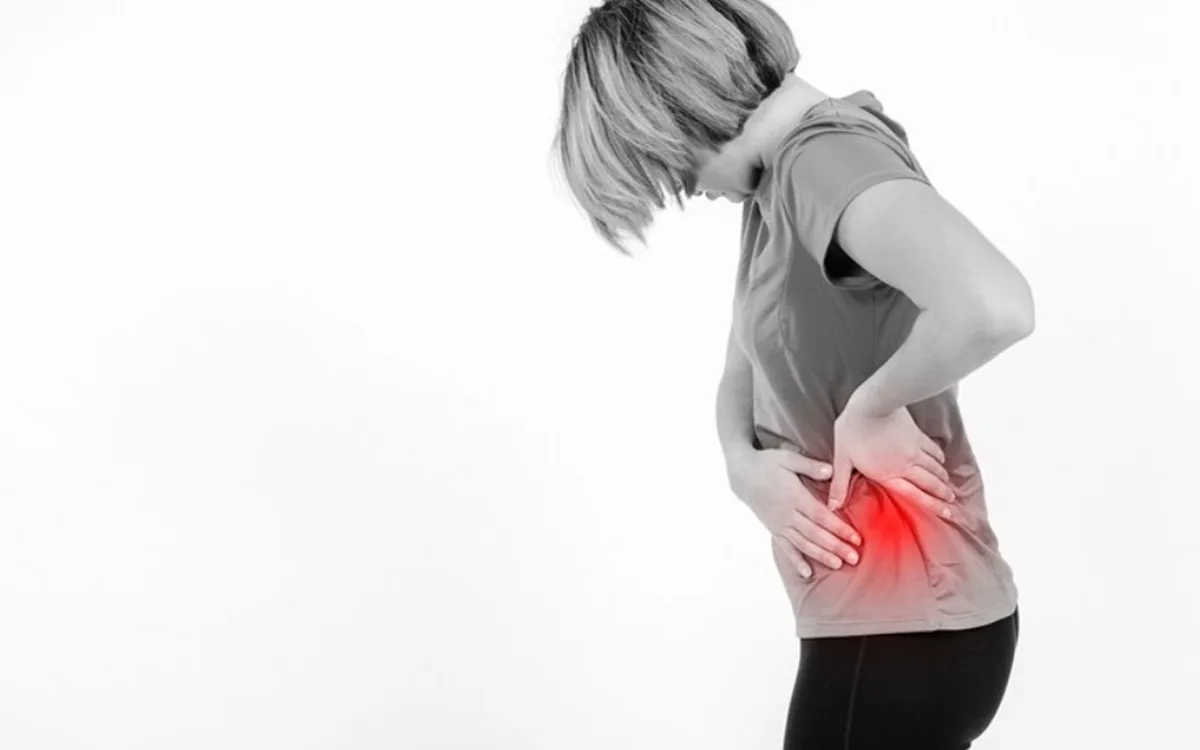
Lower Back Pain vs. Upper and Middle Back Pain
Lower Back Pain (Lumbar)
Lower back pain is the most common form of back pain and the most frequent reason patients consult our team. It may be short-term (acute), often following strain, injury, or a specific trigger, or persistent (chronic), lasting or recurring over a longer period.
Lower back pain is more likely than upper back pain to involve the discs, spinal nerves, or lower spinal joints, which is why it’s more often associated with pain radiating into the buttock or leg, numbness, tingling, or weakness. It may be evaluated in relation to muscle or ligament strain, disc-related conditions, sciatica, degenerative disc disease, spinal stenosis, or facet joint pain (see below).
Upper and Middle Back Pain (Thoracic)
Upper and middle back pain is often linked to postural strain, prolonged sitting or screen use, muscle tension between the shoulder blades, or injury. It is less commonly associated with nerve compression than lower back pain, though persistent or unexplained upper back pain — particularly with associated symptoms — should still be evaluated rather than assumed to be purely postural.
Management approaches for upper and middle back pain overlap with those for lower back pain (activity modification, physical rehabilitation, targeted interventions where appropriate), adjusted for the structures involved.
What Causes Back Pain?
There are many possible causes of back pain. Some cases are non-specific, meaning a single structural cause cannot be confidently identified. Others are related to a specific spinal, neurological, musculoskeletal, or medical condition.
Muscle or Ligament Strain
Physical exertion, lifting, repetitive activity, sudden movement, poor posture, or injury can contribute to strain involving the muscles and supporting tissues of the back — the most common cause across both lower and upper back regions.
Herniated or Bulging Disc
Spinal discs act as cushions between the vertebrae. Changes or damage to a disc — most often in the lower back — can sometimes contribute to pain and, when a nerve is affected, symptoms such as radiating leg pain, tingling, numbness, or weakness.
Sciatica
Sciatica generally refers to pain associated with irritation or involvement of the sciatic nerve or its nerve roots, causing pain that travels from the lower back or buttock into the leg.
Degenerative Disc Disease
Spinal discs can undergo age-related and other degenerative changes, which in some people may be associated with persistent back pain. Treatment depends on the individual’s symptoms, clinical findings, and overall condition.
Spinal Stenosis
Spinal stenosis involves narrowing around the spinal canal or nerve passageways, most often affecting the lower back, and can contribute to nerve-related symptoms such as pain, numbness, or difficulty walking.
Facet Joint-Related Pain
The facet joints are small joints located at the back of the spine. Problems affecting these joints can sometimes contribute to localized back pain and stiffness, in either the lower or upper spine.
Postural and Repetitive-Strain Causes
Particularly relevant to upper and middle back pain — prolonged desk work, screen use, or repetitive overhead activity can contribute to muscle tension and discomfort between the shoulder blades and along the mid-spine.
Other Possible Causes
Back pain can also be associated with other spinal or medical conditions. Persistent or unexplained pain should be evaluated rather than assuming every episode has the same cause.
When Should You See a Back Pain Specialist?
Not every episode of back pain requires advanced treatment. However, medical evaluation may be appropriate when:
- Pain persists or repeatedly returns
- Pain interferes with normal daily activities
- Pain is becoming progressively worse
- Pain radiates into the buttock, leg, chest wall, or shoulder blade
- You experience numbness, tingling, or weakness
- Pain follows an injury
- Previous treatment has not provided adequate improvement
- Ongoing symptoms are affecting work, sleep, or mobility
| ⚠ Seek urgent medical attention if you experience new or worsening severe neurological symptoms — particularly significant or progressive weakness, or new problems with bladder or bowel control. These can indicate a potentially serious underlying problem requiring immediate evaluation, not a routine consultation. |
How Is Back Pain Diagnosed?
Medical history: when the pain started, how it developed, its location, what makes it better or worse, whether it travels into the leg or around the chest wall, any numbness, tingling, or weakness, previous injuries and treatments, and relevant medical conditions.
Physical and neurological assessment: spinal movement, muscle strength, sensation, reflexes, walking pattern, areas of tenderness, and signs associated with nerve involvement.
Imaging or other investigations: recommended when clinically appropriate — not necessary for every person with back pain. The objective isn’t simply to identify an abnormality on a scan, but to understand whether the findings are relevant to the patient’s symptoms and treatment plan.
Non-Surgical Back Pain Treatment Options in Ahmedabad
At Nexus Advanced Pain Management, treatment is focused on non-surgical and minimally invasive pain management. Surgery is considered only when conservative and non-surgical options have not provided adequate relief, or when there are specific neurological concerns. Depending on your diagnosis, one or more of the following approaches may be considered.
Conservative Management
Education, activity modification, physical rehabilitation, exercise-based approaches, and other non-invasive measures to reduce pain while supporting movement and daily function.
Medication Management
Individualized based on the patient’s condition, medical history, other medicines, and potential risks.
Targeted Injections & Nerve Blocks
For selected patients whose symptoms persist despite conservative management:
- Injections for Pain Relief — targeted or epidural injections to reduce inflammation and pain around an affected nerve or joint.
- Transforaminal Blocks — injections directed at the point where a spinal nerve exits the spine, sometimes considered for nerve-related leg pain associated with disc problems or sciatica.
- Sympathetic Nerve Block — used in selected nerve-related pain presentations, when clinically appropriate.
Radiofrequency Ablation
Uses heat generated from radio waves to interrupt the small nerves supplying a painful facet joint, and may be considered for selected patients with facet joint-related back pain.
LASER Therapy (PLDD)
A minimally invasive, laser-based technique that may be considered for selected patients with disc-related back pain, aimed at reducing disc pressure without open surgery.
Regenerative & Biologic Therapies
Nexus Advanced Pain Management offers a full range of advanced regenerative and biologic therapies designed to work with the body’s own natural healing processes — an important option for patients looking to avoid or delay surgery for their back pain.
- Stem Cell Therapy — harnesses the body’s own regenerative potential to support tissue repair at the site of injury.
- PRP Therapy — concentrates platelets from the patient’s own blood to help stimulate the body’s healing response in the treated area.
- Ozone Therapy — uses medical-grade ozone to support pain relief and tissue recovery as part of an integrated treatment plan.
- Regenerative Therapy — our broader regenerative treatment approach, tailored to your specific diagnosis and recovery goals.
Advanced Options for Persistent or Complex Cases
For selected patients whose back pain has not responded adequately to the above:
- Spinal Cord Stimulation — an implantable device that delivers electrical impulses to modulate pain signals, considered for selected patients with chronic back pain.
- Vertebroplasty — a minimally invasive procedure that stabilizes a vertebral compression fracture by injecting bone cement into the affected vertebra; relevant for back pain caused by such fractures.
- Intrathecal Drug Delivery System — an implantable device delivering medication directly into the spinal fluid, considered for selected patients with severe chronic pain.
Treatment for Back Pain Based on the Cause
Disc-related back pain may require a combination of conservative management, rehabilitation, medication, and, for selected patients, targeted interventional procedures.
Back pain with sciatica — when accompanied by radiating leg pain or other nerve-related symptoms, treatment is directed toward the underlying cause and severity of nerve involvement.
Back pain due to spinal stenosis — management depends on the severity of symptoms and functional limitations, ranging from conservative care to selected interventional approaches.
Back pain due to facet joint pain — targeted diagnostic and therapeutic approaches may be considered after clinical assessment.
Postural or thoracic back pain — often responds to activity and ergonomic modification and physical rehabilitation; persistent cases are evaluated the same way as any other back pain rather than assumed to be purely postural.
Why Choose Nexus Advanced Pain Management for Back Pain Treatment in Ahmedabad?
Our approach is focused on understanding the patient’s pain rather than treating every patient with the same procedure.
Dr. Dhaval Patel — MBBS, MD (B.J. Medical College & Civil Hospital, Ahmedabad), Fellowship in Pain Management (FIPM); interventional spine and pain specialist.
Dr. Parth Shah — MBBS, Fellowship in Pain Management (FIPM), FPCI, FIAPM; interventional spine and pain specialist.
We focus on individualized pain assessment, identifying the likely source of pain, personalized treatment planning, non-surgical and minimally invasive options where appropriate, evidence-informed pain management, patient education and realistic expectations, and follow-up based on individual clinical needs.
Back Pain Treatment in Ahmedabad, Mehsana, Patan and Gandhinagar
Nexus Advanced Pain Management provides pain-management services for patients from Ahmedabad and surrounding areas, including Mehsana, Patan, and Gandhinagar. Our clinic is located on SG Highway, Sola. If you are looking for a back pain specialist in Ahmedabad or are travelling from nearby areas, you can contact Nexus Advance Pain Management to discuss your symptoms and consultation options.
Frequently Asked Questions About Back Pain
What is the best treatment for back pain?
There is no single treatment that is best for every person. Treatment depends on the location, underlying cause, symptoms, duration, severity, and individual clinical assessment.
Which doctor should I see for back pain?
A pain management specialist can evaluate persistent or complex back pain and determine whether conservative, interventional, or other specialist care may be appropriate.
Is lower back pain different from upper back pain?
Yes. Lower back pain more often involves the discs and spinal nerves and is more likely to radiate into the leg. Upper and middle back pain is more often linked to posture, muscle tension, or prolonged screen use, though persistent cases still warrant evaluation.
When should I see a specialist for back pain?
Consider medical evaluation when pain persists, repeatedly returns, affects daily activities, radiates into the leg or around the chest wall, or is associated with numbness, tingling, or weakness.
Can back pain be treated without surgery?
Many types of back pain can be managed without surgery, through rehabilitation, medication management, targeted injections, nerve blocks, and other non-surgical approaches, depending on the cause.
Can back pain cause leg pain?
Yes — this is more common with lower back involvement, particularly when spinal nerves are affected.
What causes back pain?
Causes vary by region and may include muscle or ligament strain, disc-related conditions, sciatica, spinal stenosis, facet joint problems, degenerative changes, postural strain, injury, and other medical or spinal conditions.
How is back pain diagnosed?
Diagnosis generally begins with a medical history and physical examination. Additional investigations or imaging may be recommended when clinically appropriate.
Can chronic back pain be treated?
Chronic back pain can often be managed through an individualized treatment plan involving rehabilitation, education, lifestyle changes, medication, and selected specialist interventions.
What should I do if back pain is accompanied by numbness or weakness?
This may indicate nerve involvement. Seek medical evaluation, particularly if symptoms are new, worsening, or associated with significant neurological changes.
Can I get back pain treatment in Ahmedabad?
Yes. Nexus Advanced Pain Management provides specialist pain-management services in Ahmedabad for patients experiencing back pain and related spinal conditions.
Book a Consultation for Back Pain Treatment in Ahmedabad
Persistent back pain — whether in your lower, middle, or upper back — can affect your mobility, work, sleep, and quality of life. Our specialists evaluate your symptoms and help determine an appropriate treatment approach based on your individual condition.
If you are looking for a back pain specialist in Ahmedabad, contact Nexus Advanced Pain Management to schedule a consultation.
Book Your Consultation Today
Call: +91 9033882054
Book An Appointment: Schedule a Personalised Consultation with Our Specialists
Visit Our Ahmedabad Clinic: Get Directions
Medical Disclaimer: The information on this page is intended for general educational purposes and should not replace an individual medical evaluation or professional medical advice. Treatment suitability varies from person to person and should be determined by a qualified healthcare professional.