Categories Knee Pain

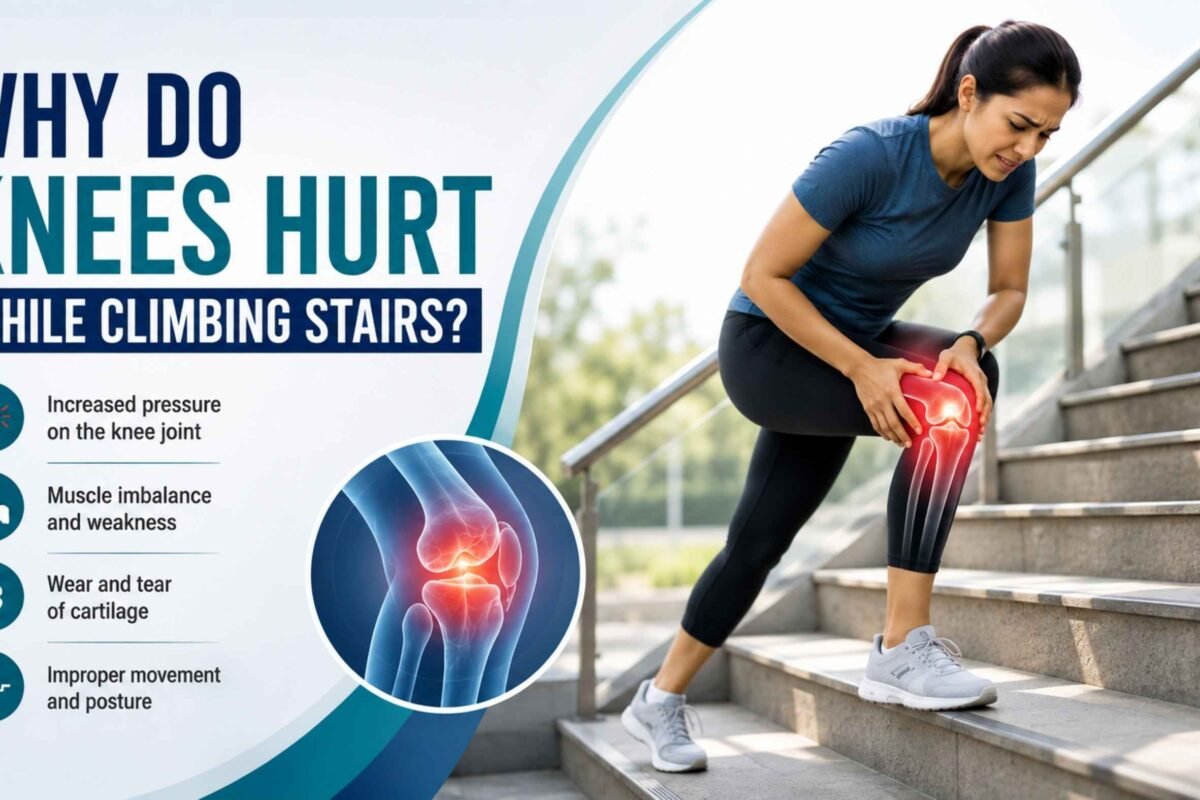
Why Do Knees Hurt While Climbing Stairs?

Quick Answer

Knees hurt while climbing stairs because stairs place 3–4 times your body weight through the kneecap joint, far more than walking on flat ground. Pain is most often caused by patellofemoral pain syndrome (irritation under the kneecap), early cartilage wear, weak thigh muscles, or, in older adults, osteoarthritis. Most cases improve with targeted strengthening, activity modification, and non-surgical pain management — surgery is rarely the first step.

Quick Summary

  • Stairs load the kneecap joint 3–4x more than flat-ground walking, which is why pain often appears only on stairs.
  • Descending is usually more painful than climbing because it requires the thigh muscles to control your body weight while lengthening (eccentric load).
  • The most common cause in adults under 45 is patellofemoral pain syndrome; in adults over 50, early knee osteoarthritis is more likely.
  • Weak or imbalanced thigh (quadriceps) muscles are a leading, correctable contributor.
  • Pain that lasts more than 2–3 weeks, causes swelling, or is accompanied by locking or giving-way needs clinical evaluation.
  • Most stair-related knee pain responds well to physiotherapy, activity modification, and non-surgical interventional treatment.
  • A pain management specialist can identify the exact source of pain using clinical assessment and imaging, avoiding unnecessary surgery.

Introduction

Climbing or descending a flight of stairs is one of the most physically demanding everyday movements for the knee joint — more demanding, in fact, than walking or even jogging on level ground. So when a patient says, “My knees are fine most of the day, but stairs are unbearable,” that single detail is clinically meaningful. It tells us the problem is very likely centered on the kneecap (patellofemoral) joint rather than the whole knee, and it usually points toward a specific, identifiable cause rather than vague “wear and tear.”

This guide explains exactly why stairs trigger knee pain, what the common underlying causes are, how pain specialists diagnose the problem, and which non-surgical treatments genuinely help. The goal is not to alarm you — the goal is to help you understand your knee well enough to make an informed decision about what to do next.

Why Stairs Are So Hard on Your Knees

Every time you climb a step, your kneecap (patella) glides within a groove at the end of the thighbone (femur). This is called the patellofemoral joint. Research in joint biomechanics has consistently shown that this joint bears roughly 3–4 times your body weight when climbing stairs, compared to about 1–1.3 times your body weight during level walking. Descending stairs can place even greater strain on the joint, because your thigh muscles must contract while lengthening to control your descent — a pattern called eccentric loading, which is more taxing on both muscle and joint surface.

Why this matters: if your knee only hurts on stairs (and not on flat ground), the problem is almost always related to how load passes through the kneecap joint — not necessarily deep, structural damage inside the knee.

Common Symptoms of Stair-Related Knee Pain

  • A dull, aching pain around or behind the kneecap when climbing or descending
  • Sharp, catching pain on the first few steps, especially going downstairs
  • A grinding, clicking, or crunching sensation (crepitus) with movement
  • Mild swelling after stair use or prolonged sitting
  • Stiffness after sitting with bent knees for a long time (“theatre sign”)
  • A feeling that the knee may “give way” on stairs, particularly descending

What Causes Knee Pain While Climbing Stairs?

1. Patellofemoral Pain Syndrome (PFPS)

The single most common cause in active adults and young patients. It occurs when the kneecap doesn’t track smoothly in its groove, causing irritation of the cartilage and surrounding tissue under repetitive loading — exactly the kind of loading stairs produce.

2. Chondromalacia Patella

A softening or early wear of the cartilage on the underside of the kneecap. It shares symptoms with PFPS but reflects an actual, visible change in the cartilage surface, usually identified on imaging.

3. Knee Osteoarthritis

In patients over 45–50, progressive cartilage thinning across the joint is a common cause. Stair pain — particularly descending — is often one of the earliest reported symptoms of osteoarthritis, appearing before pain on flat ground.

4. Quadriceps Weakness or Imbalance

The quadriceps (thigh) muscles, especially the inner portion (vastus medialis), help guide the kneecap’s movement. Weakness or imbalance here is one of the most common — and most correctable — contributors to stair pain.

5. Patellar Tendinitis (“Jumper’s Knee”)

Overuse-related inflammation of the tendon just below the kneecap, common in athletes and people who recently increased stair-climbing, running, or squatting activity.

6. Meniscus Irritation

The meniscus (shock-absorbing cartilage between the thigh and shin bones) can become irritated or, in some cases, torn, causing pain that is often worse with twisting or descending motions.

7. IT Band Syndrome

Tightness in the iliotibial band running along the outer thigh can pull on the outer kneecap structures, producing pain that is frequently worse going down stairs.

Risk Factors

  • Age over 45, particularly for osteoarthritis-related causes
  • Sedentary lifestyle with weak thigh and hip muscles
  • Sudden increase in stair use, running, or squatting activity
  • Previous knee injury or surgery
  • Being overweight, which multiplies joint loading on stairs
  • Occupations requiring frequent stair or ladder use
  • Flat feet or abnormal lower-limb alignment

How Is Stair-Related Knee Pain Diagnosed?

A pain management specialist typically begins with a detailed history — including exactly when the pain occurs (up vs. down stairs), its duration, and any swelling or instability — followed by a physical examination assessing kneecap tracking, muscle strength, and joint stability. Depending on findings, imaging such as X-ray (for joint space and arthritis) or MRI (for cartilage, tendon, or meniscus detail) may be recommended. Diagnosis is rarely guesswork; it is a structured process of ruling causes in or out.

Expert Insight

“Patients often assume stair pain automatically means arthritis, but in our clinical experience, patellofemoral pain syndrome and muscle weakness are far more common causes, particularly in patients under 50. A focused assessment usually identifies the exact source within one visit.”

Treatment Options for Knee Pain on Stairs

Non-Surgical Treatment (First-Line Approach)

For the vast majority of patients, non-surgical, evidence-based management is the appropriate starting point:

  • Targeted physiotherapy to strengthen the quadriceps, hips, and core
  • Activity and load modification (e.g., using a handrail, reducing stair frequency temporarily)
  • Anti-inflammatory strategies guided by a physician, where appropriate
  • Bracing or taping to support kneecap tracking during recovery
  • Interventional options such as targeted injections or PRP therapy for select cases of cartilage irritation or tendinitis
  • Radiofrequency ablation (RFA) for select chronic osteoarthritis-related knee pain that hasn’t responded to conservative care

Surgery is generally considered only when structural damage (such as a significant meniscus tear or advanced arthritis) is confirmed and conservative treatment has not provided adequate relief.

Prevention Tips

  • Strengthen the quadriceps and hip muscles with guided exercises 2–3 times per week
  • Warm up before activities that involve repeated stair use
  • Maintain a healthy body weight to reduce joint loading
  • Use proper footwear with adequate cushioning and support
  • Avoid sudden spikes in stair-climbing, running, or squat-based activity
  • Address flat feet or alignment issues with orthotics if recommended

Recovery and Rehabilitation

Most cases of patellofemoral pain syndrome and mild chondromalacia improve within 6–12 weeks of consistent, guided physiotherapy. Recovery is typically progressive: initial pain reduction and swelling control in the first 1–2 weeks, followed by graded strengthening over 4–8 weeks, and a gradual return to full stair activity by week 8–12. Osteoarthritis-related pain follows a longer-term management pattern rather than a fixed recovery timeline, focused on symptom control and joint preservation.

Comparison: Climbing vs. Descending Stairs

AspectClimbing (Ascending)Descending
Muscle actionConcentric (muscle shortens)Eccentric (muscle lengthens under load)
Typical joint stressHighHigher — often the more painful direction
Common associated causeQuadriceps weakness, tendinitisPFPS, chondromalacia, early osteoarthritis
Typical sensationAching, fatigue-like painSharp, catching, or unstable feeling

Common Mistakes Patients Make

  1. Ignoring stair pain for months, assuming it will “just go away”, which allows muscle weakness and altered movement patterns to worsen.
  2. Resting completely instead of modifying activity — prolonged inactivity weakens the quadriceps further and can worsen symptoms.
  3. Self-diagnosing as “arthritis” and assuming surgery is inevitable, when most cases respond well to non-surgical care.
  4. Skipping professional strengthening guidance and doing generic online exercises that may not target the right muscles.

Myths vs. Facts

MythFact
Knee pain on stairs always means arthritisIt is often patellofemoral pain syndrome or muscle weakness, especially under age 50
Rest is the best treatmentGuided activity and targeted strengthening usually work better than complete rest
Surgery is the only real fixMost patients improve significantly with non-surgical, evidence-based treatment
Clicking or cracking always signals damagePainless clicking (crepitus) is common and often not a sign of injury

Questions Patients Forget to Ask

  • Is my pain coming from the kneecap joint specifically, or the whole knee?
  • What is causing my pain — is it muscular, cartilage-related, or joint-related?
  • What is a realistic recovery timeline for my specific cause?
  • Which exercises should I avoid until my pain improves?
  • What are my non-surgical options before considering more invasive treatment?

Practical Action Plan

  1. Track your pain pattern for one week — note whether it’s worse going up, down, or both, and whether swelling occurs.
  2. Reduce (don’t eliminate) stair use temporarily and use a handrail for support.
  3. Begin gentle quadriceps and hip-strengthening exercises, ideally under guidance.
  4. Schedule an evaluation with a pain management specialist if pain persists beyond 2–3 weeks, or sooner if there is swelling, locking, or instability.
  5. Follow a structured, evidence-based treatment plan rather than a generic online routine.

Nexus Pain Expert Summary

Stair-related knee pain is common, usually explainable, and in most cases treatable without surgery. At Nexus Advanced Pain Management, we begin with a comprehensive assessment to identify the exact source of your pain, then build a personalized, non-surgical treatment plan — from targeted physiotherapy to interventional options like PRP or radiofrequency ablation where appropriate — with realistic expectations and long-term joint health as the goal.

How Nexus Pain Management Can Help

Nexus Advanced Pain Management takes an evidence-based approach to knee pain, beginning with a comprehensive assessment to identify the true source of your discomfort rather than treating symptoms generically. Our approach includes personalized, non-surgical treatment planning, interventional pain procedures where clinically appropriate, rehabilitation guidance, and long-term strategies for joint health and pain relief — all grounded in realistic expectations and patient education.

Key Takeaways

  • Stairs load the kneecap joint 3–4x more than walking, which is why pain often appears there first.
  • Descending stairs is frequently more painful than climbing due to eccentric muscle loading.
  • Common causes include patellofemoral pain syndrome, chondromalacia, quadriceps weakness, and — in older adults — early osteoarthritis.
  • Persistent pain beyond 2–3 weeks, swelling, or instability warrants professional evaluation.
  • Non-surgical treatment is effective for the large majority of patients.
  • A structured diagnosis prevents unnecessary worry and unnecessary surgery.

Frequently Asked Questions

  1. Why does my knee only hurt on stairs and not when walking?

Stairs place several times more load through the kneecap joint than flat-ground walking, so problems localized to that joint — such as patellofemoral pain syndrome — often show up only on stairs.

  1. Is it normal for knees to hurt while climbing stairs?

Occasional mild discomfort can occur with deconditioning, but persistent or worsening pain is not something to ignore and should be evaluated, particularly if it lasts more than 2–3 weeks.

  1. Why is going down the stairs more painful than going up?

Descending requires your thigh muscles to control your body weight while lengthening (eccentric loading), which places greater stress on the kneecap joint than the muscle-shortening action used while climbing.

  1. Can weak thigh muscles really cause knee pain on stairs?

Yes. Weak or imbalanced quadriceps muscles are one of the most common and most correctable contributors to stair-related knee pain, as they affect how the kneecap tracks during movement.

  1. Does knee pain on stairs mean I have arthritis?

Not necessarily. While early osteoarthritis can present this way in adults over 45–50, patellofemoral pain syndrome and muscle weakness are more common causes in younger, active patients.

  1. When should I see a pain specialist for knee pain on stairs?

See a specialist if pain persists beyond 2–3 weeks, is accompanied by swelling, clicking with pain, locking, instability, or if it is limiting your daily activities.

  1. Can knee pain on stairs be treated without surgery?

Yes. Most cases respond well to physiotherapy, activity modification, and non-surgical interventional treatments; surgery is generally reserved for confirmed structural damage that hasn’t responded to conservative care.

  1. What tests are used to diagnose stair-related knee pain?

Diagnosis typically starts with a clinical history and physical examination, followed by imaging such as X-ray or MRI when needed to assess cartilage, tendon, or joint condition.

  1. How long does it take for stair-related knee pain to improve?

Many patients with patellofemoral pain syndrome improve within 6–12 weeks of consistent, guided treatment, though timelines vary depending on the underlying cause.

  1. Can being overweight cause knee pain on stairs?

Yes. Excess body weight significantly increases the load passing through the kneecap joint during stair use, which can contribute to or worsen symptoms.

  1. Is clicking or cracking in the knee on stairs a cause for concern?

Painless clicking (crepitus) is common and usually not concerning on its own; it becomes relevant mainly when accompanied by pain, swelling, or a catching sensation.

  1. Where can I get evaluated for knee pain while climbing stairs in Ahmedabad?

Nexus Advanced Pain Management in Ahmedabad offers comprehensive knee pain assessment and evidence-based, non-surgical treatment planning for stair-related and activity-related knee pain.


Categories Knee Pain

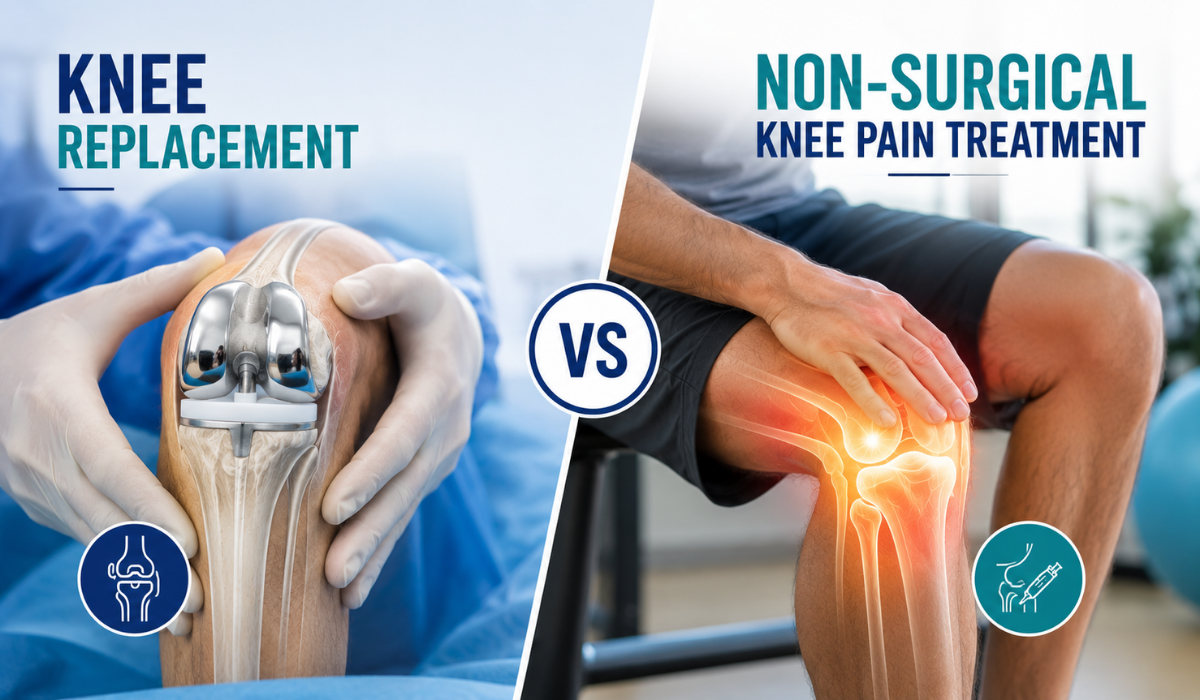
Knee Replacement vs. Non-Surgical Knee Pain Treatment

Knee replacement vs non-surgical knee pain treatment options

Quick Answer

Non-surgical, interventional treatment — such as PRP therapy, viscosupplementation, a genicular nerve block, radiofrequency ablation (RFA), or ozone therapy — is often considered for knee osteoarthritis and can help manage pain and improve function for select patients. Total knee replacement becomes the more effective option when arthritis is advanced (grade 3–4), when non-surgical/interventional options no longer control symptoms, or when daily activity is severely limited. The right choice depends on a clinical assessment of your pain severity, functional limitation, imaging findings, previous treatment response, and personal goals — not on X-ray grade alone.

Quick Summary

  • Non-surgical or interventional treatment is often considered first for mild-to-moderate knee osteoarthritis, based on clinical assessment.
  • Total knee replacement (TKR) tends to produce greater pain and function improvement than non-surgical care alone in patients with moderate-to-severe osteoarthritis, according to randomised trial data.
  • A meaningful proportion of patients who begin non-surgical or interventional treatment are able to delay or manage their symptoms without surgery for a period of time; individual outcomes vary.
  • Non-surgical/interventional options generally carry fewer immediate risks than surgery and do not require anaesthesia or a hospital stay.
  • TKR recovery generally takes 3–6 months for most daily activities, with continued strength gains up to a year.
  • The decision should be individualised — pain severity, functional limitation, imaging, previous treatment response, and patient goals all matter, not arthritis grade alone.
  • A trial of appropriate non-surgical or interventional care before surgery is a reasonable approach for most patients without emergency indications.

Introduction

Knee pain from osteoarthritis is one of the most common reasons people in Ahmedabad visit an orthopaedic or pain management clinic. At some point, most patients are asked the same question: should you try non-surgical treatment, or is it time to consider knee replacement? Neither answer is universally correct — the right path depends on how far the arthritis has progressed, how the knee responds to conservative care, and what matters most to you: avoiding surgery, restoring full activity, or something in between. This article breaks down both pathways in practical terms, using current clinical evidence, so you can have a more informed conversation with your treating doctor.

Understanding the Two Pathways

Knee osteoarthritis develops when the cartilage cushioning the joint wears down, leading to pain, stiffness, and reduced mobility. Treatment generally follows a staged approach: conservative, non-surgical management first, with surgery reserved for patients whose symptoms and joint damage do not respond adequately.

Non-Surgical Knee Pain Treatment

At Nexus Pain Management, non-surgical treatment for knee osteoarthritis is approached through minimally invasive, interventional, injection-based, and regenerative options, selected based on individual assessment:

  • PRP (Platelet-Rich Plasma) Therapy — a regenerative, injection-based option used to help manage symptoms in select patients as part of an individualized plan
  • Viscosupplementation — a lubricating, injection-based option considered for appropriately selected patients with knee osteoarthritis
  • Genicular Nerve Block — a targeted injection that addresses pain signalling from the nerves around the knee joint
  • Radiofrequency Ablation (RFA) — a minimally invasive procedure that targets selected pain-transmitting nerves around the knee; it does not repair or regenerate cartilage
  • Ozone Therapy — an interventional option some patients consider for knee pain; current evidence is limited, and it is not a cure or a way to reverse existing joint damage
  • In some cases, more than one option may be combined, based on individual assessment findings
  • Reassessment over time to guide whether the same treatment, a different option, or a combination is appropriate going forward

These treatments have different purposes and are not interchangeable — the right option, or combination, depends on the cause and severity of the pain, imaging findings, and how the knee has responded to treatment so far, determined through a clinical assessment at Nexus Pain Management, an advanced/interventional pain management clinic in Ahmedabad.

Total Knee Replacement (TKR)

Total knee replacement is a surgical procedure in which the damaged joint surfaces are resurfaced with an artificial implant. It is generally considered the definitive treatment for end-stage knee osteoarthritis (grade 3–4) once non-surgical measures no longer provide adequate relief. It is a major orthopaedic procedure requiring hospital admission, anaesthesia, and a structured rehabilitation programme afterward.

What the Evidence Shows

A randomised controlled trial published in the New England Journal of Medicine compared patients with moderate-to-severe knee osteoarthritis who were eligible for TKR, assigning them to either surgery followed by non-surgical care, or non-surgical care alone. At 12 months, the surgery group showed significantly greater improvement in the Knee Injury and Osteoarthritis Outcome Score (KOOS), which measures pain, symptoms, daily function, and quality of life. A related 2-year follow-up found the same pattern held over time, though patients who started with non-surgical treatment alone still showed meaningful improvement compared to written advice only.

It is worth noting that a proportion of patients who begin with non-surgical or interventional treatment do eventually proceed to knee replacement, while others continue to manage without surgery for an extended period. This is the key clinical takeaway: non-surgical and interventional treatment is not a guaranteed alternative to surgery for advanced arthritis, but it can allow many patients to delay it or manage effectively for a period of time while maintaining function.

Knee Replacement vs. Non-Surgical Treatment: Side-by-Side Comparison

FactorNon-Surgical TreatmentTotal Knee Replacement
Best suited forMild-to-moderate osteoarthritis, or patients seeking to manage symptoms before considering surgeryAdvanced (grade 3–4) osteoarthritis, failed conservative care
Pain reliefVaries by treatment and patient; options target different mechanisms (e.g., the joint itself vs. pain-signalling nerves)Generally greater improvement in trial data
Recovery timeMinimal downtime for most options; effects and duration vary by treatment type3–6 months for most activities; up to 12 months for full strength
Risk profileLow; localized, injection-related risks only, and vary by treatment typeSurgical and anaesthesia-related risks apply
ReversibilityNon-permanent; treatment plan can be adjusted or changedPermanent structural change to the joint
Typical first stepOften considered before surgery, depending on assessmentConsidered after non-surgical options are exhausted
Ongoing commitmentPeriodic reassessment and, where appropriate, repeat or combined interventional treatmentStructured rehab, then long-term joint care

Recovery and Rehabilitation

Recovery expectations differ meaningfully between the two pathways, and this is often the deciding factor for working professionals and homemakers weighing their options.

Non-Surgical / Interventional Treatment Pattern

There is no surgical downtime. Response to treatment varies by option and by patient, and some treatments may be repeated or combined based on how symptoms respond, with periodic reassessment (typically every 4–8 weeks) to check whether the current approach is working.

TKR Recovery Pattern

  • Days 1–3: Hospital stay; walking with assistance typically begins within a day or two
  • Weeks 2–3: Transition to a cane or walking unaided for many patients; a structured post-surgical rehabilitation programme often begins
  • Weeks 6–12: Return to light daily activities and desk-based work; low-impact activity gradually reintroduced
  • Months 3–6: Continued strengthening; many patients resume low-impact recreational activity
  • Months 6–12: Further gains in strength and stability for most patients

Recovery timelines vary by age, general health, pre-surgical fitness, and adherence to the post-surgical rehabilitation programme — these figures are general patterns, not guarantees for any individual patient.

Expert Insight

Expert Insight 1 — On Timing

One of the most common mistakes we see is patients waiting too long to explore non-surgical or interventional treatment, and then expecting it to work as quickly as they hoped once the arthritis has already progressed. Starting an appropriate option early, while the joint damage is still mild to moderate, generally gives it the best chance to delay or reduce the need for surgery.


Expert Insight 2 — On Realistic Expectations

Non-surgical and interventional treatment options are not designed to reverse cartilage loss. Their role is to help manage pain and maintain function for as long as reasonably possible. Patients who understand this go in with realistic expectations.


Expert Insight 3 — On Deciding for Surgery

The decision to proceed with knee replacement is rarely made on X-rays alone. We look at how much the knee is limiting daily life — walking, stairs, sleep — alongside imaging findings and how the joint has responded to a genuine trial of conservative care.

Common Mistakes to Avoid

  • Trying a single treatment in isolation without a proper clinical assessment, then concluding non-surgical or interventional treatment “doesn’t work.”
  • Delaying any evaluation until the knee is severely deformed or activity is completely restricted, which narrows treatment options.
  • Assuming knee replacement guarantees a pain-free knee — most patients see major improvement, but realistic expectations and rehab commitment matter.

Myths vs. Facts

MythFact
“Surgery is always the better choice.”For mild-to-moderate arthritis, non-surgical treatment often provides adequate relief; surgery is generally reserved for advanced disease or failed conservative care.
“Non-surgical treatment is a waste of time before surgery anyway.”Many patients are able to manage symptoms and delay surgery for a period of time with appropriately selected non-surgical or interventional treatment, though outcomes vary by individual.
PRP therapy cures arthritis.”PRP may help manage symptoms in select patients as part of an individualized plan; it does not reverse existing cartilage damage.
“Knee replacement means months of being bedridden.”Most patients begin walking with assistance within a day or two and progress steadily over the following weeks.

Questions Patients Forget to Ask

  • How advanced is my arthritis on imaging, and what does that mean for my options?
  • How long should I trial a non-surgical or interventional option before reassessing?
  • What specific outcome am I trying to achieve — pain relief, return to sport, or basic mobility?
  • What does my occupation or daily routine require from my knee?
  • What is the realistic recovery timeline for someone my age and fitness level?

Practical Action Plan

  1. Clinical assessment to understand your knee pain and overall health.
  2. Identification of the cause and severity of the knee pain.
  3. Imaging when clinically appropriate.
  4. Discussion of suitable non-surgical/interventional options.
  5. Individualized treatment selection.
  6. Reassessment of treatment response.
  7. Surgical evaluation when symptoms remain severe and surgery is clinically appropriate.

Nexus Pain Expert Summary

Most patients with knee osteoarthritis benefit from a thorough clinical assessment and consideration of non-surgical or interventional options before proceeding to surgery. The exception is advanced, grade 3–4 arthritis with significant functional limitation that has not responded to appropriate treatment, where knee replacement generally becomes the more appropriate option. The most important step is an accurate, individualized assessment early on, so the treatment recommendation matches the actual severity of the joint damage and the patient’s goals.

Key Takeaways

  • Non-surgical and interventional treatment is often an appropriate option to consider first for mild-to-moderate knee osteoarthritis, based on clinical assessment.
  • Total knee replacement shows greater improvement in trial data for moderate-to-severe cases that don’t respond to conservative care.
  • Many patients are able to delay or avoid surgery for a period of time with appropriately selected non-surgical or interventional treatment; outcomes vary by individual.
  • Recovery from TKR generally spans 3–6 months for most activities, with gains continuing up to a year.
  • The decision should be based on pain severity, functional limitation, imaging findings, and response to treatment — not on imaging alone.
  • Neither pathway guarantees a specific outcome — individual results vary.

How Nexus Pain Can Help

Nexus Pain Management is an advanced pain management and interventional pain management clinic in Ahmedabad, supporting patients at every stage of the knee pain decision-making process. This includes a thorough clinical assessment to identify the cause and severity of knee pain, imaging when clinically appropriate, and discussion of suitable non-surgical/interventional options — including PRP therapy, viscosupplementation, genicular nerve block, radiofrequency ablation, and ozone therapy — alongside clear guidance on when a surgical evaluation may be warranted. Start with a clinical assessment at Nexus Pain Management to receive an accurate diagnosis and an individualized treatment recommendation for your knee pain.

Frequently Asked Questions

Q: Is non-surgical treatment effective for knee osteoarthritis?

A: For many patients with mild-to-moderate osteoarthritis, non-surgical and interventional options such as PRP therapy, viscosupplementation, a genicular nerve block, RFA, or ozone therapy can help manage pain and improve function, depending on individual assessment. Effectiveness varies by patient and by arthritis severity.

Q: When should I consider knee replacement instead of non-surgical treatment?

A: Knee replacement is typically considered when pain severity, functional limitation, and imaging findings together indicate advanced (grade 3–4) osteoarthritis, and non-surgical or interventional treatment no longer provides adequate relief. The decision is based on clinical assessment, not imaging alone.

Q: Does non-surgical treatment delay the need for surgery?

A: For many patients, appropriately selected non-surgical or interventional treatment can help delay the need for surgery, though how long this lasts varies from person to person and depends on arthritis severity and treatment response.

Q: How long does recovery take after total knee replacement?

A: Most patients resume light daily activities within 6–12 weeks and continue to gain strength for up to a year. Individual recovery time depends on age, health, and rehabilitation adherence.

Q: Is PRP therapy a substitute for knee replacement?

A: No. PRP therapy may help manage symptoms for some patients as part of a broader non-surgical plan, but it does not reverse existing cartilage damage or replace surgery in advanced arthritis.

Q: What are the risks of delaying knee replacement surgery?

A: Delaying surgery in advanced arthritis can mean prolonged pain and functional limitation, but it is not automatically harmful — many patients safely continue non-surgical management for extended periods under medical supervision.

Q: Can younger patients avoid knee replacement with non-surgical treatment?

A: Many younger patients with early-stage arthritis respond well to non-surgical or interventional treatment and may be able to delay surgery significantly, depending on individual assessment and response to treatment.

Q: What non-surgical/interventional treatment options does Nexus Pain Management offer for knee pain?

A: At Nexus Pain Management, options may include PRP therapy, viscosupplementation, a genicular nerve block, radiofrequency ablation, or ozone therapy, selected based on a clinical assessment of the cause and severity of your knee pain.

Q: Is knee replacement painful?

A: Post-surgical pain is expected and managed with medication in the initial recovery period; pain typically decreases progressively over the following weeks as healing and rehabilitation progress.

Q: How do doctors decide which treatment is right for a specific patient?

A: The decision considers imaging findings, symptom severity, functional limitation, response to prior treatment, age, and the patient’s personal activity goals.

Q: Where can I get a knee pain evaluation in Ahmedabad?

A: Nexus Pain Management, an advanced pain management and interventional pain management clinic in Ahmedabad, offers comprehensive knee pain assessment covering both non-surgical/interventional and surgical-pathway guidance to help you understand your options.

Q: Can non-surgical treatment and surgery be used together?

A: Yes. Even patients who proceed with knee replacement generally follow a structured post-surgical rehabilitation programme to support recovery, separate from the non-surgical/interventional treatments used before surgery.


Categories Knee Pain

Why Your Knees Hurt: Common Causes of Knee Pain and How to Treat Them

Knee pain is a common ailment that affects people of all ages. Whether you’re an athlete, a busy professional, or a retiree, knee discomfort can significantly impact your daily life. Understanding the underlying causes and available treatment options is the first step toward finding relief and preventing further damage. In this article, we’ll explore the common causes of knee pain and offer insights into effective treatments.

Common Causes of Knee Pain

Injuries

The knee is a complex joint that is prone to various injuries, especially in active individuals. Common injuries include:

  • Ligament Tears: Tears in the anterior cruciate ligament (ACL) or posterior cruciate ligament (PCL) often occur during high-impact sports or accidents.
  • Meniscus Tears: The meniscus acts as a cushion between your thighbone and shinbone. A sudden twist or overuse can cause it to tear.
  • Fractures: Trauma, such as falls or accidents, can lead to broken bones around the knee joint.
  • Tendonitis: Overuse can lead to inflammation of the tendons, particularly the patellar tendon, causing pain and discomfort.

Osteoarthritis

Osteoarthritis is a degenerative joint disease that occurs when the cartilage in your knee wears away. This condition is prevalent among older adults and is characterized by stiffness, swelling, and chronic pain.

Rheumatoid Arthritis

Rheumatoid arthritis is an autoimmune condition that causes inflammation in the knee joint. It can lead to severe pain, swelling, and joint deformity over time.

Bursitis

The bursae are small fluid-filled sacs that cushion the knee joint. Inflammation of these sacs, known as bursitis, can cause pain and swelling, often as a result of repetitive motion or prolonged pressure on the knees.

Patellofemoral Pain Syndrome

Commonly referred to as “runner’s knee,” this condition is caused by improper tracking of the kneecap as it moves over the thighbone. It’s often seen in athletes and individuals who perform repetitive knee movements.

Gout and Pseudogout

These forms of arthritis occur when crystals accumulate in the knee joint. Gout is caused by uric acid crystals, while pseudogout involves calcium-containing crystals.

Infections

Infections in the knee joint, such as septic arthritis, can cause severe pain, redness, swelling, and fever. Immediate medical attention is necessary in such cases.

How to Treat Knee Pain

Rest and Ice Therapy

For minor injuries or overuse, rest and ice application can help reduce swelling and alleviate pain. Avoid activities that put strain on your knee and apply ice for 15-20 minutes every few hours.

Physical Therapy

Physical therapy is often recommended for knee pain. Strengthening the muscles around the knee can improve stability and reduce stress on the joint. A physical therapist can guide you through exercises tailored to your specific condition.

Medications

  • Over-the-Counter Pain Relievers: Nonsteroidal anti-inflammatory drugs (NSAIDs) like ibuprofen can help relieve pain and reduce inflammation.
  • Prescription Medications: For conditions like rheumatoid arthritis, your doctor may prescribe disease-modifying antirheumatic drugs (DMARDs) or biologics.

Injections

In some cases, injections may be necessary to manage knee pain:

  • Corticosteroid Injections: These can reduce inflammation and provide temporary relief.
  • Hyaluronic Acid Injections: Often used for osteoarthritis, these injections can lubricate the knee joint.
  • Platelet-Rich Plasma (PRP) Therapy: This newer treatment involves injecting a concentration of your platelets to promote healing.

Lifestyle Changes

  • Weight Management: Excess weight puts additional stress on your knees. Losing weight can significantly reduce pain, especially in cases of osteoarthritis.
  • Low-Impact Exercises: Activities like swimming, cycling, and yoga can help maintain joint health without putting undue pressure on the knees.

Assistive Devices

Using braces, compression sleeves, or orthotics can provide support and alleviate knee pain. These devices help stabilize the knee and distribute pressure more evenly.

Surgical Options

For severe cases, surgery may be the best option:

  • Arthroscopy: A minimally invasive procedure to repair damage inside the knee joint.
  • Partial or Total Knee Replacement: This is typically considered for advanced osteoarthritis or significant joint damage.

Alternative Therapies

Some people find relief through alternative treatments such as:

  • Acupuncture: May help reduce pain by stimulating specific points in the body.
  • Chiropractic Care: Can improve alignment and reduce stress on the knees.

When to See a Doctor

While minor knee pain often resolves with rest and home care, certain symptoms require medical attention:

  • Severe pain or swelling
  • Inability to bear weight on the knee
  • Signs of infection, such as redness, warmth, or fever
  • A popping sound at the time of injury, followed by swelling and instability

Preventing Knee Pain

  • Warm-Up and Stretch: Always warm up before exercising and incorporate stretches to improve flexibility.
  • Wear Proper Footwear: Supportive shoes can help reduce stress on your knees.
  • Maintain Good Posture: Avoid slouching and practice proper body mechanics when lifting or performing activities.
  • Stay Active: Regular exercise keeps your joints healthy and strengthens the muscles that support your knees.

Knee pain can stem from a variety of causes, ranging from injuries to chronic conditions. Identifying the root cause is crucial for effective treatment. While home remedies and lifestyle changes can help manage mild pain, persistent or severe symptoms should be evaluated by a healthcare professional. By taking proactive steps, you can alleviate knee pain and maintain an active, pain-free life.