
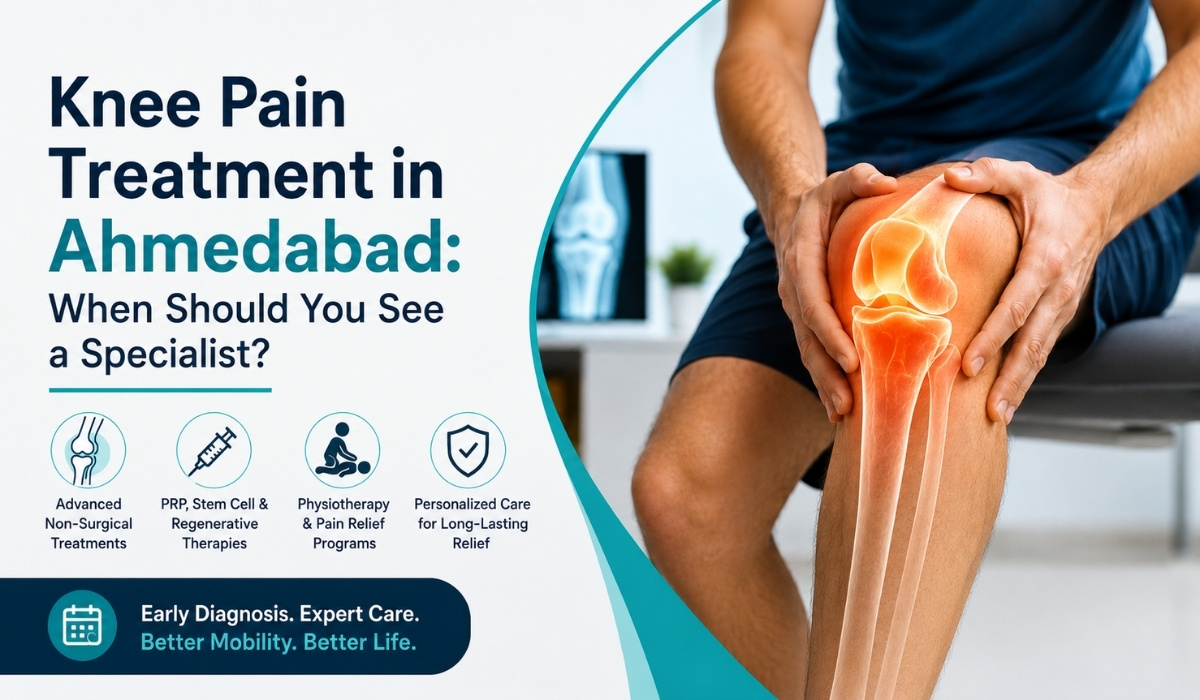

| QUICK ANSWER Knee pain that lasts more than 2–3 weeks, limits daily activity, or follows an injury needs a specialist evaluation. In Ahmedabad, pain management clinics offer evidence-based, non-surgical treatments including PRP therapy, knee injections, physiotherapy, and radiofrequency ablation — helping most patients find significant relief without surgery. |
Quick Summary — Key Takeaways
- Knee pain is one of the most common musculoskeletal complaints affecting all age groups.
- Causes range from osteoarthritis and ligament injuries to overuse and inflammatory conditions.
- Warning signs like persistent swelling, locking, instability, or night pain require specialist assessment.
- Non-surgical treatments — PRP, physiotherapy, knee injections — can provide lasting relief for most patients.
- Delaying care often worsens cartilage damage and reduces treatment effectiveness.
- A pain management specialist in Ahmedabad can identify the exact cause and build a personalised plan.
- Surgery is rarely the first option when evidence-based pain management is initiated early.
Introduction
Knee pain is rarely just an inconvenience. For a working professional in Ahmedabad who struggles to climb stairs, a homemaker who finds it painful to squat, or a senior who hesitates to walk to the local market — knee pain can quietly shrink the world. Yet most people delay seeing a specialist, hoping the pain will pass on its own.
The truth is that early, targeted intervention makes a measurable difference. This guide explains the common causes of knee pain, the warning signs that signal it’s time to see a specialist, and the evidence-based, non-surgical treatment options available in Ahmedabad today.
Understanding Knee Pain: Why It Happens
The knee is the largest and one of the most complex joints in the body. It bears the full weight of every step you take and is supported by cartilage, ligaments, tendons, and fluid-filled sacs called bursae. When any of these structures is stressed, damaged, or inflamed, pain follows.
Knee pain does not always mean there is a structural problem. It can arise from muscle imbalances, postural habits, excess body weight, or occupational strain. Understanding the underlying cause is the single most important step toward effective treatment.
Common Causes of Knee Pain
The most frequently seen causes of knee pain include:
- Osteoarthritis — Gradual wear of cartilage, most common in adults over 45.
- Patellofemoral Pain Syndrome — Pain behind the kneecap, common in office workers and runners.
- Meniscus Tears — Caused by sudden twisting or age-related degeneration.
- Ligament Injuries (ACL, PCL) — Often sports-related; cause instability and swelling.
- Bursitis — Inflammation of the small fluid sacs cushioning the knee.
- Tendinitis — Overuse inflammation of the tendons around the knee.
- Rheumatoid Arthritis — An autoimmune condition causing joint inflammation.
- Referred Pain — From the hip, lower back, or lumbar spine.
| Expert Insight #1 — Referred Pain Is Often Overlooked Many patients in Ahmedabad are treated for knee pain for months before a pain specialist identifies that the real source is lumbar spine nerve compression. A comprehensive evaluation — not just a knee X-ray — is essential to avoid months of misdirected treatment. |
Symptoms of Knee Pain: What to Watch For
Not all knee symptoms carry the same urgency. Common symptoms that warrant attention include:
| Symptom | Possible Significance |
| Persistent swelling lasting more than 3 days | Possible meniscus tear, arthritis, or infection |
| Knee locking or catching sensation | Meniscus or cartilage fragment involvement |
| Giving way or instability | Ligament weakness or ACL injury |
| Severe pain after minor activity | Advanced osteoarthritis or acute bursitis |
| Night pain disrupting sleep | Inflammatory arthritis or neuropathic component |
| Inability to fully straighten or bend the knee | Joint effusion, meniscus injury, or capsule tightening |
| Crepitus (grinding sound) | Cartilage roughening — early osteoarthritis |
When Should You See a Knee Pain Specialist?
This is the question most patients struggle with. The general guidance from pain medicine specialists is straightforward:
- Pain persists beyond 2–3 weeks despite rest and basic care.
- Swelling does not reduce within 72 hours of onset.
- You notice joint instability — your knee buckles or gives way.
- Normal activities such as walking, climbing stairs, or sitting are significantly limited.
- Sleep is disrupted by knee pain.
- There was a clear injury event — a fall, collision, or sudden twist.
- Over-the-counter medication provides only temporary or no relief.
| Common Mistake #1 — Waiting Too Long The most frequent mistake patients make is managing knee pain at home for 3–6 months before seeking care. During this period, cartilage continues to degrade, muscles weaken, and compensatory movement patterns develop — all of which make treatment more complex and recovery slower. |
How Is Knee Pain Diagnosed?
An accurate diagnosis is the foundation of effective treatment. A pain management specialist will typically perform:
- Detailed clinical history — duration, triggers, nature, and pattern of pain.
- Physical examination — joint range of motion, stability, and tenderness assessment.
- X-ray — to assess joint space, bone alignment, and signs of arthritis.
- MRI (when indicated) — for soft tissue evaluation including cartilage, meniscus, and ligaments.
- Ultrasound-guided assessment — to visualise tendons, bursae, and joint fluid.
- Blood tests — to rule out inflammatory or autoimmune causes.
Knee Pain Treatment Options in Ahmedabad
Modern pain management offers a wide spectrum of non-surgical treatments. Surgery is a last resort — most patients with knee pain respond well to the following evidence-based approaches:
Non-Surgical Treatment Options
| Treatment | Best For | Expected Timeline |
| Physiotherapy & Exercise Rehab | Muscle imbalance, mild OA, post-injury | 6–12 weeks |
| PRP (Platelet-Rich Plasma) Therapy | Cartilage damage, early-to-moderate OA | 3–6 months |
| Hyaluronic Acid (Viscosupplementation) | Lubrication deficit, moderate OA | 3–6 months |
| Corticosteroid Injections | Acute inflammation, bursitis | Weeks to months |
| Radiofrequency Ablation (RFA) | Chronic knee OA with persistent pain | 6–12+ months |
| Stem Cell Therapy (Regenerative) | Cartilage repair, moderate-to-severe OA | 3–9 months |
| Ultrasound-Guided Nerve Blocks | Neuropathic knee pain | Variable |
| Lifestyle & Weight Management | Overweight patients with OA | Ongoing |
| Expert Insight #2 — PRP Therapy for Knee Pain PRP therapy uses a concentrated preparation of the patient’s own blood platelets to stimulate natural healing within the knee joint. Studies indicate that PRP injections can reduce pain and improve function in patients with early to moderate knee osteoarthritis. It is a well-tolerated, outpatient procedure with minimal downtime. |
| Expert Insight #3 — Radiofrequency Ablation for Chronic Knee Pain For patients with longstanding knee osteoarthritis who have not responded to other treatments, genicular nerve radiofrequency ablation (RFA) targets the sensory nerves supplying the knee joint. This minimally invasive procedure can provide significant and sustained pain relief — often lasting 6–12 months or longer. |
| Expert Insight #4 — Stem Cell Therapy for Knee Cartilage Repair Stem cell therapy (Mesenchymal Stem Cell / MSC therapy) is an advanced regenerative medicine approach for knee pain. It involves harvesting stem cells from the patient’s own bone marrow or adipose (fat) tissue, concentrating them, and injecting them into the damaged knee joint under ultrasound guidance.
Unlike PRP — which primarily delivers growth factors to stimulate healing — stem cells have the potential to differentiate into cartilage cells (chondrocytes) and contribute to actual structural tissue repair. This makes stem cell therapy particularly relevant for patients with: • Moderate-to-severe knee osteoarthritis • Significant cartilage loss or damage • Failed response to PRP or other injections • Desire to delay or avoid total knee replacement
Most patients experience progressive improvement over 3–9 months as regeneration takes effect. Stem cell therapy is not a guaranteed cure and requires specialist assessment to determine candidacy. |
Stem Cell Therapy vs. PRP Therapy — Which Is Right for You?
Both are regenerative treatments, but they work differently and suit different patient profiles:
| Factor | PRP Therapy | Stem Cell Therapy |
| Source | Patient’s own blood (platelets) | Patient’s bone marrow or fat tissue |
| Mechanism | Growth factors stimulate healing | Stem cells regenerate and repair tissue |
| Best For | Early to moderate OA, inflammation | Moderate to severe OA, cartilage damage |
| Procedure Time | ~45–60 minutes | ~2–3 hours (harvest + injection) |
| Onset of Relief | 4–8 weeks | 3–6 months (gradual regeneration) |
| Duration of Effect | 6–18 months | 1–3 years (varies by patient) |
| Surgery Avoidance | Mild to moderate cases | Moderate to severe cases |
| Evidence Level | Well-established clinical data | Growing — promising results |
| Clinical Note In some cases, a combination of PRP and stem cell therapy may be recommended to maximise regenerative potential. Your specialist will assess imaging, symptom severity, and treatment history before recommending the most appropriate protocol for your knee condition. |
Preventing Knee Pain from Worsening
While not all causes of knee pain are preventable, the following strategies can significantly reduce the risk of progression:
- Maintain a healthy body weight — every kilogram lost reduces knee joint load by approximately 4 kg.
- Strengthen quadriceps and hamstrings — strong muscles protect the knee joint.
- Choose low-impact activities — swimming, cycling, and yoga are knee-friendly.
- Avoid prolonged sitting with knees bent — take regular movement breaks.
- Wear appropriate footwear — supportive shoes reduce biomechanical stress.
- Do not ignore early symptoms — timely evaluation prevents small problems from becoming large ones.
| Common Mistake #2 — Relying on Painkillers Alone Long-term NSAID use can mask pain without addressing the underlying cause, increasing the risk of cartilage deterioration and gastrointestinal complications. Painkillers should be part of a broader treatment plan, not a standalone solution. |
Recovery and Rehabilitation
Recovery from knee pain is rarely linear. Most patients experience meaningful improvement within 6–12 weeks of evidence-based treatment, but long-term outcomes depend on:
- Adherence to prescribed physiotherapy exercises.
- Addressing underlying risk factors such as obesity or biomechanical issues.
- Regular follow-up to monitor progress and adjust the treatment plan.
- Avoiding activities that consistently aggravate the joint.
Myths vs. Facts About Knee Pain
| Myth | Fact |
| Knee pain only affects the elderly. | Knee pain is common across all age groups, including young athletes, office workers, and homemakers. |
| If you can walk, your knee is fine. | Many serious conditions — including meniscus tears and ligament injuries — still allow walking with pain. |
| Knee pain always leads to surgery. | The majority of knee pain conditions are successfully managed without surgery using modern pain management. |
| Rest is always the best treatment. | Prolonged rest weakens the muscles that support the knee. Guided movement is usually more beneficial. |
| Knee injections are dangerous. | Ultrasound-guided injections performed by trained specialists are safe, precise, and effective. |
| Common Mistake #3 — Avoiding All Physical Activity Many patients with knee pain stop all physical activity out of fear of worsening the condition. In most cases, guided, low-impact activity is therapeutic. Prolonged inactivity leads to muscle weakness, stiffness, and faster joint deterioration. Always consult a specialist before starting or stopping an activity regimen. |
Questions Patients Often Forget to Ask Their Specialist
- What is the exact cause of my knee pain — not just the general category?
- Do I need imaging right now, or can we start treatment first?
- What activities should I avoid, and which can I continue safely?
- How will I know the treatment is working?
- If this treatment doesn’t help, what are the next steps?
- Is my knee pain likely to affect the other knee over time?
- Are there any lifestyle changes that will make a significant difference?
Practical Action Plan: What to Do Now
- Track your symptoms — note when pain occurs, what makes it better or worse, and how long it lasts.
- If pain persists beyond 2–3 weeks or disrupts daily activity, book an appointment with a pain specialist.
- Avoid self-medicating with painkillers for more than 5–7 days without professional guidance.
- Begin gentle, low-impact movement — short walks, gentle stretches — unless instructed otherwise.
- Prepare for your appointment — bring previous imaging, list all medications, and describe your daily limitations clearly.
| 🏥 Nexus Pain Expert Summary At Nexus Pain Management Clinic in Ahmedabad, knee pain is approached through a structured, evidence-based assessment process. Every patient receives a comprehensive pain evaluation to identify the precise source and contributing factors of their knee pain.
Treatment plans are personalised and may include physiotherapy, PRP therapy, stem cell therapy, knee joint injections, viscosupplementation, or radiofrequency ablation — depending on the diagnosis and patient goals.
The aim is always durable pain relief and functional improvement — not temporary symptom suppression. Non-surgical pain management is the foundation of care at Nexus Pain, with rehabilitation guidance and lifestyle modification support integrated into every treatment plan.
Patients are educated at every stage so they can make informed decisions about their own care. |
How Nexus Pain Management Clinic Can Help
Nexus Pain Management Clinic in Ahmedabad provides a dedicated, multidisciplinary approach to knee pain. Services include:
- Comprehensive pain assessment — identifying the true source, not just the symptom.
- Evidence-based, non-surgical treatment plans tailored to individual needs.
- Interventional pain procedures — PRP therapy, stem cell therapy, knee injections, RFA — performed with precision.
- Personalised rehabilitation guidance and physiotherapy coordination.
- Lifestyle modification and weight management support.
- Long-term pain management strategies to prevent recurrence.
Whether you are a senior citizen managing arthritis, an athlete recovering from injury, or a professional struggling with daily discomfort, a specialist consultation is the first step toward structured, lasting relief from knee pain in Ahmedabad.
| Key Takeaways 1. Knee pain lasting more than 2–3 weeks or limiting daily function warrants specialist evaluation. 2. Common causes include osteoarthritis, meniscus tears, ligament injuries, and bursitis. 3. Early diagnosis allows for more effective, less invasive treatment. 4. PRP therapy, physiotherapy, and knee injections are proven non-surgical options. 5. Radiofrequency ablation provides long-term relief for chronic knee osteoarthritis. 6. Prolonged inactivity and painkiller reliance are two of the most common patient mistakes. 7. Most patients do not need surgery when evidence-based pain management is started early. 8. Lifestyle factors — weight, activity, footwear — significantly influence outcomes. 9. Nexus Pain offers a personalised, non-surgical approach to knee pain management in Ahmedabad. 10. Timely specialist care reduces long-term disability and improves quality of life. |
FAQ
Q1. When should I see a doctor for knee pain?
You should consult a knee pain specialist if your pain persists beyond 2–3 weeks, limits daily activities, is accompanied by significant swelling or instability, or follows a specific injury. Delaying care can worsen cartilage damage and prolong recovery.
Q2. What is the best non-surgical treatment for knee pain?
The most effective non-surgical treatments depend on the underlying cause. Physiotherapy, PRP therapy, hyaluronic acid (viscosupplementation) injections, and radiofrequency ablation (RFA) are among the most evidence-supported options available at pain management clinics in Ahmedabad.
Q3. Is knee pain treatment available without surgery in Ahmedabad?
Yes. Non-surgical knee pain treatment is widely available in Ahmedabad. Pain management specialists offer procedures such as PRP therapy, corticosteroid and hyaluronic acid injections, and genicular nerve radiofrequency ablation — all performed on an outpatient basis.
Q4. What causes sudden knee pain without injury?
Sudden knee pain without a clear injury can be caused by gout (uric acid crystal deposits in the joint), bursitis, early osteoarthritis, a spontaneous meniscus tear in older adults, or referred pain from the lumbar spine. A specialist evaluation is needed to identify the exact cause.
Q5. How long does knee pain treatment take to show results?
This depends on the treatment and underlying condition. Physiotherapy typically shows meaningful results within 6–8 weeks. PRP therapy often takes 3–6 months for full effect. Corticosteroid injections may provide relief within days to weeks. RFA can offer relief lasting 6–12 months or more.
Q6. Can knee pain go away on its own?
Minor knee pain from overuse or mild inflammation may resolve with rest, ice, and gentle stretching. However, knee pain from structural problems — such as cartilage damage, meniscus tears, or osteoarthritis — will not resolve without appropriate treatment and tends to worsen if ignored.
Q7. What is PRP therapy for knee pain?
PRP (Platelet-Rich Plasma) therapy involves drawing a small sample of the patient’s blood, concentrating the platelets, and injecting this into the knee joint. Platelets release growth factors that stimulate tissue repair and reduce inflammation. It is a well-tolerated, outpatient procedure suitable for early to moderate knee osteoarthritis.
Q8. Is it safe to exercise with knee pain?
Low-impact exercise — such as swimming, cycling, and specific strengthening exercises — is generally safe and beneficial for knee pain. High-impact activities, deep squatting, and heavy loading should be avoided until assessed by a specialist. A physiotherapist can create a safe, personalised programme.
Q9. What are the warning signs of serious knee damage?
Warning signs that indicate potentially serious knee damage include: severe or sudden onset of pain, significant swelling (especially after injury), inability to bear weight, visible deformity, joint locking or complete loss of range of motion, and symptoms that progressively worsen despite conservative care.
Q10. Where can I find the best knee pain specialist in Ahmedabad?
A dedicated pain management clinic in Ahmedabad with expertise in interventional procedures offers the most comprehensive evaluation and treatment for knee pain. Look for a specialist with experience in musculoskeletal conditions, ultrasound-guided procedures, and personalised, non-surgical pain management.
Q11. Is knee pain treatment covered under health insurance?
Coverage depends on the specific insurance plan and the procedure recommended. Many standard physiotherapy consultations and diagnostic imaging costs are covered under most policies. For procedures such as PRP therapy or RFA, patients are advised to check with their insurance provider regarding coverage.
Q12. Can knee osteoarthritis be treated without replacement surgery?
Yes. Many patients with knee osteoarthritis — including moderate-to-severe cases — can achieve significant, sustained pain relief through non-surgical interventions such as physiotherapy, viscosupplementation, PRP therapy, genicular nerve RFA, and stem cell therapy. Joint replacement is considered only when conservative and interventional treatments have been fully explored and exhausted.