

Quick Answer
Most side effects after PRP therapy are mild and short-lived: soreness, swelling, stiffness or bruising around the injection site, usually settling within a few days to about a week. A brief pain flare is expected because PRP works by triggering a controlled healing response. Serious problems such as infection or nerve injury are uncommon, but fever, spreading redness, drainage, steadily worsening pain or new numbness need prompt medical review.
Quick Summary
- Soreness, swelling and bruising are the most common effects and usually settle within days.
- A short pain flare is part of the healing response. It does not predict success or failure.
- Many clinics advise avoiding NSAIDs such as ibuprofen around the injection.
- Infection and nerve injury are rare, but fever, spreading redness or new numbness need prompt review.
- Blood disorders, blood thinners and active infection can make PRP unsuitable.
Introduction
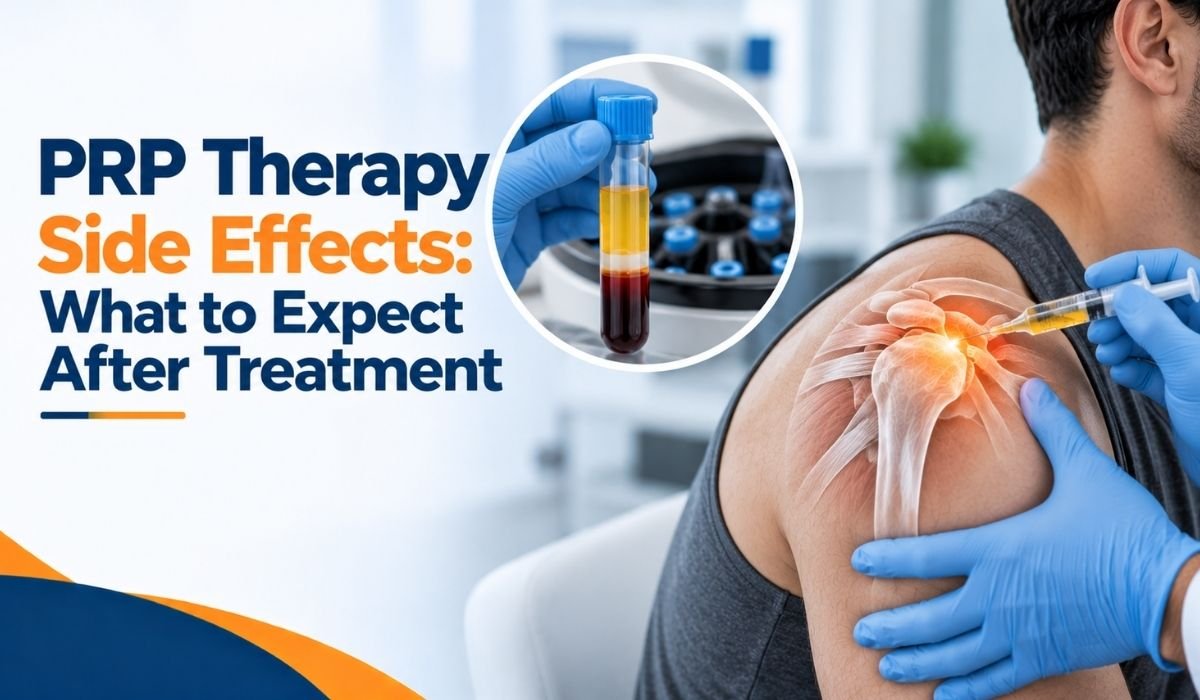
Platelet-rich plasma (PRP) is made by spinning a sample of your own blood to concentrate platelets, then injecting it into an injured or painful area. Because it is your own blood, many people assume it has no side effects. Allergy is unlikely, but the injection and blood draw still have after-effects. This guide covers PRP for joint, tendon and other musculoskeletal pain. For the stages of recovery, see our PRP recovery timeline.
Common PRP Side Effects and Why They Happen
PRP is designed to provoke short-term inflammation that kick-starts repair, so pain and swelling are expected. Cleveland Clinic says they often last a day or two. Other sources describe up to a week, and the American Academy of Orthopaedic Surgeons notes that pain after a tendon injection may increase for a week or two. Duration depends on the site, technique and individual.
| Effect | What you may notice | Usual pattern |
| Injection-site pain | Dull ache or tenderness, sometimes worse than before | Days; up to 1 to 2 weeks after some tendon injections |
| Swelling and warmth | Mild puffiness around the area | Usually a few days |
| Stiffness | Tightness, reduced movement | Eases as swelling settles |
| Bruising | At the injection site or blood-draw arm | Fades over days |
| Lightheadedness | During or just after the blood draw | Brief |
A flare is not proof of failure, nor of success. Benefit often takes a few weeks to appear, and results vary between people.
Less Common Risks and What the Evidence Shows
- Infection: rare when sterile technique is followed.
- Nerve irritation or tissue damage: uncommon; AAOS reports rates similar to cortisone injections.
- Larger bruise or bleeding: can be more likely with blood thinners.
- Reaction to local anaesthetic, or fainting during the blood draw:
Reviews of knee osteoarthritis trials generally report more minor adverse events after PRP than after saline, with some finding rates similar to hyaluronic acid or corticosteroid injections. Reviews of rotator cuff and hip osteoarthritis trials reported no serious events. PRP preparations are not standardised, many studies are small and long-term safety data are limited. For effectiveness, see PRP for knee arthritis.
Red Flags: When Soreness Is Not Routine
Call your doctor promptly
- Fever or chills
- Spreading redness, increasing warmth, pus or drainage
- Pain that keeps escalating rather than easing
- A hot, very swollen joint that is hard to move
- New numbness, tingling or weakness
Seek emergency care
Difficulty breathing or swelling of the face or throat.
| Expert insight: The useful question is not “Do I have pain?” but “Which way is it heading?” Slowly easing soreness fits the expected pattern. Escalating pain, or pain with fever or spreading redness, should be assessed rather than waited out. |
Pain Relief After PRP: The NSAID Question
NSAIDs such as ibuprofen, naproxen, diclofenac and aspirin block COX enzymes and may dampen the platelet and inflammatory activity PRP relies on. Mass General Brigham advises stopping them at least seven days before and avoiding them for at least two weeks after, and an NHS patient leaflet recommends paracetamol instead. The evidence is largely mechanistic and consensus-based, and clinic protocols differ, as does advice on ice.
Never stop prescribed blood thinners or heart-protective aspirin on your own, and confirm your pain-relief plan, including paracetamol (acetaminophen), with your doctor.
Who Should Be Cautious or Avoid PRP
Your doctor should review your history first. Commonly cited reasons for caution include:
- Low platelet count or platelet-function disorders
- Blood-thinning treatment
- Active infection, or feeling unwell with fever
- Certain blood cancers, or chronic liver disease
Sources differ. A 2025 international consensus (GRIIP) now guides infectious, cancer-related and blood-related conditions, so individual assessment matters more than a generic checklist.
Myths vs Facts
| Myth | Fact |
| “PRP uses my own blood, so it has no side effects.” | Allergy is unlikely, but soreness, bruising, infection and nerve irritation can still occur. |
| “More pain after PRP means it is working.” | A flare reflects inflammation. It does not predict the result. |
| “Ibuprofen is harmless after PRP.” | It may interfere with the intended response. Ask your clinician first. |
Questions to Ask Before PRP
- What after-effects should I expect at this site, and for how long?
- Which medicines should I stop, and when?
- Will the injection be image-guided?
- Which symptoms should make me call, and how do I reach you?
- What is the plan if PRP does not help?
Practical Action Plan
- Before: share your full medicine list, including blood thinners and NSAIDs, and ask for written instructions.
- First 48 hours: rest the area as advised, use only pain relief your doctor approved, and follow bathing and activity instructions.
- First one to two weeks: return to movement gradually and avoid heavy lifting, high-impact exercise or sport until cleared. The PRP recovery timeline explains the stages.
- Monitor: note whether pain is easing or escalating, and check the red flags above.
- Follow up: attend your review and judge benefit over weeks, not days.
Nexus Advanced Pain Management Expert Summary
PRP is generally well tolerated, and the common after-effects are temporary and mild. The more useful skill for patients is telling an expected flare from a warning sign: easing soreness is usually reassuring, while escalating pain, fever, spreading redness or new numbness deserves prompt assessment. Agree medication timing, especially NSAIDs and blood thinners, with your doctor in advance. Because PRP evidence remains mixed, a clear plan and realistic expectations matter as much as the injection.
How Nexus Advanced Pain Management Can Help
If you are considering PRP, or have questions about symptoms after an injection, a specialist assessment can help. At Nexus Advanced Pain Management, our pain specialists in Ahmedabad review your diagnosis, medical history, medicines and previous treatments to judge whether PRP therapy is appropriate, and what other options may suit you. Planning includes explaining expected after-effects, medication instructions and warning signs before any procedure, with image-guided techniques used where clinically appropriate. PRP is one option within broader regenerative therapy and chronic pain management care, and decisions are individualised.
Key Takeaways
- Soreness, swelling, stiffness and bruising are the most common PRP side effects.
- Most settle within days to a week; some tendon injections take longer.
- A flare is normal and does not predict success or failure.
- Fever, spreading redness, drainage, escalating pain or new numbness need prompt review.
- NSAIDs may interfere with PRP, so confirm medicine instructions in advance.
- PRP evidence is mixed. Set realistic expectations and judge results over weeks.
Frequently Asked Questions
What are the most common side effects of PRP therapy?
Injection-site soreness, swelling, stiffness and bruising are the most common. Some people feel lightheaded during the blood draw. These effects are usually mild and temporary.
How long does pain last after a PRP injection?
Many people feel sore for a day or two, and some for up to a week. After some tendon injections, pain can stay increased for a week or two. The site treated and the technique both matter.
Is it normal for pain to get worse after PRP?
Yes, a short flare is common because PRP triggers inflammation as part of healing. It should gradually ease. Pain that keeps escalating, or comes with fever or spreading redness, needs assessment.
Can I take ibuprofen after PRP?
Many clinics advise avoiding ibuprofen and other NSAIDs for about two weeks because they may blunt the healing response. Protocols differ, so follow your doctor’s instructions and ask what to take instead.
Can PRP cause an infection?
Infection is rare when sterile technique is used, but it is possible with any injection. Fever, spreading redness, warmth or drainage should be reviewed promptly.
Who should avoid PRP therapy?
People with low platelet counts, platelet-function disorders, active infection, certain blood cancers or chronic liver disease may be unsuitable, and blood thinners need review. Your doctor will assess this individually.
Is PRP safe?
Reviews describe a generally favourable short-term safety profile with mostly minor effects. Long-term data are limited and PRP preparations vary, so discuss risks and benefits for your condition.
When should I call my doctor after PRP?
Call for fever, spreading redness, pus, a hot swollen joint, worsening pain, or new numbness or weakness. Seek emergency care for difficulty breathing or swelling of the face or throat.