

Quick Answer
| Most people with a slip disc (herniated or prolapsed disc) notice meaningful pain relief within 4–6 weeks of starting conservative treatment such as physiotherapy, activity modification and, if needed, targeted injections. About 80–90% of patients improve without surgery within 3–6 months. Recovery speed depends on the disc level involved, the size of the herniation, and how consistently the treatment plan is followed. |
Quick Summary
- Bed rest is not the goal — controlled movement from week one usually speeds recovery.
- Most patients see noticeable improvement within 4–6 weeks of starting treatment.
- Sciatica-type leg pain typically takes longer to settle than localised back pain — often 6–12 weeks.
- Structured physiotherapy usually begins in the first 1–2 weeks, not after pain disappears.
- Full return to physically demanding work or sport can take 3–6 months.
- Numbness, progressive weakness, or bladder/bowel changes need same-day medical evaluation.
- Recovery timelines are individual — age, disc level, general fitness, and treatment adherence all matter.
- A pain specialist can tailor the plan and adjust it if progress stalls at any stage.
What Is a Slip Disc?
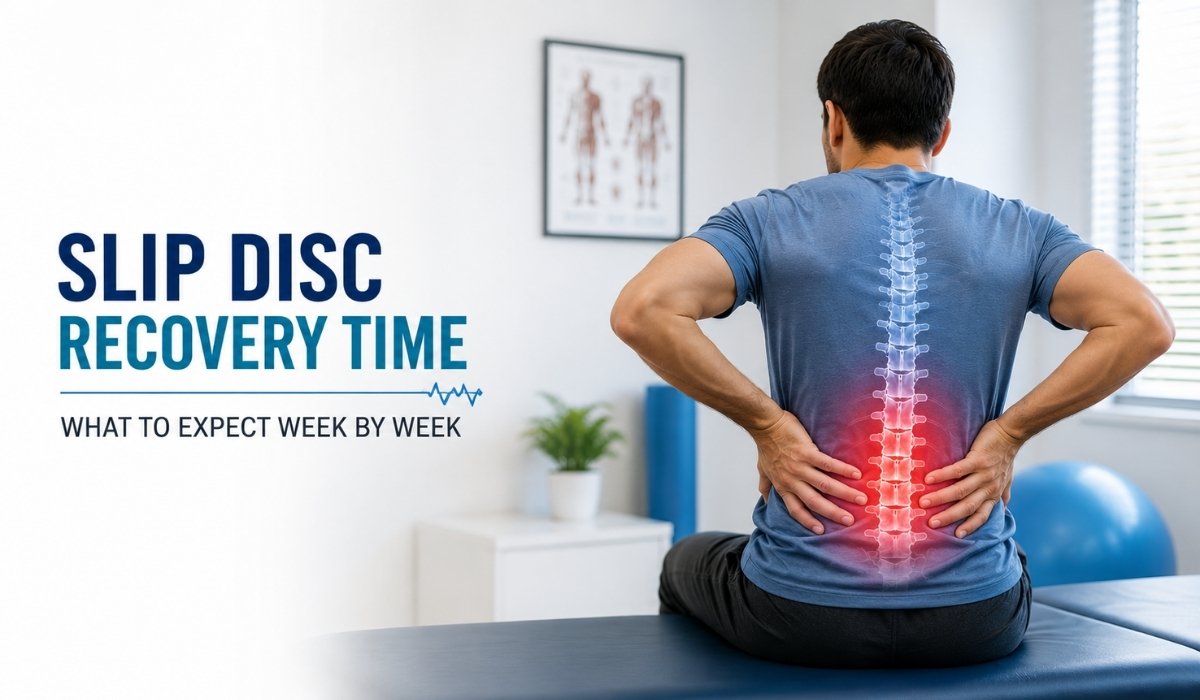
A “slip disc” (medically called a herniated, prolapsed, or bulging disc) occurs when the soft inner core of a spinal disc pushes through a weakened outer layer. This can irritate nearby nerves, most often in the lower back (lumbar spine), causing localised pain, stiffness, and sometimes pain that radiates into the leg (sciatica). The disc doesn’t literally “slip” out of place — the term describes the bulge or rupture of disc material.
Symptoms to Watch For
- Localised lower back or neck pain that may worsen with sitting or bending
- Radiating pain into the buttock, leg, or arm depending on the disc level
- Tingling, numbness, or a burning sensation along the nerve pathway
- Muscle weakness in the leg or foot in more significant cases
- Pain that eases with lying down and worsens with prolonged standing or coughing
Causes and Risk Factors
Disc herniation is usually the result of gradual wear (disc degeneration) combined with a triggering movement, rather than a single dramatic injury. Common contributors include:
- Age-related disc dehydration and reduced flexibility (most common after 30–50 years)
- Repetitive bending, twisting, or heavy lifting with poor technique
- Prolonged sitting with poor posture, common in desk-based jobs
- Excess body weight, which increases load on lumbar discs
- Smoking, which reduces disc nutrition and healing capacity
- Sedentary lifestyle with weak core and back-supporting muscles
How a Slip Disc Is Diagnosed
Diagnosis starts with a clinical history and physical examination, including tests for nerve involvement such as leg-raise tests and reflex checks. Imaging — typically an MRI — is used to confirm the disc level, the size of the herniation, and whether a nerve is being compressed. Nexus Pain does not recommend imaging or invasive treatment for every mild case; many patients recover with structured conservative care alone, and imaging is reserved for those with red-flag symptoms or pain that doesn’t respond to initial treatment.
Slip Disc Recovery Time: Week-by-Week
The exact numbers vary by patient, but this is the general pattern most people can expect once appropriate treatment begins.
Week 1–2: Acute Phase — Pain Control and Gentle Movement
The priority is calming inflammation and avoiding positions that aggravate the nerve, while staying gently active. Complete bed rest beyond a day or two is generally discouraged, as prolonged inactivity can slow recovery and weaken supporting muscles. Short, frequent walks, anti-inflammatory measures, and activity modification are typical. A physiotherapy assessment is often started during this window.
Week 3–4: Early Rehabilitation
Pain usually starts to shift from constant to intermittent, and leg or arm symptoms may begin to reduce as inflammation settles. Guided physiotherapy — nerve-gliding exercises, gentle stretching, and posture correction — typically progresses here. Patients who skip this phase or return to full activity too soon are more likely to see symptoms flare up again.
Week 5–8: Functional Recovery
Most patients notice a clear improvement in day-to-day comfort by this stage, with reduced reliance on medication. Core-strengthening and postural correction exercises are progressed, and light work duties can often resume with ergonomic adjustments. Persistent or worsening leg pain at this stage is a signal to reassess the treatment plan rather than “wait it out.”
Week 9–12: Consolidation
By around three months, the majority of patients following a structured programme report significant relief and improved function. Return to moderate exercise, longer working hours, and most daily activities is usually appropriate, guided by physiotherapy progress rather than a fixed calendar date.
Months 3–6: Full Functional Return
For physically demanding jobs, contact sports, or heavy lifting, full return typically falls in this window, once strength and flexibility have been rebuilt and confirmed through functional testing. A minority of patients with larger herniations or incomplete relief may be evaluated for further options such as targeted injections or, rarely, surgery, at this stage.
Comparison: Recovery Timeline by Approach
| Approach | Typical Timeline to Meaningful Relief | Notes |
| Activity modification + physiotherapy alone | 6–12 weeks | Effective for the majority of mild-to-moderate cases |
| Physiotherapy + epidural steroid injection | 3–6 weeks | Considered when leg/arm pain limits participation in physiotherapy |
| Radiofrequency ablation (select cases) | 2–4 weeks post-procedure | Used for specific facet-related or chronic pain patterns, not routine disc herniation |
| Surgical discectomy (reserved cases) | 4–6 weeks initial, 3–6 months full recovery | Considered after failed conservative care or with red-flag symptoms |
Non-Surgical Treatment Options
- Structured physiotherapy: nerve mobilisation, core strengthening, posture retraining
- Activity modification: avoiding prolonged sitting, heavy lifting, and high-impact loading
- Medication: short-term anti-inflammatory or nerve-pain medication as prescribed
- Epidural steroid injections: for significant nerve-related pain limiting rehabilitation
- Ergonomic and lifestyle adjustments: workstation setup, sleep posture, weight management
Prevention Tips During and After Recovery
- Maintain a strong core through guided, progressive exercise
- Use correct lifting technique — bend at the knees, keep the load close to the body
- Avoid prolonged static sitting; take short movement breaks every 30–45 minutes
- Address body weight and smoking, both of which affect disc health and healing
- Continue maintenance exercises after symptoms resolve, not just during flare-ups
Expert Insights
| Expert Insight 1: Movement Is Medicine in the Early Phase Patients often assume rest equals recovery. In reality, controlled movement in the first two weeks helps maintain disc nutrition and prevents stiffness that can prolong recovery. The goal is modified activity, not immobility. |
| Expert Insight 2: Leg Pain Often Takes Longer Than Back Pain When a disc herniation irritates a nerve root, the resulting leg or arm pain (sciatica) can lag behind the back pain itself, sometimes taking several extra weeks to settle even as the back feels better. This is a normal pattern, not a sign that treatment has failed. |
| Expert Insight 3: Consistency Matters More Than Intensity Patients who complete short, regular physiotherapy sessions tend to progress more predictably than those who do occasional intense sessions. Recovery timelines quoted in research reflect consistent adherence to a structured plan, not sporadic effort. |
Common Mistakes That Slow Recovery
- Prolonged bed rest beyond the first day or two, which weakens supporting muscles
- Returning to heavy lifting or high-impact exercise as soon as pain reduces, before strength is rebuilt
- Stopping physiotherapy once acute pain settles, instead of completing the full rehabilitation programme
- Relying only on painkillers without addressing posture, ergonomics, or core strength
Myths vs. Facts
| Myth | Fact |
| A slip disc always requires surgery. | Most cases (roughly 80–90%) improve with non-surgical treatment; surgery is reserved for specific situations. |
| Complete bed rest heals a slip disc fastest. | Extended bed rest can slow recovery; guided, gradual movement is generally more effective. |
| Once pain disappears, the disc is fully healed. | Pain relief often precedes full tissue healing and strength recovery — the rehabilitation programme should still be completed. |
| A slip disc means you can never exercise again. | Most patients return to regular, and often high-level, activity once appropriately rehabilitated. |
Questions Patients Often Forget to Ask
- Which specific disc level is involved, and how does that affect my expected timeline?
- What movements or positions should I avoid during each phase of recovery?
- How will we know if the treatment plan needs to change?
- What does a realistic return-to-work or return-to-sport date look like for my specific case?
- What warning signs should prompt me to seek urgent care rather than wait for my next appointment?
Practical Action Plan
- Get an accurate diagnosis and, if indicated, imaging before assuming the worst
- Start physiotherapy early rather than waiting for pain to fully settle
- Follow activity modification guidance rather than either full rest or pushing through pain
- Track symptoms week to week and share changes with your treatment team
- Reassess the plan at the 4–6 week mark if progress feels slower than expected
| Nexus Pain Expert Summary Slip disc recovery is rarely a straight line, but most patients who follow a structured, progressive plan see meaningful improvement within 6–12 weeks and substantial functional recovery within 3–6 months. The most important factors within a patient’s control are staying appropriately active, completing the full rehabilitation programme, and seeking a reassessment if progress stalls — rather than waiting indefinitely. |
Key Takeaways
- A slip disc is a bulge or rupture of disc material, not a bone “slipping” out of place.
- Most patients improve without surgery within weeks to a few months.
- Early, guided movement generally outperforms prolonged bed rest.
- Leg or arm nerve pain can take longer to resolve than local back pain.
- Recovery timelines should be reassessed, not assumed, if progress plateaus.
- Warning signs like weakness or bladder/bowel changes need same-day evaluation.
- A tailored plan from a pain specialist can reduce recovery time and recurrence risk.
How Nexus Pain Can Help
Nexus Pain Management, Ahmedabad, works with patients through every stage of slip disc recovery — from accurate diagnosis and comprehensive pain assessment to evidence-based, non-surgical treatment planning. This includes structured physiotherapy coordination, interventional options such as epidural injections where clinically appropriate, and long-term guidance on posture, core strength, and lifestyle modification to support lasting recovery and reduce the risk of recurrence. Every treatment plan is personalised to the patient’s disc level, symptom pattern, and functional goals.
Frequently Asked Questions
How long does it take for a slip disc to heal completely?
Most patients see meaningful pain relief within 4–6 weeks and significant functional recovery within 3–6 months, though full tissue healing can continue gradually beyond that with a consistent rehabilitation routine.
Can a slip disc heal on its own without treatment?
Mild disc herniations can improve with time and activity modification alone, but structured physiotherapy generally leads to faster, more reliable recovery and lowers the risk of recurrence.
Is bed rest good for slip disc recovery?
No — beyond the first day or two, prolonged bed rest is generally discouraged, as it can weaken supporting muscles and slow overall recovery. Gentle, guided movement is usually recommended instead.
When can I go back to work after a slip disc?
Light desk-based work can often resume within a few weeks with ergonomic adjustments, while physically demanding jobs may take 3–6 months, depending on the severity of the herniation and rehabilitation progress.
Why does my leg pain take longer to go away than my back pain?
Nerve irritation from a disc herniation can settle more slowly than local back muscle pain, so residual leg or arm symptoms lasting weeks longer than back pain is a common, expected pattern.
Do all slip discs need surgery?
No — most cases, roughly 80–90%, improve with non-surgical treatment such as physiotherapy, activity modification, and, when needed, targeted injections. Surgery is generally reserved for cases with red-flag symptoms or those that don’t respond to conservative care.
What exercises should I avoid during slip disc recovery?
High-impact activities, heavy lifting, deep forward bending, and twisting movements are typically avoided early on; a physiotherapist can guide safe, progressive exercises specific to your disc level.
How do I know if my slip disc recovery is on track?
A general reduction in pain intensity, improving tolerance for sitting and standing, and reducing reliance on medication are good signs; if symptoms plateau or worsen by 4–6 weeks, the treatment plan should be reassessed.
What are the warning signs that need urgent medical attention?
Progressive leg weakness, numbness in the groin or inner thighs, or new bladder or bowel changes are red-flag symptoms that require same-day medical evaluation, not a wait-and-watch approach.
Can physiotherapy alone fix a slip disc?
For many mild-to-moderate cases, structured physiotherapy alone leads to significant improvement; more involved cases may need it combined with other treatments such as injections.
How long should I continue physiotherapy after the pain goes away?
It’s generally advisable to complete the full rehabilitation programme even after pain resolves, since strength and flexibility gains take longer to establish than pain relief and help prevent recurrence.
Does age affect slip disc recovery time?
Yes — younger patients and those with good baseline fitness often recover somewhat faster, though people of any age can achieve good outcomes with a consistent, guided rehabilitation plan.