

Quick Answer
| Tech neck syndrome is neck and upper-back strain caused by prolonged forward head posture while looking down at phones, laptops, or tablets. Common symptoms include neck stiffness, upper back pain, headaches, and rounded shoulders. It is generally manageable with posture correction, ergonomic changes, targeted exercises, and — when pain persists — evaluation by a pain management specialist. |
Quick Summary
| Key Takeaways at a Glance ● Tech neck results from repeated forward head tilt while using digital devices. ● Every inch the head tips forward multiplies the load on the cervical spine. ● Common symptoms: neck stiffness, headaches, shoulder tightness, and reduced mobility. ● Desk workers, students, and frequent smartphone users are at highest risk. ● Most cases improve with posture correction, ergonomic adjustments, and physiotherapy. ● Ignoring symptoms for years can contribute to long-term postural and spinal strain. ● Persistent or worsening pain should be evaluated by a pain management specialist. |
Introduction
If your neck feels stiff by mid-afternoon, or you reach for a phone and instantly feel a pull at the base of your skull, you are not alone. “Tech neck” has become one of the most common postural complaints seen in clinics today, driven by hours spent looking down at smartphones, laptops, and tablets. It is not a formal medical diagnosis in itself, but a recognizable pattern of strain that, over time, can affect the muscles, joints, and nerves of the cervical spine.
This article explains what tech neck syndrome is, why it develops, how to recognize it, and — most importantly — practical, evidence-based ways to prevent and manage it.
What Is Tech Neck Syndrome?
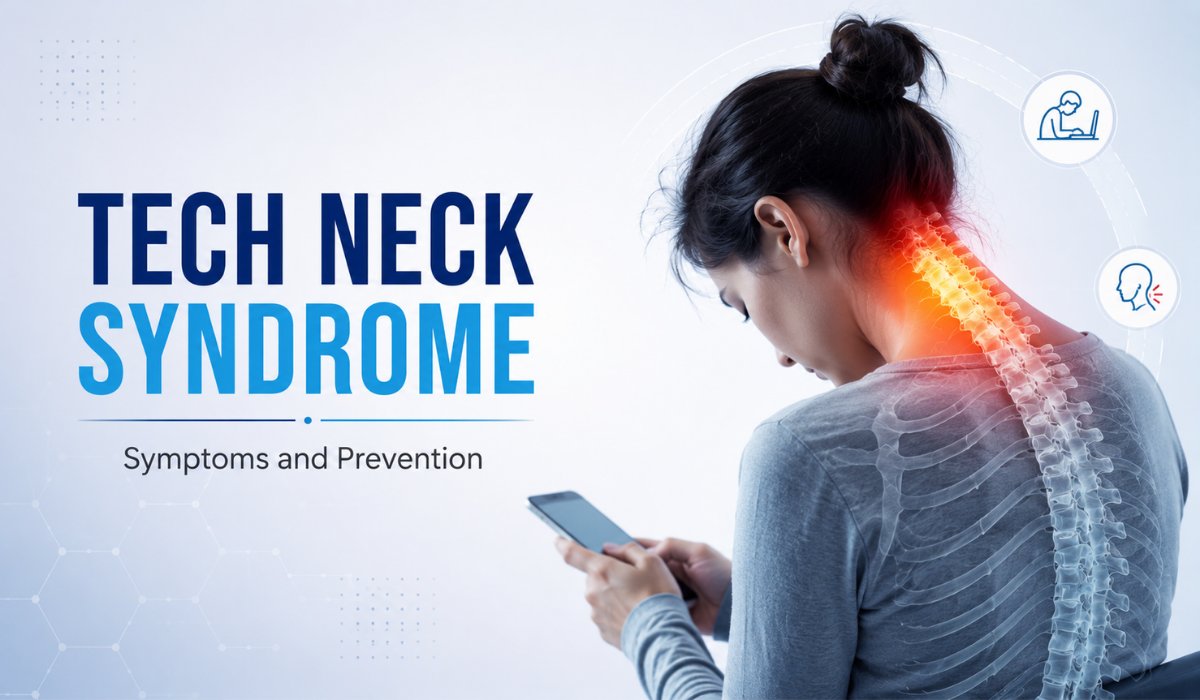
Tech neck syndrome, sometimes called “text neck,” describes the cumulative strain placed on the neck and upper back from repeatedly holding the head in a forward, tilted position while using digital devices. The human head weighs roughly 4.5–5.5 kg in a neutral position, but as it tips forward, the effective load on the cervical spine increases sharply — tilting to just 60 degrees can place the equivalent of 27 kg of force through the neck muscles and joints.
Over months or years, this repeated loading can lead to muscle fatigue, joint irritation, and postural changes such as forward head posture and rounded shoulders.
Symptoms of Tech Neck Syndrome
- Persistent stiffness or tightness at the base of the neck
- Dull, aching pain across the upper back and shoulders
- Tension-type headaches, often starting at the back of the head
- Reduced range of motion when turning or tilting the head
- Rounded shoulders or a visibly forward-jutting head posture
- Tingling or numbness radiating into the arms in more advanced cases
- Fatigue in the neck and shoulder muscles by the end of the day
Symptoms are usually mild and intermittent at first, which is why many people delay addressing them until the discomfort becomes a daily occurrence.
Causes of Tech Neck Syndrome
- Prolonged smartphone use with the head tilted downward
- Laptop use without an external monitor, keyboard, or stand
- Poor desk ergonomics — screens positioned too low or too far
- Long, uninterrupted screen sessions without posture breaks
- Weak deep neck flexor and upper back muscles
- Sleeping positions that keep the neck flexed or unsupported
Risk Factors
- Desk-based and remote workers spending 6+ hours on screens daily
- Students using tablets or phones for extended study sessions
- Individuals with pre-existing postural imbalances
- People who primarily use smartphones rather than larger screens
- Sedentary lifestyle with limited upper back and core strengthening
How Tech Neck Is Diagnosed
Tech neck is typically identified through a clinical assessment rather than imaging alone. A pain specialist or physiotherapist will usually review posture, screen-use habits, muscle tenderness, and neck range of motion. If symptoms are more advanced, persistent, or accompanied by arm numbness, imaging such as an X-ray or MRI may be recommended to rule out underlying cervical spine conditions like disc degeneration or nerve compression.
Treatment Options
Non-Surgical Treatment Approaches
- Postural retraining and ergonomic correction
- Targeted physiotherapy to strengthen deep neck flexors and upper back muscles
- Stretching routines for the chest, upper trapezius, and levator scapulae
- Heat therapy or therapeutic massage for muscle tension
- Activity modification — scheduled screen breaks and device positioning
Most people with tech neck respond well to conservative, non-surgical care, and surgery is rarely required. If imaging and clinical evaluation confirm an underlying structural cervical condition rather than simple postural strain, a pain specialist may discuss evidence-based interventional options such as radiofrequency ablation or a targeted nerve block — but these are not first-line treatments for tech neck itself.
Prevention Tips
- Hold devices at eye level rather than looking down
- Position laptop or monitor screens at eye height using a stand
- Follow the 20-20-20 rule — every 20 minutes, look 20 feet away for 20 seconds
- Take a posture or movement break every 30–45 minutes
- Strengthen upper back and neck-supporting muscles regularly
- Use a supportive pillow that keeps the neck in a neutral position while sleeping
- Set up a proper ergonomic workstation, even when working from home
Recovery and Rehabilitation
Recovery timelines vary depending on how long symptoms have been present. Mild, recently developed tech neck often improves within 2–4 weeks of consistent posture correction and stretching. More established cases with muscle imbalance may take 6–12 weeks of structured physiotherapy to see meaningful, lasting improvement. Long-term prevention depends on sustaining ergonomic habits even after symptoms resolve, since the underlying screen-use patterns typically remain unchanged.
Tech Neck vs. Cervical Spondylosis
| Feature | Tech Neck Syndrome | Cervical Spondylosis |
| Primary Cause | Prolonged forward head posture, muscular strain | Age-related degeneration of cervical discs and joints |
| Typical Age Group | Common across working-age adults and students | More common after age 40–45 |
| Structural Changes | Usually none on imaging in early stages | Disc thinning, bone spurs visible on imaging |
| Reversibility | Often improves fully with posture and exercise | Manageable, but degenerative changes are not reversible |
| Typical Treatment | Ergonomics, physiotherapy, stretching | Physiotherapy, pain management, occasionally interventional care |
Expert Insight Sections
| Expert Insight #1 — The 60-Degree Problem A common mistake is assuming neck pain only comes from awkward sitting. In reality, even a mild 45–60 degree forward head tilt — the average angle used while texting — multiplies spinal load several times over. Correcting device height is often more impactful than correcting the chair. |
| Expert Insight #2 — Muscle Imbalance Is the Real Driver Tech neck is rarely just about the neck. Tight chest muscles paired with weak upper back and deep neck flexor muscles create the classic “upper crossed” pattern. Long-term relief usually requires strengthening the weak muscles, not just stretching the tight ones. |
| Expert Insight #3 — When to Stop Self-Managing If symptoms persist beyond 4–6 weeks of consistent posture and exercise changes, or if numbness or tingling develops in the arms, this is a signal to see a pain specialist rather than continuing to self-treat. |
Common Mistakes
- Only stretching the tight muscles while ignoring the weak, underactive ones that need strengthening.
- Raising the phone briefly for photos but reverting to a downward gaze during normal browsing and messaging.
- Waiting until pain becomes constant before seeking a professional assessment, allowing postural patterns to become deeply ingrained.
Myths vs. Facts
| Myth | Fact |
| Tech neck only affects people who work at a desk all day. | Frequent smartphone use alone — even without a desk job — can cause tech neck. |
| Tech neck always requires surgery to fix. | The large majority of cases improve with posture correction and physiotherapy; surgery is rarely needed. |
| A quick stretch once a day is enough to reverse it. | Consistent, structured strengthening over several weeks is usually needed for lasting change. |
| Neck pain from screens will simply go away on its own. | Without addressing posture and screen habits, symptoms often persist or gradually worsen. |
Questions Patients Forget to Ask
- Could my headaches be related to my neck posture rather than a separate issue?
- Should I get an X-ray or MRI, or is a clinical exam sufficient at this stage?
- What specific exercises should I be doing, and how often?
- Is my sleeping position contributing to the problem?
- How will I know if my tech neck is improving versus progressing?
Practical Action Plan
- This week: Raise your phone and laptop screen to eye level and set a 30-minute break reminder.
- This week: Begin gentle chin-tuck and shoulder blade squeeze exercises, 2–3 sets daily.
- Next 2–4 weeks: Track whether stiffness and headaches are reducing in frequency.
- If no improvement after 4 weeks: Book an evaluation with a pain management or physiotherapy specialist.
- Ongoing: Reassess your workstation ergonomics every few months, especially after any equipment changes.
Nexus Pain Expert Summary
| Tech neck syndrome is a manageable, posture-driven condition in the vast majority of cases. Early recognition and consistent ergonomic and exercise habits prevent most cases from progressing. Persistent pain, recurring headaches, or arm symptoms warrant a proper clinical evaluation to rule out underlying cervical spine involvement and to build a personalized, non-surgical management plan. |
How Nexus Pain Can Help
For patients in Ahmedabad experiencing persistent neck stiffness, headaches, or postural discomfort linked to screen use, Nexus Advanced Pain Management offers a structured, evidence-based approach to assessment and care, including:
- Comprehensive pain and postural assessment
- Evidence-based, personalized treatment planning
- Non-surgical pain management strategies
- Guidance on ergonomic and lifestyle modification
- Rehabilitation support for long-term postural correction
- Long-term strategies to prevent symptom recurrence
The goal of care is not just short-term symptom relief but building sustainable habits that address the root cause of tech neck.
Key Takeaways
- Tech neck stems from repeated forward head posture during screen use.
- Device height and screen breaks matter more than most people realize.
- Strengthening — not just stretching — is key to lasting relief.
- Most cases resolve without surgery through posture and physiotherapy-based care.
- Persistent symptoms beyond 4–6 weeks should be professionally assessed.
- Sleep posture and workstation setup are frequently overlooked contributors.
FAQ Section
1. What is tech neck syndrome?
Tech neck syndrome is neck and upper back strain caused by prolonged forward head posture while using phones, laptops, or tablets.
2. What are the first signs of tech neck?
Early signs include mild neck stiffness, tightness at the base of the skull, and tension headaches, especially after long screen sessions.
3. Can tech neck cause headaches?
Yes. Muscle tension at the base of the skull from forward head posture commonly triggers tension-type headaches.
4. Is tech neck permanent?
In most cases, tech neck is not permanent and improves significantly with posture correction, ergonomic changes, and targeted exercise.
5. How long does it take to fix tech neck?
Mild cases often improve within 2–4 weeks; more established postural patterns may take 6–12 weeks of consistent care.
6. Can children and teenagers get tech neck?
Yes, students who use tablets and phones for long study or gaming sessions are increasingly seen with early tech neck symptoms.
7. Does tech neck cause arm numbness?
In more advanced cases, nerve irritation from prolonged strain can cause tingling or numbness radiating into the arms, which warrants specialist evaluation.
8. What is the best sleeping position to avoid tech neck?
Sleeping on your back or side with a supportive pillow that keeps the neck in a neutral, aligned position is generally best.
9. Is tech neck the same as cervical spondylosis?
No. Tech neck is a posture-driven muscular strain pattern, while cervical spondylosis involves age-related degenerative changes to the cervical spine, visible on imaging.
10. What exercises help with tech neck?
Chin tucks, shoulder blade squeezes, upper back strengthening, and chest stretches are commonly recommended starting exercises.
11. When should I see a pain specialist for tech neck?
If symptoms persist beyond 4–6 weeks despite posture correction, or if you notice arm numbness, weakness, or worsening headaches, a specialist evaluation is advised.
12. Can tech neck be prevented completely?
While occasional device use is unavoidable, consistent ergonomic habits and regular movement breaks significantly reduce the risk of developing symptoms.