
Best Knee Pain Treatment in Ahmedabad
Comprehensive Knee Pain Care at Nexus Advanced Pain Management
Struggling with knee pain that makes stairs, standing, or everyday movement difficult?
Nexus Advanced Pain Management, led by Dr. Dhaval Patel (MBBS, MD — B.J. Medical College & Civil Hospital, Ahmedabad; Fellowship in Pain Management) and Dr. Parth Shah (MBBS, FIPM, FPCI, FIAPM), evaluates knee pain on a case-by-case basis — because pain coming from worn cartilage, a torn ligament, or an inflamed tendon each calls for a different treatment approach.
A large share of knee pain — osteoarthritis included — responds to non-surgical care. We typically consider surgical referral only if conservative and interventional treatment hasn’t helped, or if there’s structural damage that genuinely needs it.
Talk to our pain management specialists in Ahmedabad about your knee pain.
What Is Knee Pain?
Knee pain refers to pain, stiffness, swelling, or reduced function affecting the knee joint. It can affect people of any age and may develop gradually over time or appear suddenly following an injury.
Knee pain may be short-term (acute), often following an injury or specific trigger, or persistent (chronic), lasting or recurring over months or years. It can be related to the joint surfaces, ligaments, tendons, cartilage, or the surrounding soft tissue, and different causes can produce similar symptoms — which is why proper clinical assessment matters before deciding on treatment.
Common Symptoms of Knee Pain
Symptoms vary depending on the underlying cause. Common symptoms may include:
- Pain with stairs, kneeling, or squatting
- Swelling around the knee joint
- Stiffness, particularly after rest or first thing in the morning
- Clicking, catching, or locking sensations
- A feeling of instability or the knee “giving way”
- Pain that worsens with activity or, in some cases, after prolonged rest
- Reduced range of motion
Sudden swelling, inability to bear weight, or a feeling of the knee giving way after an injury may indicate a more significant structural problem and should be evaluated.
What Causes Knee Pain?
Osteoarthritis
The most common cause of knee pain, involving gradual wear of the cartilage that cushions the joint. Pain typically worsens with activity and weight-bearing and improves with rest, often with associated stiffness and swelling.
Rheumatoid Arthritis
An autoimmune condition that causes inflammation within the joint lining, often affecting both knees and other joints. It can lead to persistent pain, swelling, and joint damage if not managed.
Ligament Injuries
Injuries to the ACL, MCL, or other supporting ligaments — often from sports, twisting movements, or trauma — can cause pain, swelling, and a feeling of instability in the knee.
Meniscus Tears
Damage to the cartilage that cushions the knee joint can cause pain, swelling, and mechanical symptoms such as clicking, catching, or locking.
Tendinitis
Inflammation of the tendons around the knee, often caused by overuse, repetitive activity, or sudden increases in physical activity.
Bursitis
Inflammation of the small fluid-filled sacs that cushion the knee joint, often caused by kneeling, repetitive motion, or direct impact.
Other Possible Causes
Knee pain can also be associated with other joint or medical conditions. Persistent or unexplained pain should be evaluated rather than assuming every episode has the same cause.
Weight, Activity, and Knee Health
The knee is a weight-bearing joint, so factors that other pain conditions don’t involve in the same way play a direct role here. Every extra kilogram of body weight adds multiplied load across the knee with each step, which is why weight management is one of the few genuinely modifiable factors in slowing the progression of knee osteoarthritis. Activity type matters too — repetitive kneeling or squatting (common in certain occupations and household tasks), and sports involving sudden pivoting or direction changes (football, cricket, badminton), carry different injury patterns and are worth mentioning to your specialist as part of your history.
Immediate Care for a Recent Knee Injury
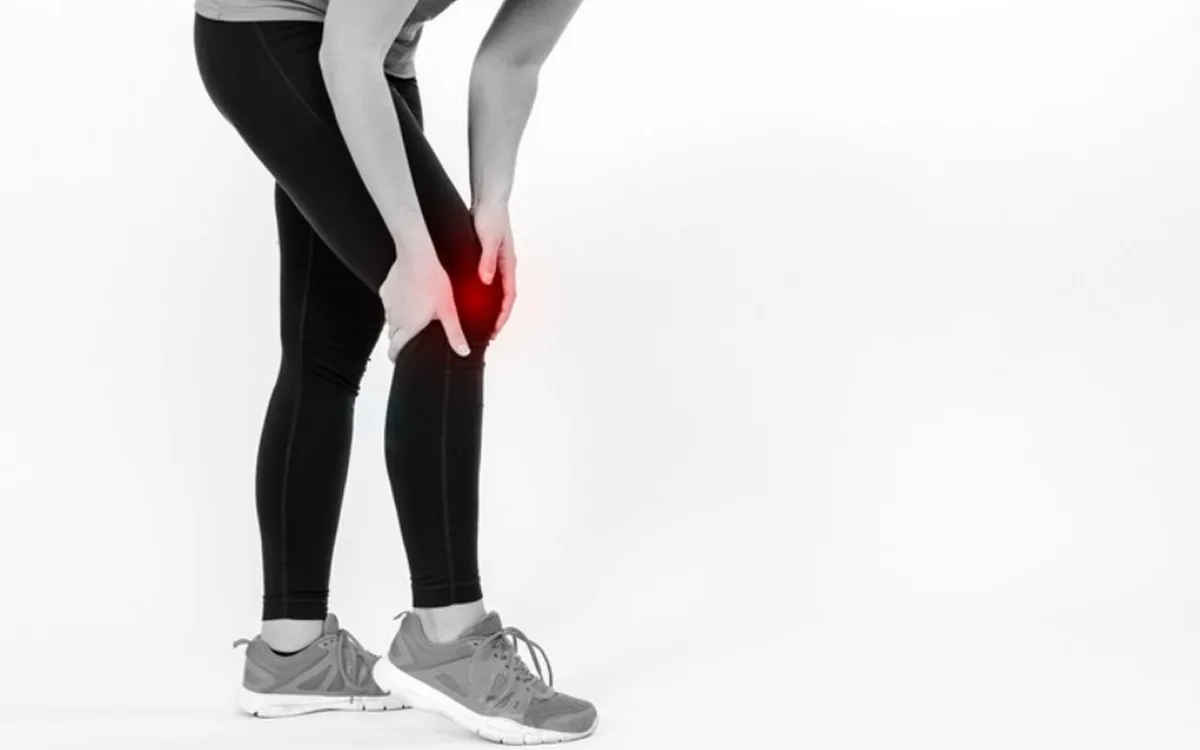
If you’ve just twisted, fallen on, or otherwise injured your knee, the standard first 48–72 hours of self-care generally follows the RICE approach — Rest the joint, apply Ice in short intervals, use Compression (such as an elastic bandage) if comfortable, and Elevate the leg when resting. This can help limit early swelling while you arrange a proper evaluation — it isn’t a substitute for assessment, particularly if you can’t bear weight or the knee looks visibly swollen or deformed (see red flags below).
When Should You See a Knee Pain Specialist?
Mild knee pain after a long walk or an unfamiliar workout usually settles on its own. But a few situations are worth acting on rather than waiting out:
- Pain persists or repeatedly returns
- Pain interferes with normal daily activities
- Pain is becoming progressively worse
- You notice swelling, stiffness, or reduced range of motion
- Your knee feels unstable or “gives way”
- Pain follows an injury
- Previous treatment has not provided adequate improvement
| ⚠ Seek urgent medical attention if you experience sudden inability to bear weight on the knee, visible deformity, significant swelling following an injury, or signs of joint infection such as fever with a hot, red, and swollen knee. These may indicate a serious underlying problem requiring immediate evaluation, not a routine consultation. |
How Is Knee Pain Diagnosed?
Because so many different structures inside the knee can produce similar-feeling pain, getting the diagnosis right matters more here than the treatment choice itself.
Medical history: when the pain started, how it developed, its location, what makes it better or worse, any swelling, locking, or instability, previous injuries and treatments, and relevant medical conditions.
Physical examination: assessment of the knee’s range of motion, stability, alignment, areas of tenderness, and signs of swelling or inflammation — often including specific stress tests to check ligament and meniscus integrity.
Imaging or other investigations: an X-ray can show joint-space narrowing typical of osteoarthritis, while an MRI is more useful for soft-tissue detail such as ligament or meniscus tears. Not every knee complaint needs imaging — your specialist will decide based on your history and exam findings, not by default.
Non-Surgical Knee Pain Treatment Options in Ahmedabad
There’s rarely a single “fix” for knee pain — treatment usually builds in stages, starting simple and escalating only if needed. Here’s what that ladder typically looks like at Nexus Advanced Pain Management.
Conservative Management
For many patients, especially with early osteoarthritis or mild ligament strain, this is the starting point: targeted quadriceps and hip-strengthening exercises to offload the joint, gait and activity adjustments, weight management guidance where relevant, and other non-invasive measures.
Medication Management
Individualized based on the patient’s condition, medical history, other medicines, and potential risks.
Targeted Injections & Nerve Blocks
- Genicular Nerve Block — targets the nerves supplying the knee joint to help reduce pain signals, and may be considered for selected patients with chronic knee pain.
- Viscosupplementation — injections that lubricate the joint with a gel-like substance (hyaluronic acid) to help reduce friction and improve joint movement, most often considered for knee osteoarthritis.
Radiofrequency Ablation
Uses heat generated from radio waves to interrupt the nerves transmitting pain signals from the knee, and may be considered for selected patients with chronic knee pain, including from arthritis.
Regenerative & Biologic Therapies
For patients looking to avoid or delay knee surgery, Nexus Advanced Pain Management also offers advanced regenerative and biologic therapies that work with your body’s own repair mechanisms:
- Stem Cell Therapy — supports repair of damaged cartilage and joint tissue using the body’s own regenerative cells.
- PRP Therapy — concentrates platelets from your own blood to help stimulate healing within the joint, often considered for early-to-moderate osteoarthritis.
- Ozone Therapy — uses medical-grade ozone to help reduce joint inflammation and support recovery.
- Regenerative Therapy — our broader regenerative approach, matched to your knee’s specific condition and your recovery goals.
Your specialist will confirm during your consultation which of these fits your diagnosis best.
Want a single detailed comparison of these non-surgical approaches?
Is Surgery Ever Needed for Knee Pain?
For most patients, knee pain can be evaluated and managed without surgery. However, surgical referral may be appropriate for certain structural injuries or advanced joint damage that does not respond adequately to non-surgical treatment. Our specialists will help you understand where your condition falls on this spectrum, so you can make an informed decision.
Why Choose Nexus Advanced Pain Management for Knee Pain Treatment in Ahmedabad?
No two knees hurt for exactly the same reason — our approach starts with figuring out yours before recommending a treatment plan.
Dr. Dhaval Patel — MBBS, MD (B.J. Medical College & Civil Hospital, Ahmedabad), Fellowship in Pain Management (FIPM); interventional spine and pain specialist.
Dr. Parth Shah — MBBS, Fellowship in Pain Management (FIPM), FPCI, FIAPM; interventional spine and pain specialist.
Every evaluation starts with pinpointing whether the pain is coming from the joint surface, a ligament, the meniscus, or surrounding soft tissue — that distinction changes the treatment plan. From there, we prioritize non-surgical and minimally invasive options where they’re appropriate, keep you informed about realistic outcomes, and adjust your plan based on how you respond to treatment.
Knee Pain Treatment in Ahmedabad, Mehsana, Patan and Gandhinagar
Nexus Advanced Pain Management provides pain-management services for patients from Ahmedabad and surrounding areas, including Mehsana, Patan, and Gandhinagar. Our clinic is located on SG Highway, Sola. If you are looking for a knee pain specialist in Ahmedabad or are travelling from nearby areas, you can contact Nexus Advanced Pain Management to discuss your symptoms and consultation options.
Frequently Asked Questions
Does knee pain always need surgery?
No. Most knee pain, including many cases of osteoarthritis, can be evaluated and managed without surgery. Surgical referral is considered only when non-surgical treatment does not provide adequate relief.
Can osteoarthritis of the knee be treated without surgery?
Yes, in many cases. Treatment options range from conservative management and medication to targeted injections and regenerative therapies, depending on the severity and individual clinical assessment.
When should I see a doctor for knee pain?
Consider medical evaluation when pain persists, repeatedly returns, affects daily activities, is associated with swelling or instability, or follows an injury.
Is PRP effective for knee pain?
PRP therapy may help support healing and reduce inflammation for certain patients, particularly with osteoarthritis or soft-tissue injuries. Suitability varies and should be discussed with your specialist.
What causes knee pain?
Common causes include osteoarthritis, rheumatoid arthritis, ligament injuries, meniscus tears, tendinitis, bursitis, and other joint or medical conditions.
How is knee pain diagnosed?
Diagnosis generally begins with a medical history and physical examination. Additional investigations or imaging may be recommended when clinically appropriate.
Can chronic knee pain be treated?
Chronic knee pain can often be managed through an individualized treatment plan involving rehabilitation, medication, targeted injections, and, for selected patients, regenerative therapies.
What should I do if my knee locks or gives way?
This may indicate a mechanical problem such as a meniscus tear or ligament injury. It’s worth having it evaluated, particularly if the symptom is new, recurrent, or affecting your stability.
Can I get knee pain treatment in Ahmedabad?
Yes. Nexus Advanced Pain Management provides specialist, non-surgical pain-management services in Ahmedabad for patients experiencing knee pain and related joint conditions.
Book a Consultation for Knee Pain Treatment in Ahmedabad
Knee pain has a way of shrinking your world — fewer stairs, shorter walks, activities you quietly stop doing. Our specialists evaluate what’s actually driving your pain and build a treatment plan around it, non-surgical wherever that’s a realistic option.
If you are looking for a knee pain specialist in Ahmedabad, contact Nexus Advanced Pain Management to schedule a consultation.
Call: +91 9033882054
Book An Appointment: Schedule a Personalised Consultation with Our Specialists
Visit Our Ahmedabad Clinic: Get Directions
Medical Disclaimer: The information on this page is intended for general educational purposes and should not replace an individual medical evaluation or professional medical advice. Treatment suitability varies from person to person and should be determined by a qualified healthcare professional.